NOW Foods and vitamin D3
A factual guide to the contents, label and choice of D3 capsules
1 selected products
Our selection
Campaign products
Find the option that fits your needs
A guide to vitamin D3 and choosing a product
Vitamin D3 is available in several types of food supplements, and the information on packaging can be difficult to compare at first glance. This guide offers factual guidance on what to look for on the label, how quantities are presented and which practical questions can help you choose between products. The current selection contains one product: NOW Foods Vitamin D3 2000 IU capsules. The guide therefore focuses mainly on how to review the information for this type of product, without drawing conclusions about its use or effects.
Food supplements are not medicines, and product information should be read as information about contents, form and labelling. When comparing options, start by checking that you are looking at the same vitamin form and that the quantities refer to the same unit. Always read the full information on the current packaging before making a purchase decision.
Vitamin D3 as a form
Vitamin D occurs in different forms in food supplements. D3 is the name of the form specified for the product in this selection. When comparing products, it is therefore useful to first check which form is stated on the label, rather than relying on an image or a short heading. Product names may summarise some of the contents, but the packaging is the source of complete information about the ingredients and how the product is presented.
The form alone does not tell you everything about the product. The label may also specify the type of capsule, other ingredients and the number of capsules in the pack. This information may be relevant if you want to compare formats or plan a purchase, but it should not be interpreted as evidence of particular properties. For the listed product, the name specifies capsules and the number 180. Any details beyond these should be checked on the current packaging, as they are not provided in the selection information.
What does the stated quantity mean?
The product name states 2000 IU. IU is an international unit used to express the quantity of certain vitamins and other substances. When comparing products, it is important to check whether the quantity is stated per capsule, serving or another unit. Otherwise, a figure on the front of the pack may be difficult to compare with another product, particularly if the packaging presents the contents in different ways.
Read the full nutrition or contents declaration and check what the stated quantity refers to. If a label also gives the quantity in micrograms, this may help you compare products, but make sure the comparison is for the same quantity of product. Do not assume that a higher figure automatically means a more suitable choice. Needs and use can vary, and this guide does not provide individual dosage advice. Follow the information on the packaging and consult a healthcare professional if you are unsure.
How to read the ingredients list
The ingredients list shows what the product contains in addition to the vitamin form stated in the name. It may, for example, include materials used in the capsule or other ingredients, but do not assume that these are present unless they are listed on the label. Read the entire list and check whether there are any ingredients you need to take into account, for example because of an intolerance or specific dietary choices. The product name alone does not give a complete picture of the contents.
It can also be helpful to distinguish between ingredients and other information on the packaging. Storage information, best-before dates and details of the responsible business may appear in different parts of the label. Check that the information is legible and up to date when you receive the product. If you need to know whether a capsule is suitable for a particular diet, look for clear information on the packaging or ask the retailer rather than drawing conclusions from the product name or appearance.
Capsules and other product formats
Food supplements containing vitamin D may be sold in different formats, such as capsules, tablets or drops. The format may affect how well the product fits into personal routines, but does not in itself say anything about the suitability of its contents. In the current selection, the product is described as capsules. If you compare it with another format, check the quantity per unit, ingredients and instructions on each label, as these details may differ.
Practical questions can make the comparison clearer: do you prefer a particular format, how many units are in the pack, and how should the product be stored? The listed product name specifies 180 capsules. However, it is not possible to determine how long a pack will last without knowing the instructions for use. Do not create your own routine based on the number of capsules. Read the packaging instructions and take healthcare professionals’ advice into account when needed.
Compare labelling and packaging information
Compare the vitamin form, quantity and the unit to which the quantity refers. Then check the ingredients list, the number of capsules or other units, and any instructions. Also make sure that you are comparing products with the same types of information, rather than comparing a quantity per capsule with one per serving. If a detail is missing from a short product description, check the full labelling.
The packaging may also contain information about the responsible business, batch or shelf life. This information is part of the product labelling, but should not be confused with independent test results or certifications. Do not make assumptions about quality, origin or level of testing unless the information is explicitly available. If a detail is important to your choice, look for clear information on the label or ask about it before buying. A factual comparison is based on verifiable information, not vague wording.
Practical criteria for choosing
Start by considering what you actually need to compare: form, stated quantity, pack size or ingredients. Then read the product name alongside the label and check that the information matches. If you take other food supplements or medicines, have a particular health situation or are unsure whether a supplement is suitable for you, it is sensible to ask a healthcare professional. This information is not a substitute for individual advice and does not recommend starting to use vitamin D.
Such information needs to be considered in context and compared with the full labelling. Also check the storage and best-before information when the product is delivered. If you cannot find the information you need, wait to make a decision until it has been confirmed. An informed choice is about understanding what the product contains and how it is labelled, not attributing effects to it that are not supported by reliable product information.
How we selected the products in the campaign
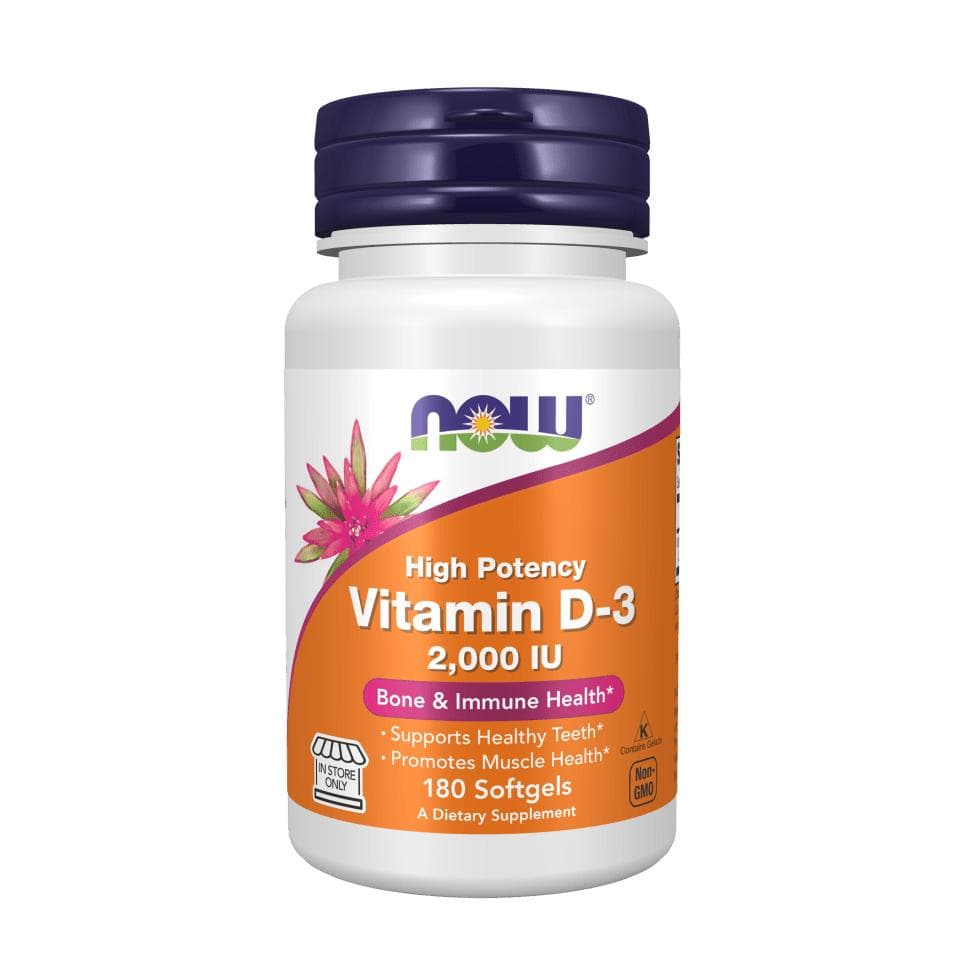
The campaign selection consists of one product: NOW Foods Vitamin D3 2000 IU in a pack of 180 capsules. Its relevance to the theme is the vitamin form stated for the product, D3, and its place in a context in which vitamin D often receives attention.
The product image shown therefore refers to the capsule product specified in the selection, not to several variants or formats. The information in the product name provides basic details about the form, stated quantity and number of capsules, but not the full ingredients list or all instructions for use. Therefore, check the current packaging for complete labelling and follow its information. If you need personal guidance about food supplements or vitamin D, consult a healthcare professional.