Blog
Guides, research reviews and practical advice on vitamins, minerals and dietary supplements — sorted by topic.
Latest articles

Zinc in foods: sources and availability
Zinc is found in foods of both animal and plant origin, but the available sources do not allow us to identify a food with the most zinc or create a comparable ranking. Its availability can vary depending on the food matrix and processing, so the stated content does not necessarily equal the amount available.

Vitamin D Foods: Sources and Labelling
The EU list of novel foods lists UV-treated mushrooms in connection with vitamin D2. A study also examined poultry and eggs bioenriched with 25-hydroxyvitamin D3. However, the available sources do not provide a complete list of vitamin-D-rich foods or generally applicable content values for individual products. EU list of novel foods Study on bioenriched poultry and eggs

Advantage of Ashwagandha: What Research Shows
There is no single, universal advantage of ashwagandha established by the research described here. Studies have examined different outcomes and preparations, but their findings vary and do not guarantee a particular result from any product.

Zinc supplements: When are they useful?
Zinc supplements are products intended to provide additional zinc. The reviews provided investigate different products, groups and measures; their findings apply to the specific settings studied and do not amount to a general recommendation for everyone.

Iron-rich foods: how to assess their sources
The available sources do not specify particular foods or how much iron each provides, so they do not support a reliable list or ranking. They do indicate that the food matrix, preparation and other factors can affect nutrient availability.

Zinc: Which Foods Contain It?
The available sources provide neither a comparative table of zinc content nor a ranking of the foods that contain the most zinc. A study on biofortified wheat instead examines how milling and the preparation of sandwich bread and chapati affect measured concentrations and certain indicators of potential availability.

Ashwagandha Withania: Forms and Labels
“Ashwagandha” and “Withania somnifera” are used together in the supplied research to identify the study ingredient. The names alone do not specify a product’s preparation or show that it matches an ingredient studied in a trial.
Magnesium Deficiency: Meaning and Assessment
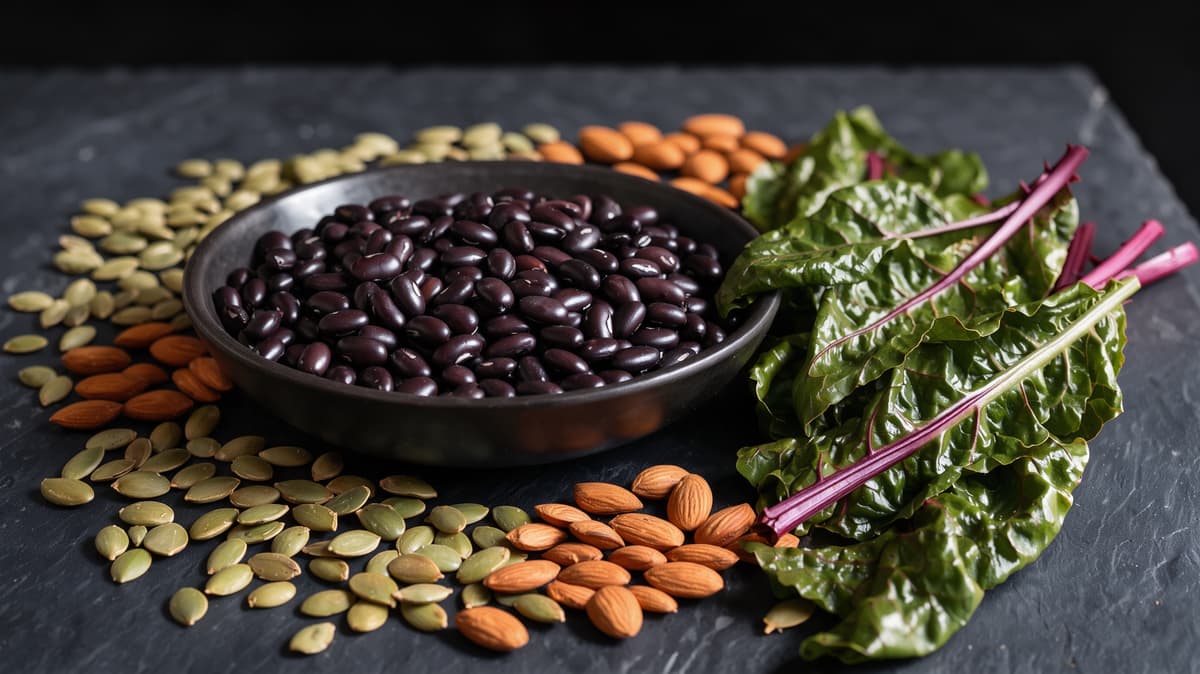
Magnesium deficiency refers to an inadequate magnesium state, while hypomagnesemia means that measured magnesium in the blood is below the laboratory’s reference range. A serum result provides only a partial view of magnesium status, so assessment may consider other information as well.

Zinc for women: what it does and what we know
Zinc is an essential micronutrient involved in various physiological processes in the human body, but this does not show that taking a supplement produces a specific effect in women. The sources reviewed do not support a general recommendation to take zinc supplements or a specific purpose for a particular dose.
Vitamin E in food: intake and research
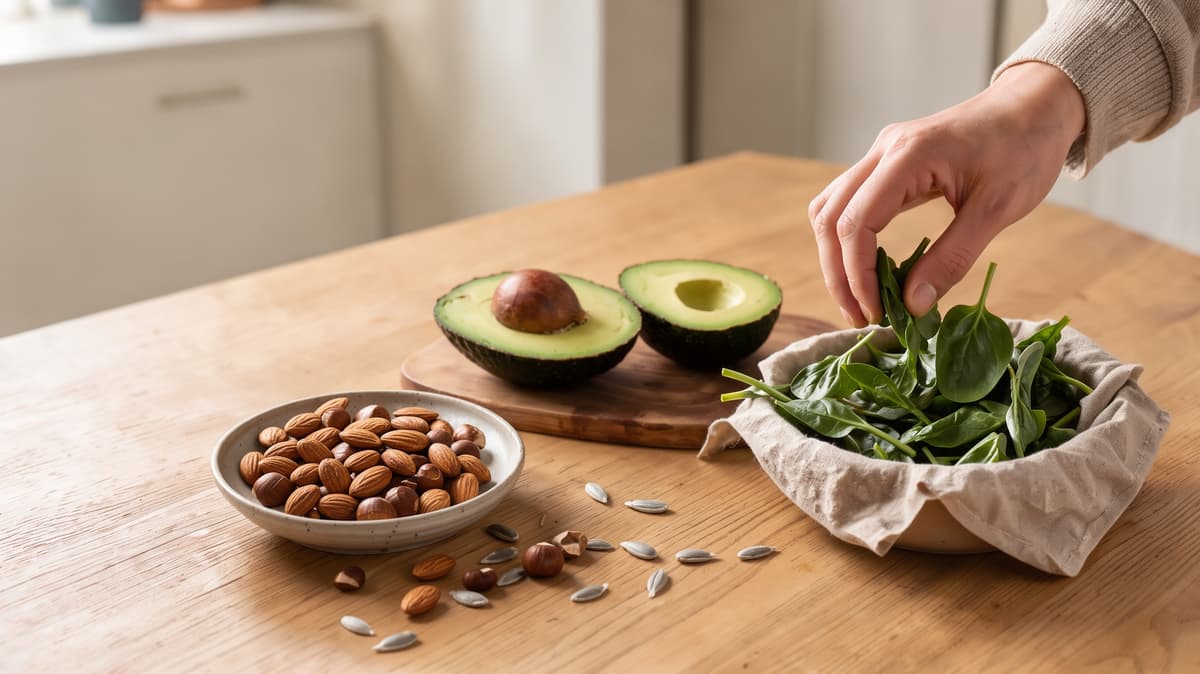
An international overview concludes that a balanced, plant-based diet without supplements appears sufficient for adequate vitamin E intake. A Cuban study estimated the average intake among the adults studied at 6.8 mg α-tocopherol equivalents per day; this group average is not an individual measurement.

Foods with magnesium: sources and how to compare them
The available sources do not include composition data to identify which foods contain magnesium or how much each provides. They therefore do not support a reliable list, comparisons between foods or a “top 10.”

Sodium Bicarbonate: Research, Forms and Safety
Sodium bicarbonate, also called baking soda, is the compound NaHCO₃. Sports research has studied it in exercise settings, but the findings vary by outcome and do not establish a universal result.