Supplements
158 articles in this topic.

Zinc in foods: sources and availability
Zinc is found in foods of both animal and plant origin, but the available sources do not allow us to identify a food with the most zinc or create a comparable ranking. Its availability can vary depending on the food matrix and processing, so the stated content does not necessarily equal the amount available.

Vitamin D Foods: Sources and Labelling
The EU list of novel foods lists UV-treated mushrooms in connection with vitamin D2. A study also examined poultry and eggs bioenriched with 25-hydroxyvitamin D3. However, the available sources do not provide a complete list of vitamin-D-rich foods or generally applicable content values for individual products. EU list of novel foods Study on bioenriched poultry and eggs

Advantage of Ashwagandha: What Research Shows
There is no single, universal advantage of ashwagandha established by the research described here. Studies have examined different outcomes and preparations, but their findings vary and do not guarantee a particular result from any product.

Zinc supplements: When are they useful?
Zinc supplements are products intended to provide additional zinc. The reviews provided investigate different products, groups and measures; their findings apply to the specific settings studied and do not amount to a general recommendation for everyone.

Iron-rich foods: how to assess their sources
The available sources do not specify particular foods or how much iron each provides, so they do not support a reliable list or ranking. They do indicate that the food matrix, preparation and other factors can affect nutrient availability.

Zinc: Which Foods Contain It?
The available sources provide neither a comparative table of zinc content nor a ranking of the foods that contain the most zinc. A study on biofortified wheat instead examines how milling and the preparation of sandwich bread and chapati affect measured concentrations and certain indicators of potential availability.

Ashwagandha Withania: Forms and Labels
“Ashwagandha” and “Withania somnifera” are used together in the supplied research to identify the study ingredient. The names alone do not specify a product’s preparation or show that it matches an ingredient studied in a trial.
Magnesium Deficiency: Meaning and Assessment
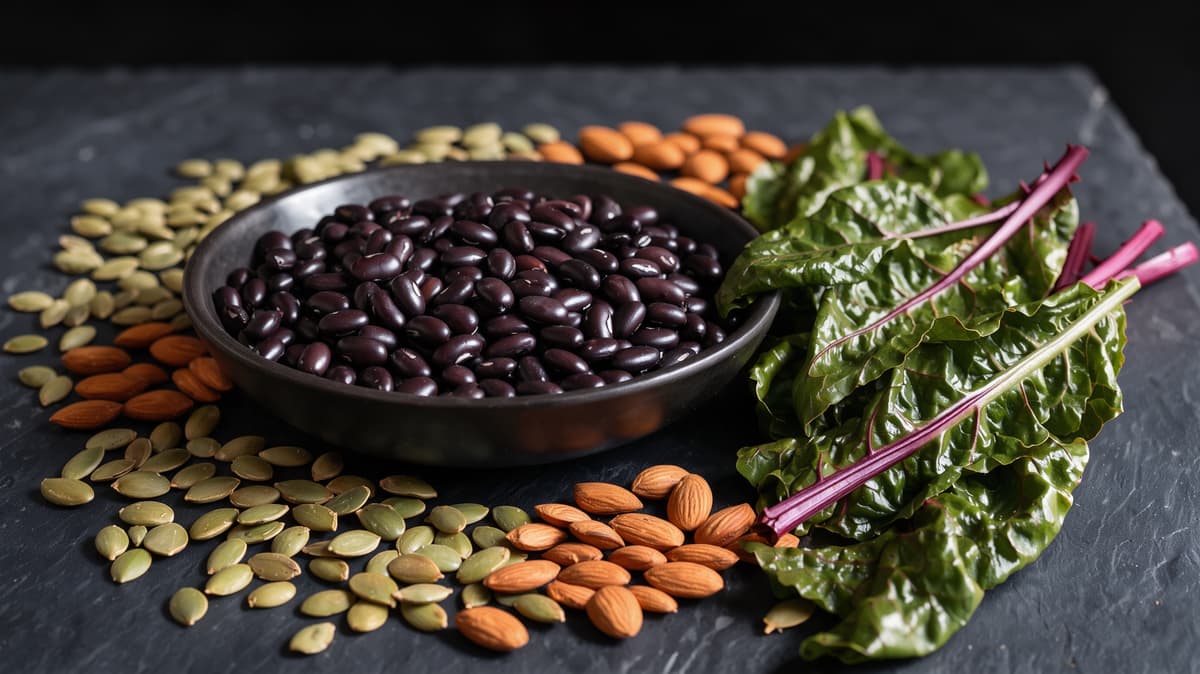
Magnesium deficiency refers to an inadequate magnesium state, while hypomagnesemia means that measured magnesium in the blood is below the laboratory’s reference range. A serum result provides only a partial view of magnesium status, so assessment may consider other information as well.

Zinc for women: what it does and what we know
Zinc is an essential micronutrient involved in various physiological processes in the human body, but this does not show that taking a supplement produces a specific effect in women. The sources reviewed do not support a general recommendation to take zinc supplements or a specific purpose for a particular dose.
Vitamin E in food: intake and research
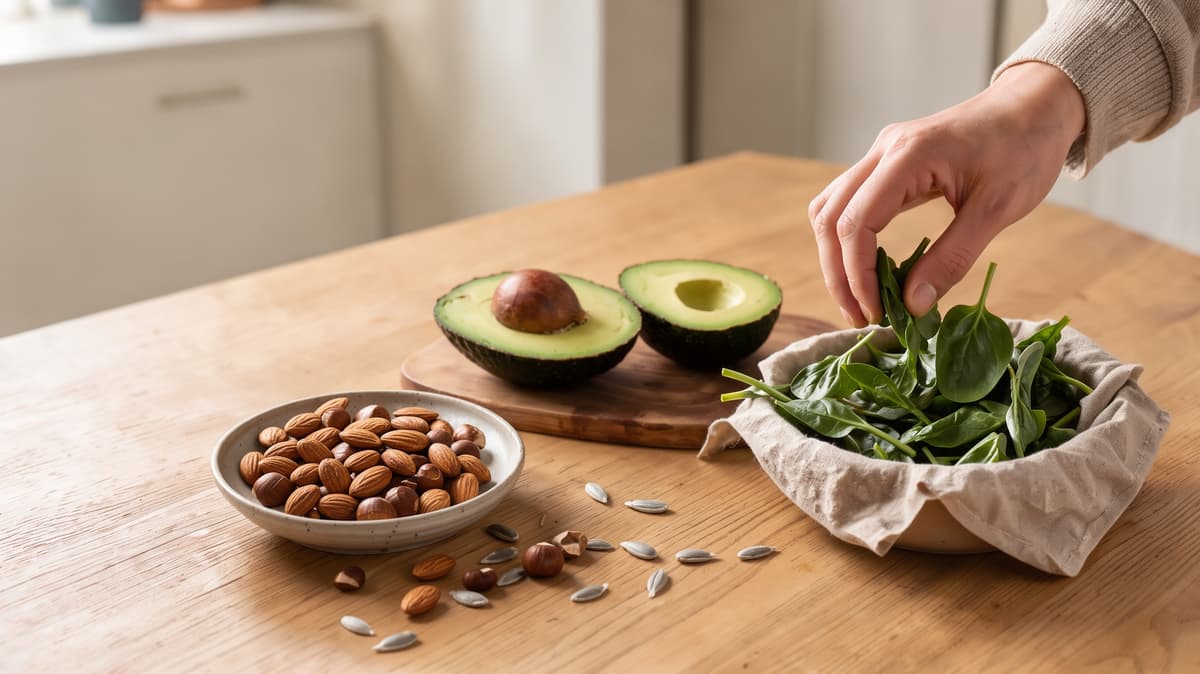
An international overview concludes that a balanced, plant-based diet without supplements appears sufficient for adequate vitamin E intake. A Cuban study estimated the average intake among the adults studied at 6.8 mg α-tocopherol equivalents per day; this group average is not an individual measurement.

Foods with magnesium: sources and how to compare them
The available sources do not include composition data to identify which foods contain magnesium or how much each provides. They therefore do not support a reliable list, comparisons between foods or a “top 10.”

Sodium Bicarbonate: Research, Forms and Safety
Sodium bicarbonate, also called baking soda, is the compound NaHCO₃. Sports research has studied it in exercise settings, but the findings vary by outcome and do not establish a universal result.

Vitamin C for the Face: How to Choose It
Vitamin C for the face is primarily a topical antioxidant to incorporate regularly into a routine. It may support radiance and the skin’s defence against oxidative stress, but it does not replace suitable sunscreen or targeted care.

Zinc: sources, forms and supplement choice
Zinc is found in animal foods (meat, seafood and dairy) and plant foods (nuts, seeds, legumes, whole grains and leafy vegetables). The supplement forms most often encountered are peptide-chelated forms (ZCP) and zinc-l-carnosine chelate.

Is 400 mg magnesium too much?
The supplied reviews do not determine whether 400 mg of magnesium is too much or safe for everyone. They examine magnesium in specific contexts and give no general dose limit for assessing 400 mg.

Calcium: role, evidence on supplementation and
Calcium is discussed here through reviews on dietary intake and supplementation in adults. Evidence on supplementation reports small changes in bone mineral density and differing associations across fracture categories, with certainty varying by outcome.

Zinc Supplement: Label and Informed Use
The cited sources do not establish a general recommendation about who should take a zinc supplement or a dose or duration that is valid for everyone. The studies examine specific groups and protocols, and their results are limited to the measures assessed in each study.

Folate: Forms, Metabolism and Limits of the Evidence
Folate is identified as vitamin B9, and the sources link it to DNA synthesis, cell division and processes in one-carbon metabolism. The cited research compares folic acid and 5-MTHF on certain measures, but the available results do not establish that either form is generally superior.

Niacin – side effects: what do the sources say?
The available review generally indicates that excess vitamins may be associated with harmful effects, but its description does not list specific niacin side effects or dose thresholds. The nicotinamide analysis concerned vitamin B3 concentrations in breast milk, not the assessment of adverse effects.

Vitamin C in food: where is it found?
The available studies examine associations between vitamin C intake and specific outcomes, but do not provide an overview of foods rich in vitamin C or recommended daily amounts. Their results describe associations within the groups studied and do not establish cause and effect.

Vitamin C cancioneiro: What does the expression mean?
The available sources do not define “vitamin C cancioneiro” or link the expression to a song or repertoire. The meaning of “cancioneiro” in this context therefore remains uncertain.

Folic Acid Deficiency: Symptoms and Diagnosis
The available clinical description lists the manifestations of folate deficiency as a topic it discusses, but does not provide a detailed list of symptoms or their frequency (clinical review description). A review on the oral mucosa discusses various deficiencies and changes, but does not allow these to be specifically attributed to folate deficiency (review description).

Vitamin C table: fruit and vegetables at a glance
A vitamin C table can compare the amounts in individual foods meaningfully only if specific values and a consistent reference quantity are available. The available sources do not give comparable values for individual fruits or vegetables, so a ranking cannot be drawn from them.

Folate vs folic acid: what is the difference?
Folate is the umbrella name for several vitamin B9 forms, including the forms found naturally in foods and those added to foods or supplements. Folic acid is one specific synthetic form, while methylfolate and folinic acid are other distinct forms within the folate family.