Folate: Forms, Metabolism and Limits of the Evidence
Short answer
Folate is identified as vitamin B9, and the sources link it to DNA synthesis, cell division and processes in one-carbon metabolism. The cited research compares folic acid and 5-MTHF on certain measures, but the available results do not establish that either form is generally superior.
Quick facts
- Folate is identified as vitamin B9.
- A review links it to DNA synthesis and cell division.
- Comparisons of folic acid and 5-MTHF address specific measures.
- The comparative evidence is limited and does not establish that either form is generally superior.

Folate: definition and forms of vitamin B9
Folate is identified as vitamin B9 and described as a water-soluble vitamin. A review of food fortification links it to DNA synthesis, cell division, and growth and development, with particular relevance during pregnancy. The review published in Nutrients therefore provides an overview of the vitamin, but the available abstract does not detail the individual biochemical reactions in which it is involved.
The same review distinguishes folate from folic acid and discusses supplementation and food fortification separately. The review of folic acid fortification However, the information provided does not specify which chemical forms the term “folate” covers or describe the structure or properties of folic acid in detail. The distinction made by the source can therefore be reported, but it cannot be used to derive a complete classification of the forms of vitamin B9.
A second review compares folic acid with (6S)-5-MTHF, assessing certain outcomes across intervention studies. The systematic review of unmetabolized folic acid 5-MTHF is thus one of the forms considered in that comparison; however, the abstract does not provide a general chemical description of this form or an exhaustive list of folate forms. It would not be appropriate to use these data to attribute unreported characteristics to the forms or present the comparison as a complete overview of vitamin B9.
The 2026 systematic review included 65 publications covering 61 primary studies and examined, among other topics, the replacement of folic acid with (6S)-5-MTHF. For red blood cell folate, the results of the two available studies conflicted and were insufficient to establish equivalence or non-inferiority. No pooled estimate could be calculated for total homocysteine; the review reports that no difference between the forms was detected. These findings concern the outcomes and studies included in the review; they do not establish that either form is generally superior.
In summary, the sources distinguish folate from folic acid and mention 5-MTHF in the context of a specific comparison. The review of vitamin B9 The review comparing folic acid and 5-MTHF The available information is insufficient to describe all forms of folate or establish that one is generally preferable. The comparative findings should be read in light of the limited number of studies and the low certainty or inconsistency reported for some outcomes.
Biochemical role of folate
The sources describe folate, or vitamin B9, as central to one-carbon metabolism.
Nucleotide and DNA synthesis
Nucleotides are units involved in forming nucleic acids. The review of interactions between folate and the gut microbiome identifies nucleotide biosynthesis as one of the processes supported by one-carbon metabolism, in which folate plays a central role.[S3] Another review summarizes folate’s role in DNA synthesis and cell division.[S6] The sources present these as general biochemical roles; they do not establish that a specific form or amount of folate produces a particular result in an individual.
Methylation and epigenetic regulation
Folate is also linked to methylation homeostasis and epigenetic processes.[S3] Methylation is a biochemical process the sources discuss as part of one-carbon metabolism; the review also mentions its relevance to epigenetic processes, but this does not allow a specific health outcome to be inferred from taking a supplement.[S3] A review synthesizing research on neuropsychiatric disorders describes cellular methylation capacity as important for neuronal gene expression and neurotransmitter synthesis, but notes that epidemiological evidence on associations between folate and these disorders is inconclusive.[S5]
A biochemical picture, not a clinical prediction
One-carbon metabolism encompasses processes associated with several cellular functions: nucleotide synthesis, methylation and epigenetic processes.[S3] The review of the gut microbiome also describes a two-way interaction: some gut microorganisms produce folate, while others consume it; only a minority of gut bacteria have complete pathways for folate biosynthesis.[S3] The same review specifies that the evidence base is predominantly associative and observational and is insufficient to establish causal relationships between microbial folate metabolism and the outcomes described.[S3]
It is therefore important to distinguish descriptions of biochemical processes from clinical conclusions. Folate’s involvement in fundamental cellular pathways does not, on its own, show that a supplement provides a specific benefit or establish which form or dose is suitable for an individual. The cited sources describe functions and areas of research, but do not provide a basis for turning those functions into promises of individual effects.
Forms of folate considered in research
Folate research does not always concern the same form: the sources distinguish folate from folic acid and, in the experimental comparison considered here, compare folic acid with (6S)-5-MTHF. These terms describe the forms discussed in the studies; on their own, they do not indicate which is preferable for an individual. A 2026 review explicitly addresses the distinction between folate and folic acid, as well as that between supplementation and food fortification, while the 2026 systematic review assesses the comparison between folic acid and (6S)-5-MTHF.
Folic acid and (6S)-5-MTHF in the study comparison
The systematic review collected 65 publications covering 61 primary studies and examined 71 analytical contributions. Part of the analysis assessed equimolar replacement of folic acid with (6S)-5-MTHF, considering three outcomes: unmetabolized folic acid in plasma, red blood cell folate and total homocysteine. The comparison therefore concerns results measured in the included studies, not a general assessment of which form is better. The systematic review
The certainty of the evidence was rated low. This is therefore a finding limited to this measure and a few contributions, not a conclusion that either form is superior overall. The systematic review
For red blood cell folate, the two available studies produced conflicting results: one reported a standardized effect of +0.40 (95% confidence interval: +0.08–+0.73), the other −0.38 (−0.92–+0.16). Heterogeneity was high (I² = 83%), and the results were not combined into a pooled estimate. The authors note that these data are insufficient to establish equivalence or non-inferiority of (6S)-5-MTHF compared with folic acid for this outcome. No pooled estimate could be calculated for total homocysteine; the review reports that no difference between the forms was detected. The systematic review
What can be concluded
The evidence presented compares specific forms and individual outcomes, with a limited number of studies for each comparison. The finding for unmetabolized folic acid in plasma does not demonstrate general superiority; the red blood cell findings remain conflicting, and no pooled estimate is available for total homocysteine. The review therefore cannot establish that the forms are equivalent or that one is generally preferable. The systematic review
The distinction between folate and folic acid is also addressed in a 2026 narrative review, which considers supplementation and food fortification separately. The narrative review
What the comparison between folic acid and 5-MTHF shows
The comparison between folic acid and 5-MTHF was examined in a 2026 systematic review. The review considered studies assessing what happened when folic acid was replaced with 5-MTHF, including measurements of unmetabolized folic acid in plasma (UMFA), red blood cell folate and total homocysteine. The authors synthesized quantitative results in a meta-analysis when the data allowed and assessed their certainty using the GRADE system. The systematic review notes, however, that evidence for these comparisons comes from few studies.
Unmetabolized folic acid in plasma
For plasma UMFA, the meta-analysis combined three contributions. Replacement with 5-MTHF was associated with a reduction in this measure: the reported standardized difference was +0.99, with a 95% confidence interval from +0.20 to +1.79, I² heterogeneity of 30% and low GRADE certainty. The direction of the estimate is consistent with less UMFA in the group taking 5-MTHF than in the group taking folic acid. However, the result is based on only three contributions and the certainty of the evidence is low: on its own, it is therefore insufficient to establish the general superiority of 5-MTHF. The review interprets the finding narrowly, as relating to this specific measure.
Red blood cell folate
Two studies were available for red blood cell folate, but their results pointed in different directions. One reported a standardized difference of +0.40 (95% confidence interval: +0.08–+0.73); the other reported an estimate of −0.38 (−0.92–+0.16). Heterogeneity was high (I² = 83%), and the data were not combined into a pooled estimate. According to the authors, these results establish neither equivalence nor non-inferiority of 5-MTHF compared with folic acid for red blood cell folate. The systematic review therefore emphasizes the insufficiency of the evidence, not a definitive conclusion in favor of either form.
Total homocysteine
No pooled estimate could be calculated for total homocysteine. The review reports that no difference between the forms was detected, but this finding must be read alongside the scarcity of data: it does not demonstrate that folic acid and 5-MTHF are equivalent. It indicates only that the available evidence did not reveal a difference between the groups for this measure. The authors’ synthesis reports the finding qualitatively, without a combined measure.
How to interpret the comparison
Overall, the clearest finding concerns the reduction in plasma UMFA associated with replacement by 5-MTHF, but certainty is low and the estimate is based on three contributions. For red blood cell folate, the two available studies conflict; for total homocysteine, no pooled estimate was obtained and no difference between the forms was detected. These outcomes describe specific measures and do not support a conclusion that either form is superior overall. The systematic review therefore calls for the available evidence base for this comparison to be regarded as limited.
Limits of the available evidence
The systematic review of unmetabolized folic acid (UMFA) included 65 publications covering 61 primary studies, with 71 analytical contributions in total. The authors distinguished between mechanistic, observational and intervention studies, summarizing the observational and mechanistic evidence narratively and using a meta-analysis for some comparisons between forms of folate. The review
For the observational associations between UMFA and the outcomes examined, the findings were inconsistent, potentially confounded by overall folate levels, and had not been replicated. Consequently, these data do not show a consistent association between UMFA and the outcomes. The review also emphasizes that it remains unresolved whether UMFA, distinct from total folate, has biological consequences. The systematic review
The comparison between folic acid and 5-MTHF also rests on few studies for the outcomes considered. Two studies were available for red blood cell folate: their findings pointed in different directions and were not combined into a pooled estimate. The authors conclude that the data are insufficient to establish equivalence or non-inferiority between the forms for this measure. The review
For total homocysteine, the review did not produce a pooled estimate and reports that no difference between the forms was detected. The limited number of studies and uncertainty of the findings therefore restrict the conclusions that can be drawn: the reported data do not establish the general superiority of either form. The systematic review
- The observational associations between UMFA and outcomes were inconsistent, potentially confounded by total folate and had not been replicated. Source
- Two studies on red blood cell folate were available, with conflicting findings; no pooled estimate was calculated for total homocysteine. Source
- The finding on unmetabolized folic acid in plasma comes from three analytical contributions and was assessed as low-certainty evidence. Source
Fortification and UMFA: what the review reports
The 2026 systematic review examines unmetabolized folic acid, abbreviated UMFA, and distinguishes this measure from total folate. Among the topics covered is the presence of UMFA in blood in the context of mandatory folic acid fortification of foods. The authors report that folic acid is reduced slowly by dihydrofolate reductase (DHFR) in the liver and cite this slow process as an explanation for the presence of an unmetabolized fraction in circulation. This is the explanation reported in the review, not an independent causal conclusion about fortification or its effects. The systematic review of UMFA
The central question, the authors emphasize, remains open: it is unclear whether UMFA, considered separately from high levels of total folate, has biological consequences. Therefore, on the basis of this review, the presence of UMFA in blood should not be presented as proof of an effect or a risk. This distinction also matters when reading the studies: measuring UMFA is not the same as measuring total folate, and an observed association does not show that a measure caused an outcome. The systematic review of UMFA
To assess the evidence, the review included 65 publications covering 61 primary studies, organized into 71 analytical contributions. The authors summarized the mechanistic, observational and intervention studies separately. Overall, the observational associations between UMFA and the outcomes examined were inconsistent, potentially influenced by overall folate levels, and had not been replicated. This evidence does not allow specific biological consequences to be attributed to UMFA or a causal conclusion to be drawn from its presence in blood. The systematic review of UMFA
The review also reports an experimental comparison between folic acid and 5-MTHF: across three analytical contributions, replacing folic acid with 5-MTHF was associated with a reduction in plasma UMFA, with the certainty of the evidence assessed as low. This finding concerns the comparison between the forms and the measure assessed; it does not resolve the question of whether UMFA has biological consequences and does not, on its own, demonstrate the general superiority of either form. The authors therefore consider it still unresolved whether UMFA, distinct from high total folate, has biological effects. The systematic review of UMFA
How to interpret product and usage information
Product information and findings from studies answer different questions. A label describes what is stated for a specific product; research, by contrast, may compare particular forms of folate under defined conditions and using defined measures.
The available review compares folic acid with 5-MTHF in studies that assessed several measures: unmetabolized folic acid in plasma, folate in red blood cells and total homocysteine. The two studies on folate in red blood cells produced conflicting findings and were not combined. A pooled estimate could not be calculated for total homocysteine. These findings describe the comparison in the studies considered; they do not establish that one form is generally preferable or provide instructions for using a product.[S1]
Consequently, the reported comparisons cannot be used to determine a dose to take, a duration of use, a criterion for choosing a product or personalized guidance. The review is not a guide to using individual supplements: its findings concern specific measured outcomes and a limited number of studies.[S1]
What to look for in a product listing
When describing a product, it is useful to stick to the information actually provided in its listing or on its label, without turning it into a recommendation. The following can be distinguished:
- The stated form: give the name used by the manufacturer, without assuming from the review’s comparisons alone that it is preferable.
- The stated quantity: reproduce the value and unit exactly as shown, if available. Label information describes the product; it is not, in itself, a recommended dose.
- Other available details: keep descriptive product information separate from the conclusions of the studies.
Without information about a specific product, its form, quantity or other details cannot be stated. Likewise, the comparison between folic acid and 5-MTHF reported in the review does not establish which product is suitable for an individual: it only shows the findings for the measures examined, subject to the limitations noted by the authors.[S1]
The most cautious approach is therefore to keep three things separate: what a product states, what the studies measured and what the evidence allows us to conclude. For the comparisons described, the conclusions remain limited to the outcomes and studies included; they do not provide practical guidance on quantity, duration or individual choice.[S1]
Frequently asked questions
What is folate?
Folate is identified as vitamin B9. The cited review describes it as a water-soluble vitamin.
Which biochemical roles are described in the article?
The sources link folate to nucleotide biosynthesis, methylation homeostasis and epigenetic regulation; one review also reports its role in DNA synthesis and cell division.
What does the review comparing folic acid and 5-MTHF assess?
The review considers certain measures, including unmetabolized folic acid in plasma, red blood cell folate and total homocysteine.
Does the comparison show that one form is generally superior?
No. The results concern specific measures and few studies; the review does not establish general superiority.
What does the review report about unmetabolized folic acid in plasma?
Three contributions indicated a reduction associated with replacing folic acid with 5-MTHF. The certainty of the evidence was rated low.
What do the studies indicate about red blood cell folate?
The two available studies reported conflicting results and were not combined into a pooled estimate.
Sources
- Unmetabolized Folic Acid: Biology, Epidemiology, and Clinical Consequences: A Systematic Review. (external link)
- A Systematic Review of Folate and the Human Enteric Microbiome: Biological Mechanisms and Clinical Implications. (external link)
- Folate and global health: part 5. syntheses on neuropsychiatric disorders. (external link)
- Reassessing Mandatory Folic Acid Fortification for Neural Tube Defect Prevention: Evidence, Uncertainty, and Policy Implications. (external link)
Read more
Products related to this article

Life Extension
Life Extension - High Potency Optimized Folate - 30 Tabs
€18.00In stockWhy is this shown?
Katalogkoppling till samtliga valda ingredienser · Ämnesnamnet förekommer i produktnamnet · I lager · Betyg 5.0 av 16 kunder
Life Extension
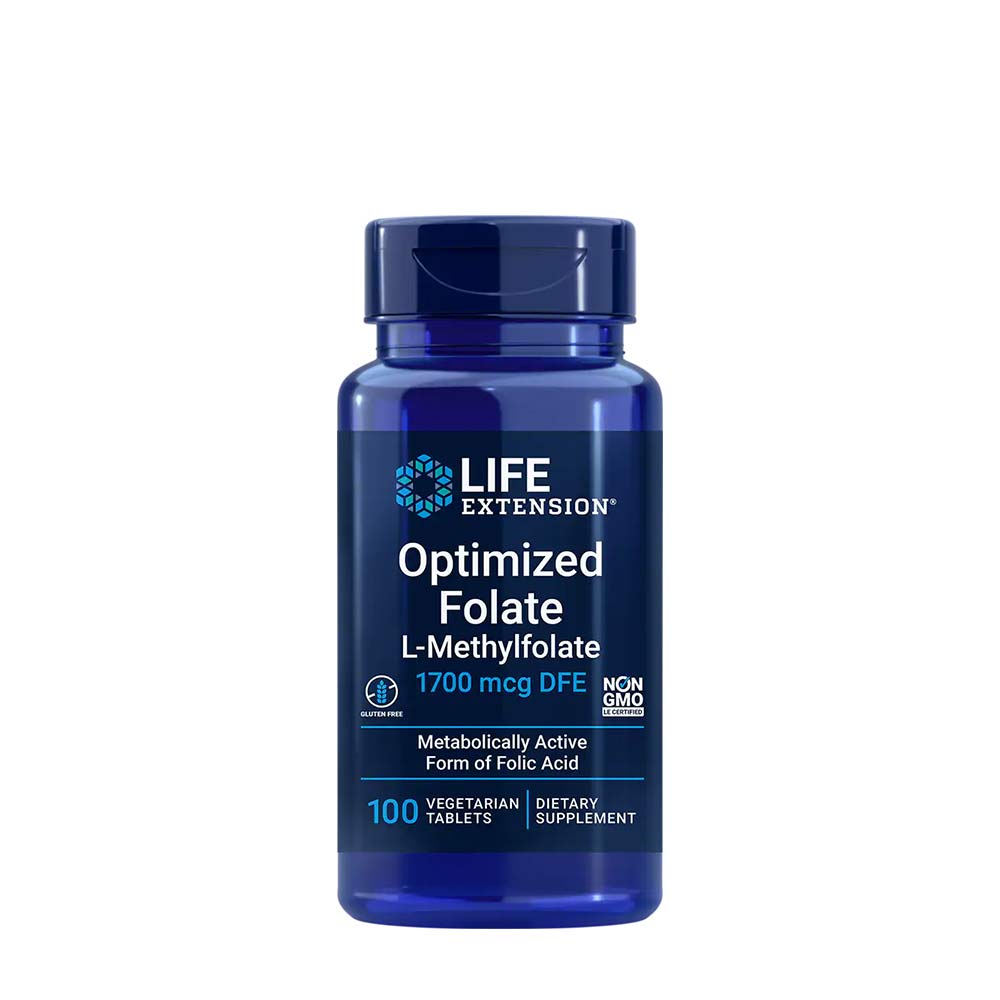
Life Extension - Optimized Folate, 1700mcg - 100 Vtabs
€18.00In stockWhy is this shown?
Katalogkoppling till samtliga valda ingredienser · Ämnesnamnet förekommer i produktnamnet · I lager · Betyg 5.0 av 17 kunder

Life Extension
Life Extension - Bioactive Folate & Vitamin B12 - 90 Vcaps
€17.00In stockWhy is this shown?
Katalogkoppling till samtliga valda ingredienser · Ämnesnamnet förekommer i produktnamnet · I lager · Betyg 4.8 av 14 kunder
Doctor Life
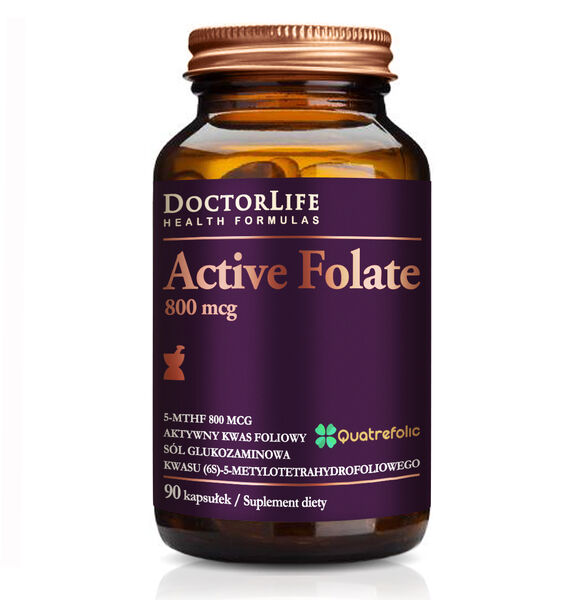
Doctor Life - Active Folate - 90 Caps
€20.00In stockWhy is this shown?
Katalogkoppling till samtliga valda ingredienser · Ämnesnamnet förekommer i produktnamnet · I lager

UNIPHAR
Uniphar - Asparaginian Cardio Duo - 50 Tabs
€9.00In stockWhy is this shown?
Katalogkoppling till samtliga valda ingredienser · I lager


