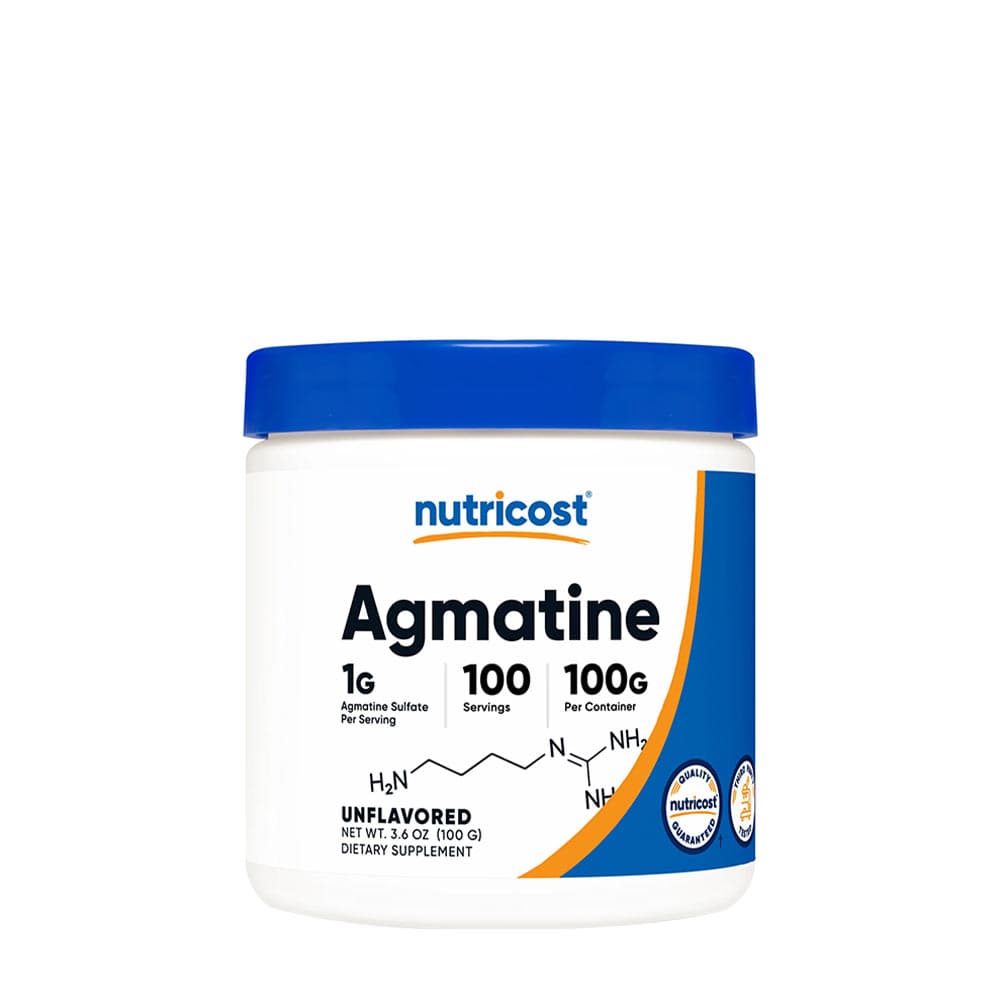
Agmatine sulfate
Agmatine is formed when the amino acid arginine loses its carboxyl group. It is described in the literature as a neuromodulator and is most often sold as a sulfate salt in the fitness segment. Isolated agmatine is not approved as a novel food in the EU.
What agmatine is
Agmatine is formed when the enzyme arginindecarboxylase removes a carboxyl group from the amino acid arginine. The compound was identified as early as 1910 by Albrecht Kossel. It occurs in the body, in certain fermented foods, and in bacteria. As a supplement, it is almost always sold as agmatine sulfate, because the sulfate salt is more stable and easier to handle than the free base.
What it does in the literature
Agmatine has been described as a neuromodulator with interactions with several receptor systems, including imidazoline receptors and NMDA receptors, and has been studied in relation to nitric oxide synthase. Most of this literature is preclinical — cell systems and animal models. Human studies are few and small.
Marketing and research point in different directions
In the fitness segment, agmatine is most often marketed with arguments about blood flow, which is based on the connection to the nitric oxide system. The focus of the preclinical literature is not there but on neurological systems. It is worth knowing this when reading product texts.
Regulation
Agmatine sulfate is not approved as a novel food in the EU, which means it cannot legally be sold as a dietary supplement within the union. There are no approved health claims.