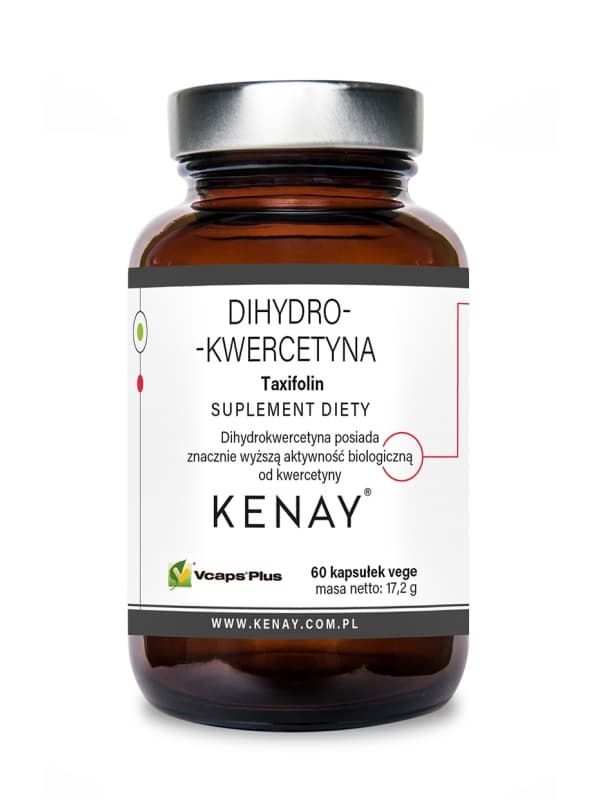
Taxifolin
Taxifolin, also called dihydrokvercetin, is a flavanonol extracted from larch wood and also found in onions, grapes, and citrus fruits. The similarity in names with dihydromyricetin is a common source of confusion — they are two distinct molecules.
What taxifolin is
Taxifolin is a flavonoid from the flavanonol subgroup. The commercial raw material is most often extracted from the heartwood of Siberian larch (Larix sibirica) or Daurian larch, where the concentration is unusually high. The compound is also naturally found in onions, grape skins, citrus fruits, and milk thistle, but in levels that make industrial extraction unfeasible.
The confusion worth clarifying
Taxifolin is also called dihydrokvercetin, and that name is uncomfortably close to dihydromyricetin — which is a completely different molecule, extracted from vine leaves and Japanese raisin tree. The two are often confused, both in marketing and in ingredient databases. Structurally, they differ in the number of hydroxyl groups in the B-ring: taxifolin has two, dihydromyricetin has three.
The research status
Taxifolin has been studied primarily for its chemical properties as an antioxidant in laboratory settings, where the molecule is well characterised. Research on cell cultures and animals has examined several different biological systems. Clinical studies on humans are significantly fewer and less extensive than the preclinical literature, which is a common pattern for plant flavonoids.
Regulation
Taxifolin-rich extract from larch wood has undergone novel food assessment in the EU and may be used within the conditions specified in the approval, including purity and maximum quantity. There is no EU-approved health claim for taxifolin, which means that no product is legally allowed to attribute a health effect to the substance.