What is potassium phosphate?
Short answer
Potassium phosphate is a family name for three separate salts: monobasic, dibasic and tribasic. The exact salt name, hydrate state and CAS number matter because labels and specifications identify the specific compound, not just a general phosphate.
Quick facts
- It is a family of three salts, not one single ingredient.
- The named forms are monobasic, dibasic and tribasic.
- Tribasic potassium phosphate is tripotassium phosphate, K3PO4.
- The tribasic CAS number is 7778-53-2.
- Monobasic and dibasic each have separate CAS numbers.
- FDA food records list the salts separately, and tribasic has technical uses such as pH control.

What exactly is potassium phosphate and which names mean what?
A family of three named salts
In the FDA food-substance listings, potassium phosphate is not one single ingredient. The retrieved entries identify three separate salts: potassium phosphate, monobasic, potassium phosphate, dibasic and potassium phosphate, tribasic. The tribasic FDA entry also lists the name phosphoric acid, tripotassium salt and the formula K3PO4, showing that the label needs to be read as a specific salt, not as a generic mineral shorthand.
| Form | Common chemical name | Formula | CAS number |
|---|---|---|---|
| Tribasic | Tripotassium phosphate | K3PO4 | 7778-53-2 |
Why the exact name matters
The FDA and SCOGS records use salt-specific entries, and the CAS registry numbers are different for each form. The tribasic entry is 7778-53-2; the SCOGS list separately shows potassium phosphate monobasic as 7778-77-0 and potassium phosphate dibasic as 7758-11-4. That is why a supplier page, label or certificate of analysis should be checked line by line: the family name alone does not identify the exact substance.
When a product says “potassium phosphate,” the salt name and CAS number are the safest way to tell which compound is actually present.
What to do with looser labels
If a product uses a broader or older-sounding name, do not assume it matches one of the three FDA-listed salts. In practice, the safer reading is the exact wording printed on the package or specification sheet, matched against the registry name and CAS number. That is especially useful when the label includes a hydrate description or a blended ingredient statement, because the registry entry is tied to the precise salt form rather than to a general phosphate family name.
For shoppers and formulators alike, the key point is simple: potassium phosphate is a family label, while monobasic, dibasic and tribasic are the specific ingredients named in the FDA records cited here.
Why do monobasic and dibasic forms behave differently?
The same family, but not the same working mix
The FDA label for Potassium Phosphates Injection describes the product as a concentrated solution containing a mixture of monobasic potassium phosphate and dibasic potassium phosphate in water for injection. FDA potassium phosphates injection label

That is also how the FDA’s food records treat the salts: potassium phosphate monobasic, potassium phosphate dibasic, and potassium phosphate tribasic appear as separate GRAS substance entries in SCOGS. The tribasic entry in EAFUS identifies the substance as potassium phosphate (K3PO4) and lists technical uses such as emulsifier or emulsifier salt, pH control agent, and stabilizer or thickener. FDA SCOGS listing FDA EAFUS entry for potassium phosphate, tribasic
What the form name tells you
| Form | How FDA records it | What matters in solution |
|---|---|---|
| Monobasic | Separate SCOGS substance entry | One defined phosphate salt in the mixture |
| Dibasic | Separate SCOGS substance entry | The other defined phosphate salt in the mixture |
| Tribasic | SCOGS entry and EAFUS entry as K3PO4 | Distinct registered form with pH-control use |
FDA’s GSRS record for potassium phosphate, dibasic, trihydrate shows that the hydrated form is tracked separately from the anhydrous dibasic salt. That is the practical point for readers comparing labels: the form name and hydration state tell you exactly which registered material is being weighed out. FDA GSRS entry for potassium phosphate, dibasic, trihydrate
What can be said about pH and pKa
The retrieved FDA sources do not give a numeric pKa for the phosphate pair. FDA potassium phosphates injection label
The same label also shows that the prepared solution is handled by measured amounts of potassium and phosphorus, with stability after dilution limited to 4 hours at room temperature or 14 days under refrigeration. That is why the exact form, concentration, and storage conditions matter when phosphate salts are made up into a solution. FDA potassium phosphates injection label
What do official claims and studies say about potassium?
What the approved wording actually allows
For the formal EFSA opinion behind the intake value, see EFSA’s dietary reference values for potassium.
How the intake numbers compare
| Authority | Population | Value | What the source is doing |
|---|---|---|---|
| EFSA | Adults | 3,500 mg/day (about 90 mmol/day) | Adequate Intake; lactating women: 4,000 mg/day |
| Nordic Nutrition Recommendations 2023 | Adults | 3,500 mg/day | Regional adult reference value; provisional AR: 2,800 mg/day; lactating women: 3,500 mg/day |
| NIH ODS / NHANES 2013–2014 | Adults aged 20 and over | 3,016 mg/day for men; 2,320 mg/day for women | Observed average intake from foods in the U.S. |
These figures differ because they answer different questions. EFSA and the Nordic recommendations set intake reference values, while the NIH ODS fact sheet reports observed intake from a U.S. survey and notes that no tolerable upper intake level has been established for potassium from food. See NIH ODS potassium health professional fact sheet and Nordic Nutrition Recommendations 2023: potassium.
What the studies point toward
EFSA based its adult Adequate Intake on randomized controlled trials and observational studies showing beneficial effects on blood pressure and reduced stroke risk. The Nordic assessment says higher potassium intake is linked to beneficial blood-pressure effects and reduced stroke risk as well, while also noting that evidence is not strong enough to set a tolerable upper level.
The public-health gap is visible in the U.S. intake data: average daily potassium intake from foods in adults aged 20 and over was 3,016 mg/day for men and 2,320 mg/day for women.
Which foods provide potassium in real-life portions?
The NIH Office of Dietary Supplements summarizes the National Academies’ adequate intakes for potassium as 3,400 mg/day for adult men aged 19 to 50, 2,600 mg/day for adult women, 2,900 mg/day during pregnancy and 2,800 mg/day during lactation. In NHANES 2013–2014, average potassium intake from food was 3,016 mg/day for men and 2,320 mg/day for women, so many people are still below the target range from food alone. NIH ODS potassium fact sheet

Compare foods, not slogans
ODS Table 2 shows that potassium is spread across ordinary foods rather than one single category. It also gives a useful low-end comparison: eggs are listed at about 69 mg per typical serving and white rice at about 54 mg per typical serving. NIH ODS potassium fact sheet
| Food example | What the ODS materials show | Why it helps |
|---|---|---|
| Potatoes, beans, lentils, bananas, dried apricots | Several of these foods are highlighted in the ODS materials as higher-potassium choices, with roughly 400–750 mg per serving in the examples summarized there | These are useful anchors when you want one meal to contribute a meaningful share of the day |
| Eggs, white rice | About 69 mg and 54 mg per serving | Helpful as a comparison point when choosing sides |
Build meals, not myths
A practical way to increase intake is to build a plate around one or two higher-potassium foods and repeat that pattern across the day, instead of chasing a single “superfood.” That can mean pairing a starch with beans or lentils, adding leafy greens or tomatoes to a meal, or using fruit and yogurt as part of breakfast. The point is not one isolated serving, but a repeatable food pattern that fits normal eating. NIH ODS potassium fact sheet
For a food-first approach, ordinary meals and isolated phosphate ingredients are not the same exposure.
The consumer fact sheet notes that potassium comes from food plus supplements and that most people’s intakes are below recommended levels, but the food table already shows how far everyday foods can go. If the goal is simply to raise potassium intake from food, the clearest starting point is usually to choose more potassium-rich foods already on the plate rather than treating potassium phosphate as a stand-alone nutrition strategy. NIH ODS potassium consumer fact sheet NIH ODS potassium fact sheet
When is potassium phosphate given intravenously?
Correcting low phosphate with a clinician-directed infusion
Potassium Phosphates Injection is labeled for intravenous use to correct hypophosphatemia in adults and pediatric patients when oral or enteral replacement is not possible, insufficient, or contraindicated, and it is also used in parenteral nutrition when enteral nutrition is not available. The FDA label describes it as a diluted infusion, not a direct IV push, and the product information says the solution contains a mixture of monobasic potassium phosphate and dibasic potassium phosphate in water for injection. FDA label for Potassium Phosphates Injection FDA notification on potassium phosphates injection
Because the injection supplies phosphate and potassium together, clinicians use it when they need a controlled intravenous source of phosphate with a potassium contribution in the same infusion. The label sets an initial or single-dose ceiling of phosphorus 45 mmol, which corresponds to potassium 66 mEq. FDA label for Potassium Phosphates Injection
How it is prepared and given
The FDA says the drug must be diluted and administered in intravenous fluids or used as an admixture in parenteral nutrition, and it must not be infused with calcium-containing intravenous fluids. For adults and pediatric patients aged 12 years and older, the label gives maximum concentrations of phosphorus 6.8 mmol per 100 mL and potassium 10 mEq per 100 mL for peripheral administration, or phosphorus 18 mmol per 100 mL and potassium 26.4 mEq per 100 mL for central administration. FDA label for Potassium Phosphates Injection
| Use | What the label says | Practical point |
|---|---|---|
| Hypophosphatemia | IV replacement when oral or enteral replacement is not possible, insufficient, or contraindicated | Dose and dilution are individualized |
| Parenteral nutrition | Added as an admixture after standard components are prepared | Not given as a direct infusion |
What clinicians monitor during infusion
The FDA warning is explicit that undiluted, bolus, or rapid IV administration has been associated with death, cardiac arrest, arrhythmia, QT prolongation, hyperkalemia, hyperphosphatemia, and seizures. The label calls for checking serum potassium before administration and monitoring serum phosphorus, potassium, calcium, and magnesium during and after infusion; it also notes that continuous electrocardiographic monitoring may be recommended at higher infusion rates. FDA label for Potassium Phosphates Injection
A randomized ICU study in critically ill patients used 30 mmol doses for moderate hypophosphatemia and 45 mmol doses for severe hypophosphatemia, with serum electrolytes and renal function followed through day 3 after infusion. PubMed study on intravenous phosphate repletion
IV potassium phosphate is a diluted, clinician-adjusted infusion with lab and sometimes ECG monitoring — not a product to treat like an oral supplement.
How do you choose the right phosphate salt or brand?
Start with the exact name on the label, not the logo. FDA food inventories list potassium phosphate monobasic, potassium phosphate dibasic, and potassium phosphate tribasic as separate entries, and the FDA’s approval review for Potassium Phosphates Injection identifies monobasic potassium phosphate, NF and dibasic potassium phosphate, USP as the active ingredients in the approved product. FDA EAFUS listing for potassium phosphate, tribasic FDA multidisciplinary review for NDA 212832
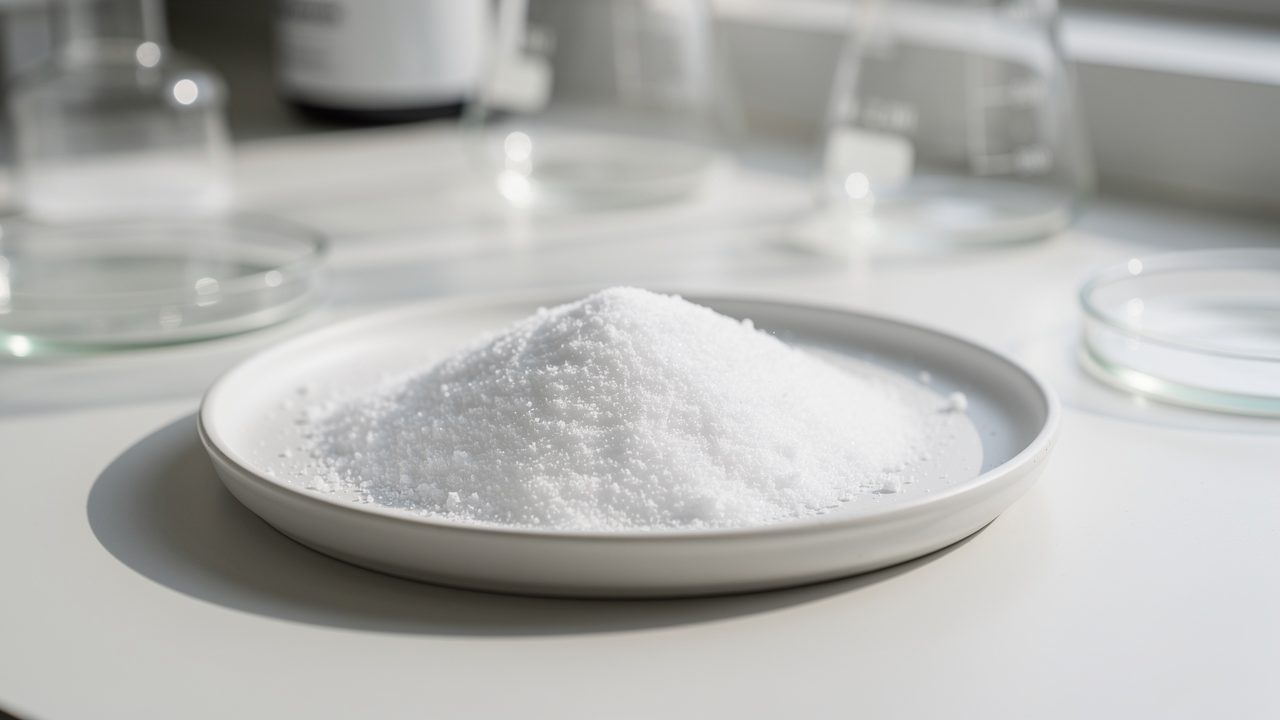
Match the form to the specification
FDA GSRS record for potassium phosphate, dibasic, trihydrate
| Form | What to check on the label | Practical buying check |
|---|---|---|
| Potassium phosphate monobasic | Exact formula, grade, assay | Use the product that matches the written brief exactly |
| Potassium phosphate dibasic | Exact formula, hydrate state, impurity limits | Confirm whether anhydrous or hydrated material is required |
| Potassium phosphate tribasic | Exact formula, intended application | Check that the technical use matches the product page |
| Potassium phosphate, dibasic, trihydrate | Hydration state, water content, batch data | Do not substitute anhydrous material if the hydrate is specified |
Supplier name is not the specification
Merck and Sigma are supplier names, not proof that two products are equivalent. The real decision points are the exact formula, hydrate state, purity or assay, food, pharma, or lab grade, impurity limits, and the certificate of analysis for the batch you are buying. The product page and the batch paperwork have to agree.
If a label says potassium sodium phosphate, treat it as a different mixed-salt choice from a pure potassium-only phosphate. For food use, FDA’s SCOGS and EAFUS listings show potassium phosphate substances as GRAS food substances under specified uses, while the approved injection product uses pharmaceutical-grade NF and USP designations. FDA SCOGS search for potassium phosphate FDA EAFUS phosphate inventory
Check the formula first, then the hydrate, then the grade and batch paperwork; the brand name comes last.
Who should avoid potassium phosphate or get monitored?
Kidney function and baseline electrolytes
The FDA label for Potassium Phosphates Injection says the product is contraindicated in hyperkalemia and hyperphosphatemia. It also warns that severe renal impairment raises the risk of life-threatening hyperkalemia, while moderate renal impairment calls for starting at the low end of the dose range and watching labs closely.
| Risk group | What the FDA label says | What that means in practice |
|---|---|---|
| Hyperkalemia or hyperphosphatemia | Contraindicated | Do not give without a revised plan |
| Cardiac disease | More susceptible to the effects of hyperkalemia | Needs closer monitoring if potassium phosphate is used |
Medicines that can raise potassium
The FDA warns that potassium phosphates may increase the risk of hyperkalemia when given with other products that raise serum potassium, and it says to avoid use in patients receiving such products if possible.
The evidence here names the interaction problem, not a full drug-by-drug list. FDA label
Phosphate-specific and pediatric risks
The phosphate side matters on its own. The FDA label warns that hyperphosphatemia can lead to hypocalcemia, and that phosphate given intravenously can lower calcium and magnesium concentrations. FDA prescribing information
One special population is explicitly named: preterm infants. The label says they are particularly at risk for aluminum toxicity because their kidneys are immature, and it adds that patients with renal impairment can accumulate aluminum during prolonged parenteral administration. FDA label FDA notification
Safety and precautions
Potassium phosphates injection must be diluted and monitored, and it must not be infused with calcium-containing intravenous fluids. The FDA label says it is contraindicated in hyperkalemia and hyperphosphatemia, and people with kidney impairment may need close monitoring of potassium, phosphorus, calcium and magnesium.
If you take medication, are pregnant, breastfeeding, or considering this for a child, ask a healthcare professional first. Preterm infants and people with renal impairment need particular caution.
Frequently asked questions
Is potassium phosphate suitable for vegans?
The body does not say whether it is suitable for vegans. It only identifies the salt forms and their official records, so vegan suitability would need to be checked on the exact product label and specification.
Can potassium phosphate be mixed with calcium-containing solutions?
No for the injectable product described here. The FDA label says it must not be infused with calcium-containing intravenous fluids.
Is potassium phosphate a legal food additive in the EU?
The body does not confirm EU legal status. It only says that FDA food inventories list potassium phosphate forms as GRAS food substances under specified uses.
Does potassium phosphate occur naturally in foods or only as an ingredient?
The body presents potassium phosphate as a named ingredient family rather than a naturally occurring food component. It does say potassium itself is found in ordinary foods, but that is not the same as potassium phosphate occurring as such.
Can potassium phosphate be used in plant fertilizer?
The body does not mention plant fertilizer use, so it does not support that application. It only covers food, specification, and intravenous contexts.
What does E340 mean on an ingredient list?
The body does not define E340. It focuses instead on the exact salt name, hydrate state and CAS number, which are the safest ways to identify the substance.
Sources
- Substances Added to Food <em>(formerly EAFUS)</em> (external link)
- SCOGS (Select Committee on GRAS Substances) (external link)
- Dietary reference values for potassium | EFSA (external link)
- Potassium - Consumer (external link)
- Potassium - Health Professional Fact Sheet (external link)
- PHOSPHATES INJECTION (external link)
- FDA notification regarding potassium phosphates injection | FDA (external link)
- Intravenous phosphate in the intensive care unit: more aggressive repletion regimens for moderate and severe hypophosphatemia. (external link)
- Infants at Risk for Aluminum Toxicity with Unapproved Potassium Phosphates Drug Product | FDA (external link)
- POTASSIUM PHOSPHATE, DIBASIC, TRIHYDRATE (external link)
- NDA/BLA Multidisciplinary Review and Evaluation NDA 212832 (external link)
- NORDIC NUTRITION RECOMMENDATIONS 2023 (external link)