Probiotic Foods: What Are They and How to Choose?
Short answer
Probiotic foods are foods that still contain live microorganisms in adequate amounts when you eat them. Not every fermented food qualifies, so the finished product, label, and storage conditions matter most.
Quick facts
- Probiotic means live microorganisms in adequate amounts.
- Fermented describes how a food was made, not whether live microbes remain.
- Yogurt labeled "contains live and active cultures" must meet specific culture conditions.
- Heat after fermentation can inactivate live cultures.
- The best choice is a food you tolerate and can eat consistently.

What counts as a probiotic food?
Probiotic means live microorganisms in an adequate amount
The NIH Office of Dietary Supplements defines probiotics as live microorganisms that confer a health benefit when given in adequate amounts. That is narrower than “fermented.” Fermented foods are made through microbial growth and metabolic activity, but the finished food may or may not still contain live microbes when eaten. NIH notes that some fermented foods, including sourdough bread and many commercially processed pickles, do not contain live microbes at the point of eating. NIH Office of Dietary Supplements
Fermented food is a method; probiotic food is a live-microbe claim
A food can be fermented and still not be a probiotic food. A food can also have probiotic organisms added without being fermented. NIH says yogurt and some fermented milks can deliver live starter cultures, while kefir, kimchi, sauerkraut, kombucha, miso and some cheeses may retain live organisms without evidence that each finished product delivers a studied strain and dose. In other words, the word “fermented” tells you how a food was made, not whether the food on the shelf still contains the right live organisms. NIH Office of Dietary Supplements
| Term | What it tells you | What it does not tell you |
|---|---|---|
| Probiotic | The product contains live microorganisms described as beneficial in adequate amounts. | That every product with the word is the same, or that any fermented food qualifies. |
| Fermented | The food was made through microbial growth and metabolic activity. | That live microbes are still present when you eat it. |
| Live and active cultures | The label is pointing to live cultures in the finished yogurt. | That the product is a general probiotic food or that it has been studied for every use. |
What to check on the package
Package language matters. In the United States, FDA guidance says yogurt that uses the optional wording contains live and active cultures must have at least 107 CFU/g at manufacture and a reasonable expectation of 106 CFU/g through its shelf life; yogurt treated after culturing to inactivate microorganisms must instead say it does not contain live and active cultures. NIH also advises looking for the organism’s genus, species and strain, the CFU amount through the use-by date rather than only at manufacture, and storage instructions. In EU labelling, the word probiotic has been treated as an implied health claim, so the word alone is not a substitute for product-specific evidence. FDA yogurt guidance NIH consumer fact sheet European Commission summary
Fermented tells you how a food was made; probiotic tells you whether live microbes in that finished food are identified and present in an amount that matters.
For shoppers, the safest reading rule is simple: do not rely on marketing words alone. Check whether the food still contains live cultures, whether the label names the organisms, and whether the product was processed after fermentation in a way that would remove the live microbes.
What does the research say about gut health?
The clearest food-specific evidence is for live yogurt or fermented milk in people who have difficulty digesting lactose. The EU-authorised claim is limited to products containing at least 10⁸ CFU/g of the specified starter organisms, Lactobacillus delbrueckii subsp. bulgaricus and Streptococcus thermophilus, and it applies to digestion of lactose in that product (EUR-Lex Regulation 432/2012). That is a narrow claim for one product type, not a blanket statement about every food sold as “probiotic.”
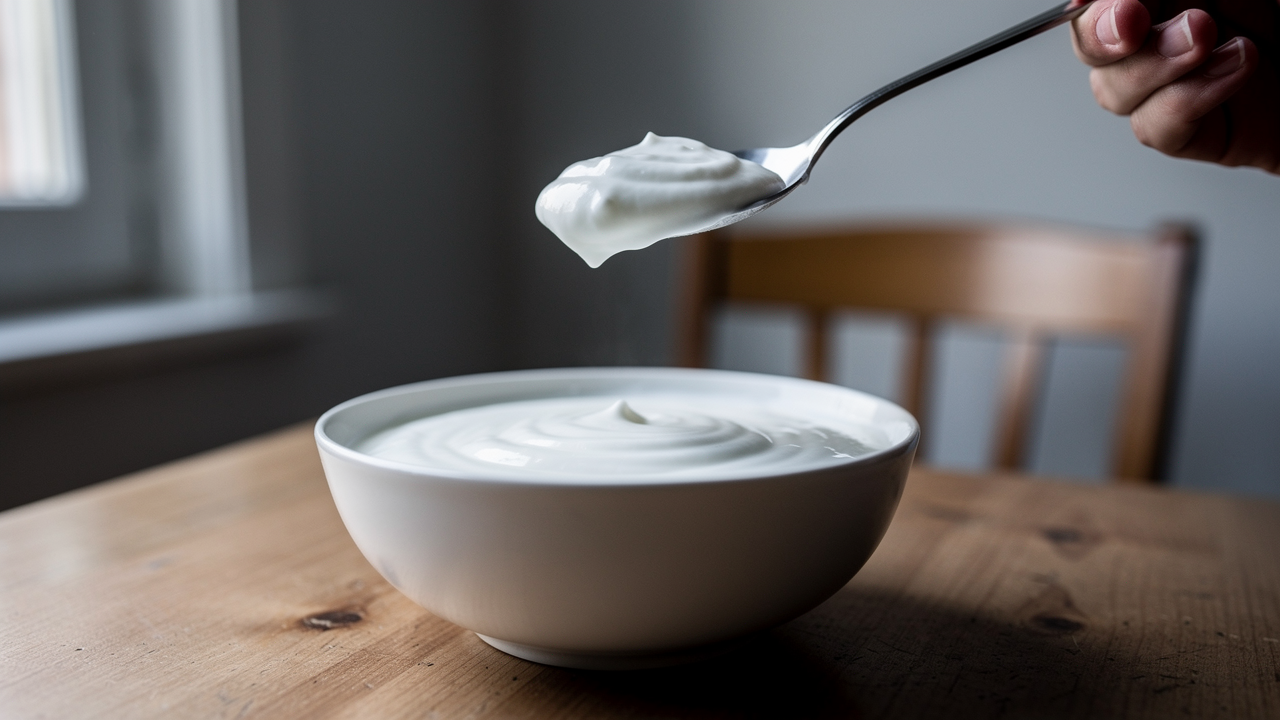
Lactose digestion is the most specific authorised use
FDA yogurt labelling rules are separate from health evidence: if a yogurt label says it contains live and active cultures, the product must meet the culture-labelling conditions at manufacture and through shelf life; if the yogurt is heat-treated after culturing, the label must say it does not contain live and active cultures (FDA yogurt guidance). So a live-culture label tells you about the presence of microbes, not whether the food has a proven digestive effect.
IBS and digestive discomfort: modest, mixed, and product-specific
A review of 16 randomized trials involving 1,264 patients with IBS found symptom relief more often overall (risk ratio 1.22, 95% CI 1.04–1.42); the fermented-milk subgroup estimate was 1.19, 95% CI 1.01–1.39, but pain and bloating scores did not improve significantly (PubMed: fermented foods in IBS). The result is real but limited: it does not identify one best supermarket product, and it does not make a broad “probiotic” label into an IBS claim.
For general digestive discomfort, a synthesis of three controlled trials in 598 adults found greater odds of improved overall discomfort with a fermented milk containing Bifidobacterium animalis subsp. lactis CNCM I-2494 plus lactic-acid bacteria than with control dairy (odds ratio 1.48, 95% CI 1.07–2.05) after at least four weeks (PubMed: fermented milk meta-analysis). Because the effect is formulation-specific, it cannot be transferred to other fermented milks.
| Area | What the evidence says | What it does not say |
|---|---|---|
| Lactose digestion | Authorised EU claim for live yogurt or fermented milk with specified starter cultures and 10⁸ CFU/g (EUR-Lex) | Not a claim for all yogurts, kefirs or fermented foods |
| IBS symptoms | Some pooled improvement, with modest and mixed results (PubMed) | Not a guarantee for pain, bloating or any single product |
| Antibiotic-associated diarrhea | ODS reports evidence for specific strains, not for generic foods (ODS) | Not proof that ordinary yogurt, kefir or pickles contain the studied strain at the studied dose |
Why the label can sound broader than the data
ODS says there is no established daily probiotic intake target or upper limit for healthy people, and that a higher CFU count alone does not establish greater benefit (ODS). The European Commission has also described “probiotic” on EU food labelling as an implied health claim (European Commission). The practical takeaway is simple: evidence-based use is narrow, product-specific, and usually modest; it should not be stretched into broad claims about immunity, weight loss or general wellbeing.
Takeaway: for gut-health questions, ask which strain, which food, which amount and which outcome were actually studied.
How do probiotic foods work in the gut?
Survival is a sequence, not a switch
Live microbes have to remain viable during manufacture and storage, then survive stomach acid and intestinal stresses such as bile, and only then pass through the small intestine. The NIH Office of Dietary Supplements describes this as a sequence rather than an on-off property. It also notes that finding an ingested organism in stool shows passage or recovery, not permanent colonisation or a health benefit.
In a systematic review of healthy adults, stool recovery and persistence were strain-dependent; at administered doses above 10^10 CFU/day, organisms could be recovered from stool in the reviewed studies. That is a detectability finding, not a recommended intake and not proof that a given food works better at that level.
| Checkpoint | What can happen | What it means for the reader |
|---|---|---|
| Manufacture and storage | Live counts can fall over time | Time since manufacture matters, so a product’s count at the use-by date is more useful than its count on day one |
| Digestion | Acid and bile can reduce survival | Only some organisms make it far enough to be recovered later |
| After processing | Heat can inactivate viable microorganisms | A yogurt treated after culturing is labeled differently from one that still contains live and active cultures |
The food matrix can change recovery
In a randomized, open-label study of 36 participants, the same 10^10-CFU/day combination was given for two weeks in capsules, yogurt or cheese. Recovery of two lactobacilli did not differ by matrix, whereas recovery of the studied propionibacterium and bifidobacterium did: yogurt yielded the highest reported end-of-intervention fecal quantities for those organisms. The measurements included microbial genome copies, so they should not be read as counts of viable colonisers.
Storage conditions matter too. In one laboratory yogurt-formulation study, L. acidophilus LA5 and Bifidobacterium BB12 remained above 10^6 CFU/g during five weeks of refrigerated storage; adding chickpea flour improved survival in simulated gastric and intestinal juices but did not significantly improve storage viability. The FDA says that if yogurt is treated after culturing to inactivate viable microorganisms, the label must say it does not contain live and active cultures, and if live cultures are claimed the product needs to meet the agency’s culture-labelling conditions at manufacture and through shelf life (FDA yogurt guidance).
What microbes are proposed to do
The main proposed actions in the evidence are straightforward: competition with other microbes, microbial enzyme activity, and production of metabolites. The NIH fact sheet says these effects vary by strain and person, which is why a live-culture food is not interchangeable with another food of the same type.
Counts, survival, and recovery answer different questions: a high CFU number does not automatically mean more microbes survive digestion.
That is the practical test for labels: live counts can tell you what was present in the product, but only storage, formulation and the exact organism tell you how likely it is to survive the trip through the gut.
Which probiotic foods are the best choices?
For a practical shopping shortlist, start with foods whose finished form can still contain live microbes. NIH draws the line clearly: fermented describes how a food was made, while probiotic refers to live microorganisms shown to confer a benefit when consumed in adequate amounts. FDA’s yogurt guidance gives one of the clearest label signals: if yogurt says “contains live and active cultures”, it must meet live-culture conditions at manufacture and through shelf life. NIH ODS probiotics fact sheet
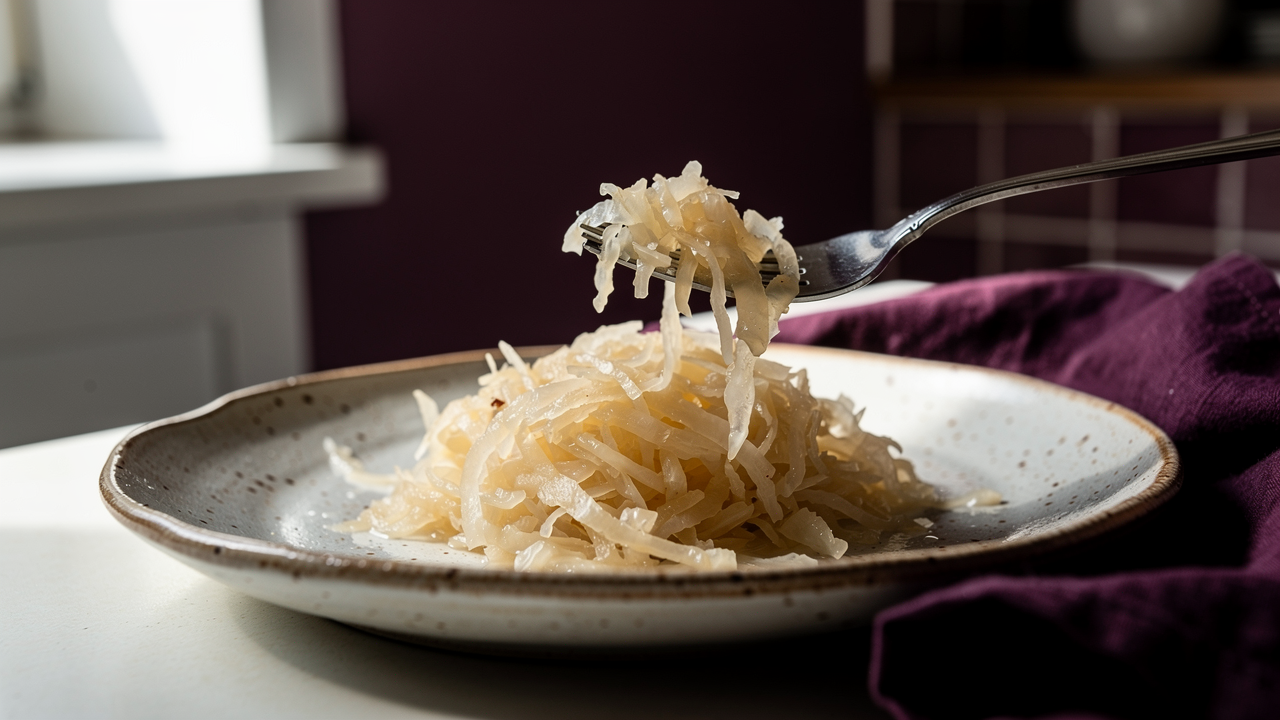
Choose the finished food, not the recipe name.
Counts vary sharply by product. One review reported roughly 105–109 CFU/g or mL in cultured dairy and 103–108 CFU/g in sampled sauerkraut, while a kefir label-accuracy study found that counts on the package often overstated what was actually measured in the bottle. review of fermented foods as a source of live organisms commercial kefir label-accuracy study
Top 20 live-culture foods, sorted by how dependable they are
| Food | Family | Status | Why it fits |
|---|---|---|---|
| Yogurt labeled “contains live and active cultures” | Cultured dairy | Reliable | FDA live-culture label condition. FDA |
| Fermented milk | Cultured dairy | Conditional | NIH says some fermented milks can contain live cultures. NIH ODS |
| Kefir | Cultured dairy drink | Conditional | Live cultures vary by formulation. NIH ODS |
| Dahi (curd) | Cultured dairy | Conditional | Measured live bacteria in specific studies. dahi study |
| Dahi-based lassi | Dairy drink | Conditional | Depends on live dahi and no post-fermentation kill step. NIH ODS |
| Buttermilk made from live dahi | Dairy drink | Conditional | Finished product matters more than tradition. NIH ODS |
| Some cheeses | Cultured dairy | Conditional | NIH says some cheeses may retain live organisms. NIH ODS |
| Kimchi | Fermented vegetables | Conditional | NIH lists it among foods that may retain live organisms. NIH ODS |
| Sauerkraut | Fermented vegetables | Conditional | Counts vary by product. study |
| Fermented cucumbers | Brined vegetables | Conditional | Only the genuinely fermented, unheated form can stay live. NIH ODS |
| Fermented olives | Brined vegetables | Conditional | Live status depends on processing and storage. NIH ODS |
| Kombucha | Fermented drink | Conditional | May retain live organisms. NIH ODS |
| Miso | Fermented soy food | Conditional | May retain live organisms. NIH ODS |
| Fermented fruit beverages | Fermented drink | Conditional | Live cultures depend on the finished beverage. NIH ODS |
| Black-carrot kanji | Fermented vegetable drink | Conditional | A study found viable lactic acid bacteria. kanji study |
| Fermented pineapple juice beverage | Fermented fruit drink | Conditional | A laboratory study found viable counts after fermentation. study |
| Idli batter | Fermented batter | Conditional | Ferments before cooking, so the batter is the live-culture step. idli study |
| Cooked idli, dosa, or dhokla | Cooked fermented foods | Usually not probiotic after processing | The usual heat step removes the live-culture goal. idli study |
| Sourdough bread | Bread | Usually not probiotic after processing | NIH says it generally does not retain live cultures when eaten. NIH ODS |
| Most commercial pickles | Pickles | Usually not probiotic after processing | NIH says many are processed after fermentation and do not retain live microbes. NIH ODS |
A simple five-food starter list
- Yogurt labeled “contains live and active cultures”
- Kefir
- Sauerkraut
- Kimchi
- Dahi, if it is sold and kept unheated
Which fruits and vegetables are truly probiotic?
Most fruit does not qualify
Fresh fruit is not automatically probiotic just because microbes can be present on it. It also says fruit is possible, but formulation matters: a laboratory study of pineapple juice fermented with specified strains reached about 109 CFU/mL after 24 hours, which shows a studied fermented beverage, not ordinary pineapple or pineapple juice. ODS probiotic foods guidance pineapple juice fermentation study
“Top 20 probiotic fruits” is mostly a misleading search term unless the fruit was intentionally fermented and still contains live cultures when you eat it.
Vegetable-first choices that can still carry live cultures
The most defensible produce-based options are fermented vegetables and other live lactic-acid ferments. ODS names fermented cabbage products such as sauerkraut and kimchi, along with fermented cucumbers and olives, as examples that may retain live organisms; it also notes that vinegar-pickled vegetables are not necessarily fermented and that pasteurization can remove viable cultures. A review of food-count studies reported roughly 103–108 CFU/g in sampled sauerkraut and 104–108 CFU/g in sampled fermented olives, while kimchi and cucumbers varied markedly by product and age. ODS probiotic foods guidance fermented foods as a dietary source of live organisms
| Produce form | Live-culture bet | How to read the label or jar |
|---|---|---|
| Fermented cabbage, kimchi-style vegetables, fermented cucumbers, olives | Can retain live organisms | Best chance when genuinely fermented and not heat-treated after fermentation |
How to avoid the most common mistake
Do not treat every “pickled” vegetable as probiotic. ODS separates fermentation from simple pickling, and it explicitly warns that heating after fermentation can leave a food without viable cultures. For that reason, the safest shopping rule is simple: choose a product that is described as fermented, not just pickled; check that it has not been pasteurised after fermentation; and remember that refrigeration alone does not prove the count at the time you eat it. ODS probiotic foods guidance
What are the best natural probiotic foods in Indian cuisine?
The useful distinction is not just fermented versus not fermented. NIH defines probiotics as live microorganisms that provide a benefit in adequate amounts, while fermented foods are made through microbial growth and metabolic activity; some fermented foods are eaten with live microbes, and others are not. FDA’s yogurt guidance uses the same logic for labels: a food can be cultured and later heated or otherwise treated so that it no longer contains live and active cultures. NIH Office of Dietary Supplements on probiotics and fermented foods FDA yogurt labeling guidance
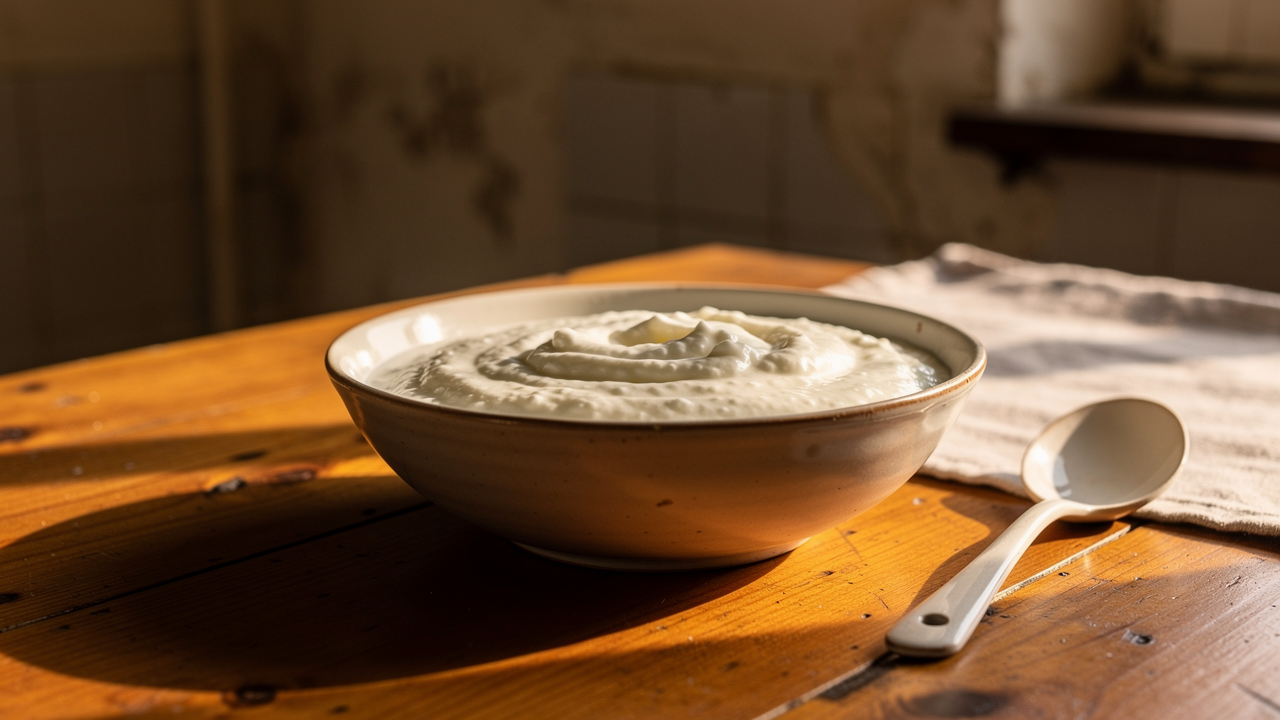
Dahi, chaas and lassi
In one studied prepared dahi, lactic acid bacteria measured about 106.45 to 106.55 CFU/g initially and about 105.53 to 105.73 CFU/g by day 21 under that study’s storage conditions. Those numbers describe that tested dahi, not every curd sold or made at home. Dahi storage study
Chaas and lassi only belong in the live-culture group if the finished drink still contains live cultures. If a cultured dairy drink is heated or pasteurised after culturing, do not assume it still has the same live-microbe status as the original food. FDA yogurt labeling guidance NIH Office of Dietary Supplements on fermented foods
| Indian food | When it can still count as a live-culture food | What can remove the microbes |
|---|---|---|
| Dahi / curd | When eaten as a cultured dairy food without a heat step after culturing | Heating or other inactivation after culturing |
| Chaas / lassi | Only if the finished drink still contains live cultures | Pasteurisation or heating after culturing |
| Kanji | When it is freshly fermented and served unheated | Long storage and any heating |
| Idli, dosa, dhokla | The batter can ferment, but the finished cooked food is a different question | Steaming, griddle cooking or other heat |
| Regional fermented pickles | Only if they are genuinely fermented and eaten without a microbe-inactivating step | Vinegar-pickling, pasteurisation or heating after fermentation |
Kanji and other unheated Indian ferments
In one black-carrot kanji study, lactic acid bacteria rose from 3.96 to a peak of 8.33 log10 CFU/mL (about 2.1 × 10⁸ CFU/mL), were 8.15 log10 CFU/mL at day 20, and declined to 5.82 log10 CFU/mL after six months. The live count changed with storage, so one batch is not interchangeable with another. Black-carrot kanji study
Cooked batters and pickles are different
Idli, dosa and dhokla batters do ferment, but the finished foods are usually steamed or griddle-cooked, so the cooked dishes should not be treated as dependable live-culture foods without measurements of the final product. In an idli-batter study, 15 hours of ambient fermentation lowered pH from 6.3 to 4.5 and doubled batter volume; that is a batter result, not proof of live cultures in cooked idli. The same logic applies to regional fermented pickles: only genuinely fermented versions eaten without a microbe-inactivating step can still contain live organisms, while vinegar-pickled, pasteurised or heated versions may not. Idli fermentation study NIH Office of Dietary Supplements on fermented foods
The simplest rule is: if the Indian food is still unheated when you eat it, it may still carry live cultures; if it is cooked, steamed, baked, pasteurised or otherwise heated after fermentation, do not assume the live cultures remain.
Dahi storage study Black-carrot kanji study
How do you choose the right probiotic food?
There is no single “best probiotic food” for gut health. The most practical choice is the one you tolerate, can buy regularly, and will actually eat consistently. NIH’s Office of Dietary Supplements says there is no recommended daily probiotic intake for healthy people, and that the effective amount depends on the strain, product and outcome rather than a universal CFU target. NIH ODS consumer guidance
Best for gut health: the food you can keep in your routine, not the one with the biggest CFU number on the label.
Match the food to your goal
| Goal | What to look for | Why this matters |
|---|---|---|
| Gut comfort | A food with live cultures that you digest well | ODS notes that benefits are strain-, product- and person-specific, so the best choice is not universal. NIH ODS health professional fact sheet |
| Regularity | A fermented food you can eat often without discomfort | Consistency matters more than chasing a one-time “stronger” product. There is no probiotic RDA or upper limit for healthy people. NIH ODS consumer guidance |
| Dairy-free eating | Fermented plant foods or drinks that still contain viable cultures | Fermented does not automatically mean probiotic, and heating or pasteurization can remove live cultures. NIH ODS health professional fact sheet |
| Lower sugar or lower salt | Plain versions with shorter ingredient lists | Flavoured products can add extras that are unrelated to the live cultures themselves. Read the finished-food label, not just the category name. |
| Convenience or budget | A chilled product you can realistically keep buying | A food that sits unopened in the fridge is less useful than a simpler option you will finish. |
What to look for on the label and in the fridge case
For yogurt, the FDA says a product that claims “live and active cultures” should have a reasonable expectation of at least 106 CFU/g through its stated shelf life, and at least 107 CFU/g when manufactured. Yogurt treated after culturing must instead say “does not contain live and active cultures.” That makes the label more useful than the front-of-pack marketing alone. FDA yogurt guidance
For fermented foods more broadly, check whether the food is still alive at the point you buy it: unpasteurised where relevant, not heat-treated after fermentation, and stored in a way that preserves viability. ODS notes that sourdough bread and many commercial pickles do not contain live microbes when eaten, while yogurt, kefir, kimchi, sauerkraut, kombucha, miso and some cheeses may retain them depending on processing. NIH ODS health professional fact sheet
What men should look for
There is no evidence-based male-only probiotic food. The selection criteria are the same for men and women: choose a product with live cultures, pick a format you tolerate, and compare the finished food rather than assuming all yogurts, kefirs or fermented vegetables are equivalent. ODS does not give men a separate probiotic intake target. NIH ODS consumer guidance
If two products look similar, the better choice is usually the one with clearer culture information, fewer processing steps after fermentation, and a taste and texture you will keep buying. That is the most defensible way to shop for probiotic foods without over-reading the label.
Who should be careful with probiotic foods?
Probiotic foods are not automatically safe for everyone, even when they are traditional or “natural.” The clearest caution in the evidence is for people who are severely ill, immunocompromised, or receiving intensive care. ODS also notes that in one retrospective ICU analysis, the ingested strain was found in blood in 6 of 522 recipients, versus 2 of 21,652 nonrecipients. That hospital finding is not the same as the risk from an ordinary grocery item, but it shows why live microbes are not automatically low-risk in vulnerable patients.
Situations where medical advice matters most
| Situation | What the evidence says | Practical step |
|---|---|---|
| Severe illness, immunosuppression, or intensive care | ODS reports rare bloodstream infections in vulnerable patients and says safety evidence is incomplete. ODS probiotics safety guidance | Ask the treating clinician before using a probiotic food on purpose. |
| Crohn’s disease or ulcerative colitis | ODS summarizes guidance that limits probiotic use for these conditions to clinical trials because evidence is insufficient. ODS immune-function guidance | Do not replace prescribed care with a fermented food. |
| Hospitalized preterm infants | FDA warns about invasive infections linked to probiotic products used in hospitalized preterm infants, including one death in 2023, and says no probiotic product is approved as a drug or biological product for infants. FDA warning on preterm infants | Use only with specialist medical direction. |
| Unpasteurized dairy | The Finnish Food Authority says raw or unpasteurized milk should be used only after heating, especially for children, pregnant people, older adults and those with weakened immunity. Finnish Food Authority guidance | Choose pasteurized products if you want live cultures with less food-safety baggage. |
Common problems that are not emergencies, but still matter
ODS says healthy people most commonly report temporary gas. ODS probiotics safety guidance
ODS says probiotics are not known to interact directly with medications, but antibiotics and antifungals may reduce the effectiveness of some probiotic organisms. That means a probiotic food should not be treated as something that works the same way for every person, or at every time, just because it is fermented. ODS immune-function guidance
When to ask before trying one
FDA warning on preterm infants ODS probiotics safety guidance
Key takeaway: a probiotic food can be familiar and traditional, yet still be the wrong choice for someone who is medically vulnerable.
For anyone who is unsure, the safest next step is to check with the treating clinician before making live-culture foods a deliberate part of the diet.
Safety and precautions
Live-culture foods are not right for everyone. If you take medication, are pregnant, are choosing foods for children, or have any medical condition, ask a healthcare professional before making probiotic foods a deliberate part of the diet.
Be extra careful with unpasteurized dairy and with foods that may have been heated, pasteurized, or otherwise processed after fermentation, because those steps can change whether live cultures remain.
Frequently asked questions
Does cooking destroy probiotic bacteria in food?
Often, yes. Heat can inactivate viable microorganisms, so cooked fermented foods are usually not dependable live-culture foods unless the finished product has been measured and labeled accordingly. In the article, the cooked versions of foods like idli, dosa, and dhokla are treated differently from the fermented batter.
How should probiotic foods be stored after opening?
Follow the storage instructions on the package, especially if the food needs refrigeration. The article also notes that live counts can fall over time, so the use-by date matters more than the count at manufacture. Once opened, it is best to keep the food in the conditions that preserve its viability.
Can probiotic foods fit a vegan diet?
Yes, some can. The article lists plant-based options such as kimchi, sauerkraut, kombucha, miso, fermented cucumbers, fermented olives, and some fermented fruit or vegetable drinks, as long as the finished food still contains live cultures. Dairy-based choices like yogurt, kefir, and dahi would not fit a vegan diet.
Can probiotic foods be eaten on a low-FODMAP diet?
The article does not give a specific low-FODMAP list. It says the best choice is a food you tolerate well and can eat consistently, so your own digestive tolerance matters most. If a food causes discomfort, it is not the right everyday choice for you.
What is the easiest starter serving for someone new to probiotic foods?
The article does not give a precise serving size. For a beginner, the simplest start is a familiar live-culture food from the starter list, such as yogurt labeled "contains live and active cultures" or kefir. The key is to choose something you already tolerate and can keep in your routine.
Sources
- Probiotics - Health Professional Fact Sheet (external link)
- EUROPEAN COMMISSION (external link)
- Probiotics - Consumer (external link)
- Systematic review and meta-analysis: the effects of fermented milk with Bifidobacterium lactis CNCM I-2494 and lactic acid bacteria on gastrointestinal discomfort in the general adult population - PubMed (external link)
- Efficacy of fermented foods in irritable bowel syndrome: a systematic review and meta-analysis of randomized controlled trials - PubMed (external link)
- Small Entity Compliance Guide: Milk and Cream Products and Yogurt Products; Final Rule to Revoke the Standards for Lowfat Yogurt and Nonfat Yogurt and To Amend the Standard for Yogurt (November 2023) (external link)
- A critical evaluation of the factors affecting the survival and persistence of beneficial bacteria in healthy adults. (external link)
- Persistence of probiotic strains in the gastrointestinal tract when administered as capsules, yoghurt, or cheese - PubMed (external link)
- Probiotic Yogurt Fortified with Chickpea Flour: Physico-Chemical Properties and Probiotic Survival during Storage and Simulated Gastrointestinal Transit - PubMed (external link)
- CL2012R0432EN0120010.0001_cp 1..1 (external link)
- Fermented Foods as a Dietary Source of Live Organisms - PMC (external link)
- Probiotic Beverage From Pineapple Juice Fermented With Lactobacillus and Bifidobacterium Strains - PMC (external link)
- Evaluation of beeswax coated coconut shells for packaging of set-type dahi: an Indian fermented product - PMC (external link)
- Physicochemical and microbiological evaluation of antioxidant-rich traditional black carrot beverage: Kanji - PMC (external link)
- Diversity and Succession of Microbiota during Fermentation of the Traditional Indian Food Idli - PubMed (external link)
- Probiotics - Health Professional Fact Sheet (external link)
- FDA Raises Concerns About Probiotic Products Sold for Use in Hospitalized Preterm Infants | FDA (external link)
- General instructions on safe use of foodstuffs (external link)
- Dietary Supplements for Immune Function and Infectious Diseases - Health Professional Fact Sheet (external link)
- Commercial kefir products assessed for label accuracy of microbial composition and density - PMC (external link)
- Diversity and Succession of Microbiota during Fermentation of the Traditional Indian Food Idli - PMC (external link)