Biotin for Hair: What Does the Science Say?
Short answer
The science says biotin is most useful when a deficiency or rare disorder is present. In people with normal biotin status, evidence that extra biotin regrows hair is weak and inconsistent, and it is not a treatment for hair loss. The approved claim is that biotin contributes to the maintenance of normal hair.
Quick facts
- Biotin deficiency can cause hair thinning, but it is very rare in healthy people on a mixed diet.
- The adult adequate intake is 30 mcg/day; during lactation it is 35 mcg/day.
- Many over-the-counter biotin products contain 100 mcg to 5,000 mcg or more per serving.
- High-dose biotin can interfere with some laboratory tests, including thyroid and troponin assays.
- No supportive trials, reviews or guideline recommendations were identified for biotin shampoos.
- Cooked beef liver provides about 30.8 mcg of biotin per 3 oz serving.

Does biotin really help hair growth?
Where the signal is strongest
The clearest support for biotin is in people whose hair changes are linked to biotin deficiency or a rare disorder. The NIH Office of Dietary Supplements says deficiency can cause hair thinning and that it is very rare in healthy people on a mixed diet; it also notes that there is little scientific evidence to support hair, skin, and nail claims in people with normal biotin status. EFSA’s biotin dietary reference values | NIH ODS consumer fact sheet
That is a very different question from whether extra biotin regrows thinning hair in someone whose intake is already adequate. EFSA’s claim wording is limited to the normal function of a nutrient: “Biotin contributes to the maintenance of normal hair”, and the claim may be used only for food which is at least a source of biotin. A nutrient claim is not the same as a treatment claim.
What the reviews found
A 2024 review of biotin for hair loss found only three studies that met its quality criteria. One double-blind, placebo-controlled trial found no difference between biotin and placebo for hair growth. The other two studies were in special populations, including isotretinoin users and women after sleeve gastrectomy, and the authors said the results were not compelling. Their conclusion was that the utility of biotin as a hair supplement is not supported by high-quality studies in people without deficiency. PubMed: Biotin for Hair Loss: Teasing Out the Evidence
| Evidence source | Who it applies to | What it showed | What you should not assume |
|---|---|---|---|
| NIH ODS | People with normal biotin status | Little scientific evidence for hair claims | That routine extra biotin will regrow hair |
| 2024 review | Three eligible studies | One placebo trial showed no difference; two special-population studies were weak | That the supplement works broadly for hair growth |
| 2017 systematic review | 18 case reports | Improvement was reported, but only with underlying pathology or deficiency | That results in deficient cases generalize to healthy people |
A 2017 systematic review identified 18 case reports with improved hair or nail outcomes after biotin, but every case involved an underlying pathology or deficiency. That matters because case reports can describe what happened in one person, yet they cannot show causation or prove that biotin was the active ingredient. PubMed: A Review of the Use of Biotin for Hair Loss
Biotin is best supported when deficiency is present; for people with normal biotin status, the evidence for hair growth is weak and inconsistent.
Online reviews may sound persuasive, but they do not separate biotin from time, styling changes, diet changes, or other ingredients in a product.
How biotin supports hair follicles
Biotin is a water-soluble B vitamin, also called vitamin B7, that works mainly as a cofactor for four carboxylase enzymes: acetyl-CoA carboxylase, propionyl-CoA carboxylase, 3-methylcrotonyl-CoA carboxylase and pyruvate carboxylase. NIH Office of Dietary Supplements biotin fact sheet
Why that matters to hair
Hair follicles are not thought to be “switched on” by biotin in a direct, drug-like way. A 2019 review notes that vitamins and minerals, including biotin, are involved in the hair follicle cycle and in cell turnover in the matrix bulbar region, while also stressing that these roles are still only partly understood. Review on vitamins and minerals in hair loss
Biotin is biologically relevant to hair because it supports metabolism in follicle cells, not because it has been shown to force follicles to grow.
What deficiency can look like
When biotin is lacking, the clearest hair-related sign in the evidence is thinning hair that can progress to alopecia. The NIH notes that deficiency can occur in specific settings such as biotinidase deficiency, alcoholism and pregnancy, and that long-term anticonvulsant therapy can lower biotin levels. That is why hair changes can sometimes point to broader nutrient-status issues, rather than a need for ever-higher supplement doses. NIH Office of Dietary Supplements biotin fact sheet
What the science still does not show
In other words, biotin is part of the hair follicle’s metabolic background, but the evidence does not justify treating it like a guaranteed growth drug. NIH Office of Dietary Supplements consumer fact sheet
How much biotin should you take?
Start with the official intake target
The reference point for biotin is an Adequate Intake, not a hair-growth dose. The NIH Office of Dietary Supplements biotin fact sheet says the Food and Nutrition Board could not set an EAR or RDA, so it uses 30 mcg/day for adults age 19 and older, 30 mcg/day in pregnancy, and 35 mcg/day during lactation. The same fact sheet notes that the typical daily intake in healthy people is about 35 to 70 mcg, and that no upper limit has been determined.
| Life stage | Official intake reference | Upper limit | Practical reading |
|---|---|---|---|
| Adults 19+ | 30 mcg/day | None determined | Enough to meet nutritional adequacy |
| Pregnancy | 30 mcg/day | None determined | Same reference intake as other adults |
| Lactation | 35 mcg/day | None determined | Slightly higher reference intake |
Why hair supplements often look much stronger
The NIH ODS FAQ on supplements says over-the-counter biotin products commonly range from 100 mcg to 5,000 mcg (5 mg) or even higher. That is far above the adult intake reference of 30 mcg/day. For a food comparison, the ODS fact sheet lists cooked beef liver at about 30.8 mcg per 3 oz serving, which is already around the adult AI.
Key takeaway: for people with normal biotin status, the target is adequacy, not megadosing.
What the hair evidence says about dose
A 2024 review in PubMed found only three studies that met quality criteria, including one double-blind placebo-controlled trial that showed no difference between biotin and placebo for hair growth. The authors concluded that biotin’s utility as a hair supplement is not supported by high-quality studies in people without deficiency. In other words, taking more than nutritional needs has not been shown to produce better hair outcomes when biotin status is already normal.
How to read the label
Check the Supplement Facts panel for the amount per serving in mcg or mg, then compare it with the intake reference for your life stage. Many hair products advertise numbers that are dozens to hundreds of times higher than the daily requirement, but the evidence above does not show that higher numbers mean better hair results. If biotin is being used because a clinician has identified a deficiency, use the dose that clinician recommends; otherwise, the sensible target is simply meeting the official intake level.
Which foods naturally provide biotin?
The NIH Office of Dietary Supplements lists the strongest practical food sources as cooked beef liver at 30.8 µg per 3 oz, a cooked whole egg at 10 µg, canned salmon at 5 µg, pork hamburger at 3.8 µg, sunflower seeds at 2.6 µg per 1/4 cup, cooked sweet potato at 2.4 µg per 1/2 cup, and roasted almonds at 1.5 µg per 1/4 cup.

What the serving sizes show
| Food | Typical serving | Biotin |
|---|---|---|
| Beef liver, cooked | 3 oz | 30.8 µg |
| Whole egg, cooked | 1 egg | 10 µg |
| Salmon, canned | 3 oz | 5 µg |
| Pork hamburger | 3 oz | 3.8 µg |
| Sunflower seeds | 1/4 cup | 2.6 µg |
| Sweet potato, cooked | 1/2 cup | 2.4 µg |
| Almonds, roasted | 1/4 cup | 1.5 µg |
On the same ODS fact sheet, the Food and Nutrition Board uses an Adequate Intake of 30 µg/day for adults 19 and older and 35 µg/day for lactating women. That means one serving of cooked beef liver already exceeds the adult AI, while eggs, fish, seeds and nuts contribute smaller but still measurable amounts.
Prepared form matters more than raw guesses
The ODS numbers are for prepared foods — cooked liver, cooked egg, canned salmon, cooked sweet potato and roasted almonds — so the way a food is served changes the intake math. USDA FoodData Central’s update log also shows biotin being added to more plant foods, including whole-grain spelt, baby spinach, mature spinach, roma tomato and berries such as strawberries, raspberries, blueberries and grapes.
Biotin-rich food choices can help people reach intake targets, but the numbers on the table are nutrient amounts, not proof of a hair-growth effect.
Do biotin shampoos work?
What the evidence does and does not show
In the sources retrieved here, there are no clinical trials, systematic reviews, or guideline recommendations showing that biotin-containing shampoos or other topical biotin scalp products improve hair growth. The Mid Yorkshire Hospitals NHS formulary lists scalp and hair products such as coal tar shampoo, ketoconazole shampoo, selenium sulfide shampoo, minoxidil, ritlecitinib, and other scalp preparations, but not biotin shampoos (The Mid Yorkshire Hospitals Formulary). That is a practical signal that biotin shampoo is not among the scalp products named on that evidence-based page.
The biotin reviews in the retrieved evidence focus on oral supplementation, not shampoo. The NIH Office of Dietary Supplements says biotin products are widely promoted for hair, skin, and nails, but there is little scientific evidence to support those claims in people with normal biotin status (NIH ODS Consumer Fact Sheet). A 2024 review found only three studies meeting quality criteria, including one double-blind placebo-controlled trial that found no difference between biotin and placebo for hair growth; those studies were not shampoo studies (PubMed: Biotin for Hair Loss: Teasing Out the Evidence).
Why shampoo is different from supplements
Route matters. A shampoo is a topical wash-off product, while the studies above evaluate biotin taken by mouth. Evidence for oral biotin cannot be assumed to apply to shampoo, and the retrieved sources do not show a follicle-level hair-growth effect from biotin applied to the scalp. If a shampoo seems to help, that impression does not prove biotin itself is doing the work.
| Form | What the retrieved sources show | What that means for readers |
|---|---|---|
| Biotin shampoo | No supportive trials, systematic reviews, or guideline recommendations were identified in the retrieved sources. | Do not expect proven hair regrowth from the biotin ingredient alone. |
| Leave-on scalp products | The NHS formulary lists other scalp treatments such as minoxidil and ritlecitinib. | These are different products with different evidence; they are not biotin shampoos. |
| Oral biotin | Reviews and the NIH fact sheet say evidence is limited outside deficiency states. | Findings from swallowed biotin do not transfer to a shampoo bottle. |
What to expect from a bottle labeled biotin
If hair looks better after use, that may reflect short-term cosmetic effects from the shampoo formula rather than a demonstrated effect on hair follicles. For readers comparing products, the most evidence-based takeaway is simple: biotin shampoo has not been shown to regrow hair in the sources retrieved here.
How to choose biotin tablets for hair
Start with the label, not the headline
The most useful pack is the one that tells you exactly how much biotin you get in a daily serving. NIH’s Frequently Asked Questions on dietary supplements says a proper Supplement Facts panel should show the amount of biotin, the % Daily Value, the serving size and any other proprietary ingredients. That matters because products on the market often range from 100 mcg to 5,000 mcg (5 mg) per serving, while the U.S. Adequate Intake for adults is 30 mcg/day and 35 mcg/day in lactation, as listed by the NIH Office of Dietary Supplements (Biotin fact sheet).
No authoritative body in the supplied evidence recommends going above the Adequate Intake to improve hair growth in people with normal biotin status, and the NIH notes there is little evidence for hair claims in that group (Biotin consumer fact sheet; The Scoop - Spring 2018).
| Format | Best fit | What to check on pack |
|---|---|---|
| Tablet or capsule | Simple formulas when you want an exact daily biotin amount | Exact biotin amount per serving, serving size, and whether it repeats biotin from another supplement |
| Gummy | If you prefer a chewable format | Sugar or sweeteners, allergens, vegan suitability, and the exact biotin amount per daily serving |
| Multi-ingredient hair formula | If you want one product with several actives | All active ingredients, duplicate nutrients from your multivitamin or B-complex, and any ingredient you do not tolerate well |
Choose by routine, not by the biggest number
The best product is the one you will actually take consistently, that fits your diet, and that keeps the label easy to understand. If you already use a multivitamin or B-complex, add up the biotin across products so you do not buy the same nutrient twice. If you prefer vegan or allergen-aware shopping, check that on the pack before you compare dose.
Look for clear ingredient disclosure, a sensible manufacturing standard, and, where available, third-party testing or certification. Those are quality signals; they are not the same as proof of a hair benefit.
One practical caution
High-dose biotin can interfere with some laboratory immunoassays, including thyroid tests, according to NIH ODS (Biotin fact sheet; The Scoop - Winter 2019). If a product pushes very large doses, check whether that amount matches your goal before you buy.
The best biotin tablet is not the one with the highest number; it is the one with the clearest label, the right format for your routine and a dose that fits what you already take.
Who is most likely to benefit from biotin?
Biotin is most plausible when hair loss sits alongside confirmed or likely biotin deficiency. The NIH Office of Dietary Supplements says deficiency is rare in people eating a mixed diet, and that there is little scientific evidence for hair benefits in people with normal biotin status: NIH ODS consumer fact sheet on biotin. A 2024 review found only one placebo-controlled trial, with no difference between biotin and placebo for hair growth, and concluded that high-quality evidence does not support biotin as a hair supplement in people without deficiency: Biotin for Hair Loss: Teasing Out the Evidence.
The people for whom biotin is the more reasonable trial
| Group | Why biotin is more plausible | Evidence cue |
|---|---|---|
| People with documented deficiency | Hair thinning and alopecia are reported when deficiency occurs | NIH ODS health professional fact sheet on biotin |
| Very restricted intake or absorption problems | Limited intake or absorption makes low status more likely | Case reports include total parenteral nutrition and short bowel syndrome: Possible biotin deficiency in adults receiving long-term total parenteral nutrition |
| Higher-risk clinical situations | Pregnancy, lactation, long-term anticonvulsant use, and alcohol use disorder are linked with lower biotin status | NIH ODS health professional fact sheet on biotin |
One small point matters: some case reports showed improvement at doses such as 3 to 5 mg/day in children with uncombable hair syndrome, but that is a rare condition, not routine hair thinning: NIH ODS health professional fact sheet on biotin.
What this means for men
For men with pattern hair loss, expectations should stay modest unless deficiency is also on the table. The Mid Yorkshire Hospitals formulary lists minoxidil and finasteride for androgenetic alopecia, not biotin: Mid Yorkshire Hospitals formulary: shampoos and other preparations for scalp and hair conditions. That fits the research gap: the 2024 review found no convincing high-quality evidence for biotin in common hair-loss patterns, and the 2017 review found benefits mainly in deficiency or rare disorders: A Review of the Use of Biotin for Hair Loss.
If hair loss is not paired with low intake, absorption problems, or another reason to suspect deficiency, biotin is a low-probability experiment.
When to think beyond biotin
If the pattern is diffuse shedding or male-pattern thinning without signs of nutrient problems, the more useful next step is to look for another cause rather than assume biotin will change the outcome. A 2022 randomized study used intramuscular biotin plus dexpanthenol in 50 adults with diffuse hair loss, but that combination approach does not establish benefit for ordinary oral biotin tablets: Efficacy of intramuscular injections of biotin and dexpanthenol in diffuse hair loss.
Biotin side effects, interactions and risk groups
What the safety data actually flags
In the retrieved NIH materials, the clearest safety issue is not a classic toxicity pattern; it is the possibility of misleading laboratory results.
The same ODS fact sheet says high biotin intake can interfere with laboratory assays that use biotin–streptavidin technology, including thyroid hormone tests, 25-hydroxyvitamin D, troponin and NT-proBNP assays: NIH ODS Health Professional Fact Sheet. That means a supplement can change the appearance of a result even when the person taking it feels unchanged.
Why lab teams need to know
Tell the clinician and the laboratory if you take biotin before blood work, especially when thyroid or heart markers are being checked. The ODS specifically warns that these assays can be affected by biotin, which can lead to misleading results if the supplement is not disclosed: NIH ODS Health Professional Fact Sheet.
The biggest real-world risk in the retrieved evidence is a false laboratory result, not a proven toxicity signal.
Who should be more cautious
| Risk group | What the evidence says | Practical step |
|---|---|---|
| People taking high doses | High intake is the setting linked to assay interference | Disclose the dose before any blood test |
| Anyone scheduled for lab testing | Thyroid, troponin, 25-hydroxyvitamin D and NT-proBNP assays can be affected | Tell the lab and prescriber you use biotin |
| People on long-term anticonvulsants | Long-term therapy of 1 year or more is associated with lower serum biotin; carbamazepine, phenytoin, primidone and phenobarbital are named | Discuss monitoring or supplementation with a clinician |
| Pregnant or lactating women | ODS notes decreased biomarkers and marginal deficiency even when intake appears adequate | Use clinician guidance rather than self-directing higher doses |
For anticonvulsant users, the ODS says lower serum biotin can reflect increased catabolism and inhibited absorption: NIH ODS Health Professional Fact Sheet. For pregnant and lactating women, the same fact sheet notes that biomarker changes do not always map neatly onto intake: NIH ODS Health Professional Fact Sheet.
If you are using high-dose biotin, have upcoming lab testing, take long-term anticonvulsants, or are pregnant or lactating, self-supplementation without clinician input is a poor fit.
Safety and precautions
High-dose biotin can interfere with some laboratory tests, including thyroid, troponin, 25-hydroxyvitamin D and NT-proBNP assays. Tell your clinician and the laboratory if you take biotin before blood work.
If you take long-term anticonvulsants, are pregnant or lactating, or want to give biotin to a child, ask a healthcare professional for advice first. Use clinician guidance whenever medication, pregnancy or children are involved.
Supplements with the ingredients in this article
Compare contents, dose and price
Frequently asked questions
How long does biotin take to show any effect on hair?
The retrieved evidence does not give a reliable timeline. When any improvement is reported, it is mainly in people with deficiency or a rare disorder, not as a predictable response in people with normal biotin status. So there is no proven wait time for routine hair regrowth.
Can biotin help if hair loss is caused by iron deficiency, thyroid disease or stress?
The evidence here does not show biotin as a general fix for hair loss from other causes. Biotin is most plausible when low intake or deficiency is part of the picture, so a clinician should look for the underlying reason. If hair loss is tied to another issue, addressing that cause matters more than adding more biotin.
Can I take biotin with collagen, zinc or iron?
The body text does not give specific guidance on collagen, zinc or iron. It does say to add up the biotin across products if you already use a multivitamin or B-complex, and to check the label so you do not duplicate the nutrient. If you are unsure about combining supplements, ask a healthcare professional.
Can biotin also help brittle nails?
There are case reports of improved nail outcomes after biotin, but they all involved deficiency or another underlying problem. That is not enough to prove biotin helps brittle nails in people with normal biotin status. The strongest support remains for correcting a deficiency.
Sources
- Biotin - Consumer (external link)
- Biotin for Hair Loss: Teasing Out the Evidence - PubMed (external link)
- A Review of the Use of Biotin for Hair Loss - PubMed (external link)
- The Role of Vitamins and Minerals in Hair Loss: A Review - PubMed (external link)
- Biotin - Health Professional Fact Sheet (external link)
- The Scoop - Winter 2019 (external link)
- The Scoop - Spring 2018 (external link)
- Possible biotin deficiency in adults receiving long-term total parenteral nutrition. (external link)
- Update Log | USDA FoodData Central (external link)
- The Mid Yorkshire Hospitals Formulary (external link)
- Frequently Asked Questions (FAQ) (external link)
- Biotin - Health Professional Fact Sheet (external link)
- Efficacy of intramuscular injections of biotin and dexpanthenol in the treatment of diffuse hair loss: A randomized, double-blind controlled study comparing two brands - PubMed (external link)
- Microsoft Word - DRV_VIT_Draft_biotin.doc (external link)
- CL2012R0432EN0120010.0001_cp 1..1 (external link)
Products related to this article

Nature's Way
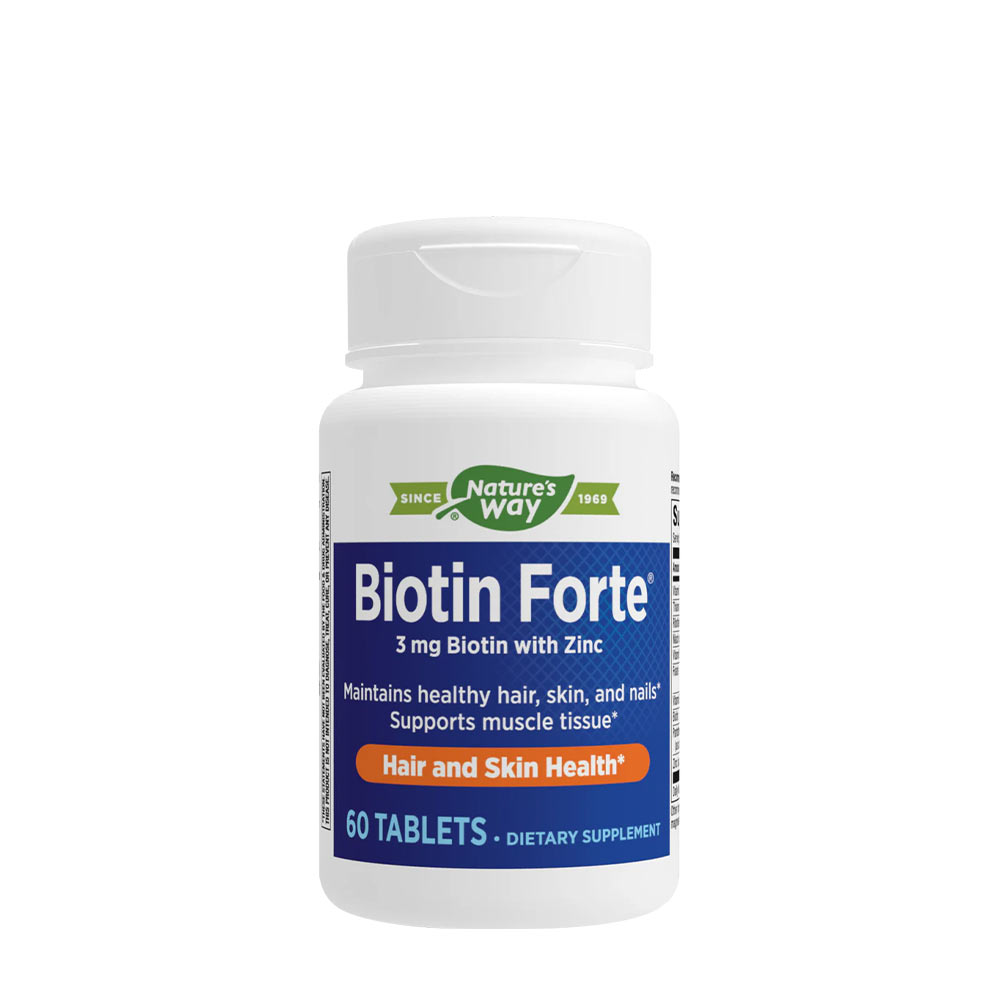
Nature'S Way - Biotin Forte - 60 Tabs
217 krIn stockWhy is this shown? Innehåller alla ämnen artikeln handlar om · Renodlat tillskott — ämnet står i produktnamnet · I lager · Betyg 5.0 av 8 kunder
Nature's Way
Nature'S Way - Biotin With Zinc - 60 Tabs
192 krIn stockWhy is this shown? Innehåller alla ämnen artikeln handlar om · Renodlat tillskott — ämnet står i produktnamnet · I lager · Betyg 5.0 av 8 kunder
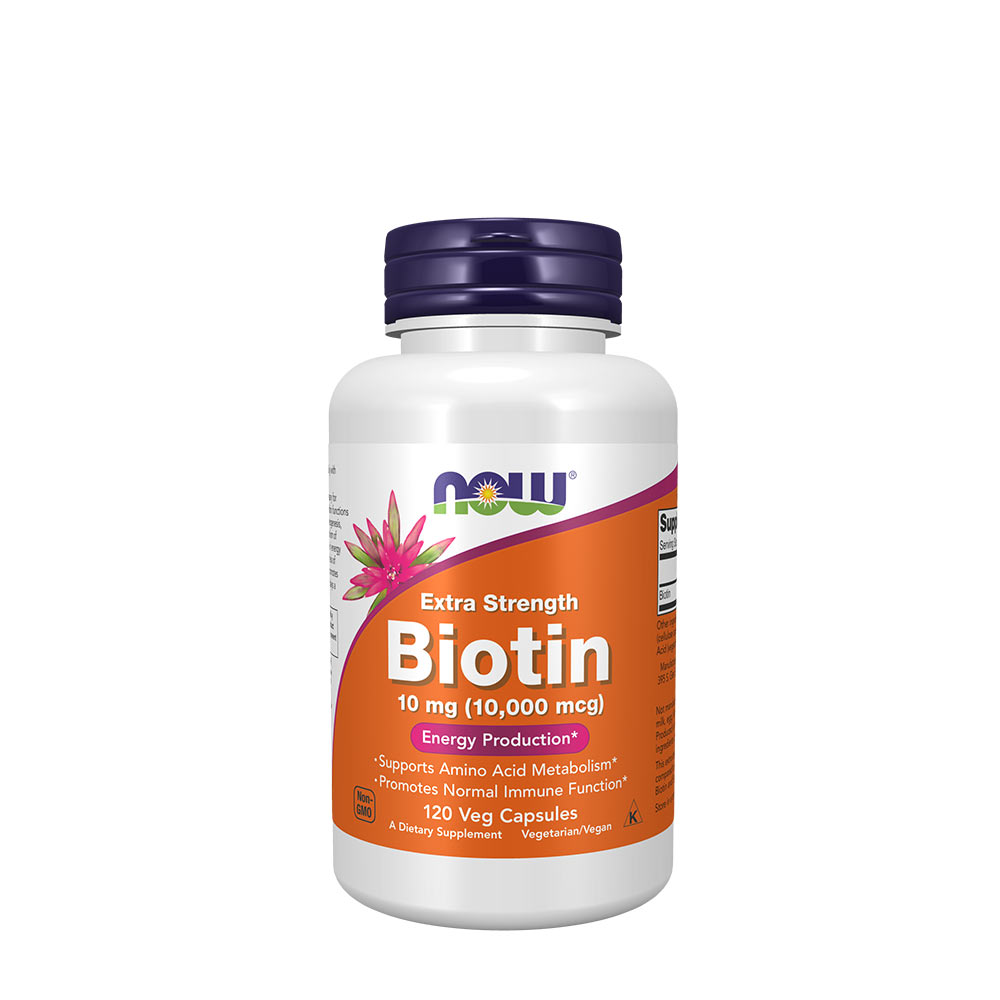
NOW Foods
Now Foods - Biotin Extra Strength - 120 Vcaps
199 krIn stockWhy is this shown? Innehåller alla ämnen artikeln handlar om · Renodlat tillskott — ämnet står i produktnamnet · I lager · Betyg 5.0 av 8 kunder

Life Extension
Life Extension - Alpha-Lipoic Acid With Biotin - 60 Caps
390 krIn stockWhy is this shown? Innehåller alla ämnen artikeln handlar om · Renodlat tillskott — ämnet står i produktnamnet · I lager · Betyg 5.0 av 7 kunder

Aura Herbals
Aura Herbals - Biotin B7 - 30 Caps
114 krIn stockWhy is this shown? Innehåller alla ämnen artikeln handlar om · Renodlat tillskott — ämnet står i produktnamnet · I lager