Biotin Supplements: What to Know Before You Buy
Short answer
Before you buy biotin, check the daily portion, the amount per portion in micrograms or milligrams, and whether the product contains other ingredients. The authorised claims are "Biotin contributes to the maintenance of normal hair" and "Biotin contributes to the maintenance of normal skin", and they are about maintenance, not rapid cosmetic change.
Quick facts
- Biotin is a water-soluble vitamin involved in core metabolism.
- True biotin deficiency is rare in people eating a mixed diet.
- The authorised claims are limited to maintenance of normal hair and normal skin.
- Hair, skin and nail blends often include other vitamins or ingredients.
- High-dose biotin can interfere with some laboratory tests.
- Compare the daily portion, not just the front-of-pack number.
What is biotin and what does it do in the body?
Biotin is a water-soluble vitamin that acts as a cofactor for five human carboxylases: pyruvate carboxylase, propionyl-CoA carboxylase, methylcrotonyl-CoA carboxylase, and two acetyl-CoA carboxylases. Together, those enzymes support glucose production, fatty-acid synthesis and amino-acid breakdown. The NIH Office of Dietary Supplements biotin fact sheet also notes that much food biotin is protein-bound; digestion and the enzyme biotinidase release the free form for absorption, and free oral biotin is absorbed efficiently.
What biotin does in metabolism
| Body function | Plain-language meaning |
|---|---|
| Cofactor role | Biotin helps enzymes carry out carboxylation reactions. |
| Glucose production | |
| Fatty-acid synthesis and amino-acid breakdown | It helps with building fatty acids and processing certain amino acids. |
What too little biotin can look like
True deficiency is rare in people eating a mixed diet, but when it does occur the signs can involve more than appearance. NIH ODS lists thinning or lost hair, a scaly red rash around the eyes, nose, mouth or perineum, conjunctivitis and brittle nails. More serious findings include metabolic acidosis and seizures, while adults can also have neurological symptoms such as lethargy or tingling. In infants, deficiency can present with poor muscle tone and delayed development. NIH ODS biotin fact sheet
| Deficiency pattern | Examples named by NIH ODS |
|---|---|
| Skin, hair and nails | Thinning or lost hair; scaly red rash; brittle nails |
| Eyes and general symptoms | Conjunctivitis; lethargy; tingling |
| More severe findings | Metabolic acidosis; seizures |
| Infants | Poor muscle tone; delayed development |
Risk is particularly relevant to people with inherited biotinidase deficiency, who cannot efficiently recycle biotin even with normal intake. NIH ODS also identifies chronic alcohol exposure and marginal biotin status during pregnancy as concerns, and says regular raw egg whites can interfere with biotin absorption because avidin binds biotin; cooking disables that effect. NIH Office of Dietary Supplements
Biotin matters for core metabolism, but deficiency is a clinical picture of low intake or impaired handling — not proof that more biotin helps someone who already gets enough.
Does biotin actually help hair, skin and nails?
What the authorised wording actually permits
The EU wording is narrow: “Biotin contributes to the maintenance of normal hair” and “Biotin contributes to the maintenance of normal skin”, and the claim may be used only for food that is at least a source of biotin; see EFSA’s scientific opinion on biotin health claims. The permitted biotin entries do not include a normal-nails claim, so “hair, skin and nails” marketing goes beyond the authorised wording. In other words, the approved language is about maintenance, not rapid regrowth or treatment.
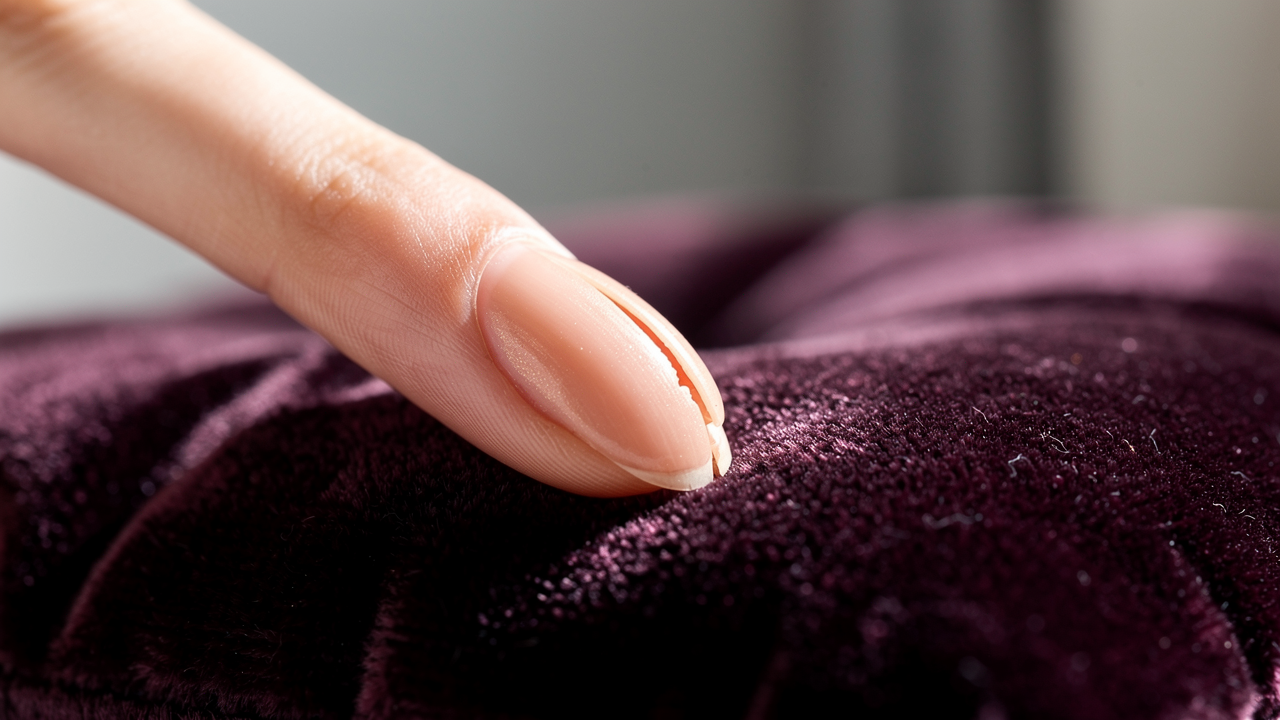
That distinction matters because the research base is much thinner than the beauty label suggests. The clearest published reports are in deficiency-related or unusual clinical situations, while evidence in otherwise healthy adults is limited and inconsistent. NIH ODS biotin fact sheet
What the studies actually looked at
| Evidence type | Population | Biotin used | What was reported | Main limit |
|---|---|---|---|---|
| Small nail studies | Women with brittle, splitting or soft nails | 2.5 mg/day | One study reported a 25% increase in nail thickness in 8 people with before-and-after samples; another reported a 7% change in 14 people that was not statistically significant | No placebo group and no baseline biotin status |
| Hair case reports | Children with uncombable hair syndrome | 3–5 mg/day for 3–4 months | Individual reports only | Not a trial of routine hair growth in healthy adults |
| Skin case reports | Infants with rash or dermatitis | 100 µg to 10 mg/day | Individual reports only | Very limited evidence |
NIH ODS says the nail evidence rests on three small studies, none placebo-controlled, and the hair evidence is limited to case reports rather than routine hair-growth trials; it also says studies in healthy people are still needed. NIH ODS biotin fact sheet
A separate review that excluded case reports found just three eligible studies of oral biotin for hair, and the placebo-controlled study found no hair-growth difference between groups. That is why testimonials can overstate what biotin did: uncontrolled studies cannot separate a supplement effect from other changes happening at the same time. PubMed review of biotin for hair loss
For cosmetic use, biotin has an approved maintenance claim, but the human evidence is small, narrow and not strong enough to treat it as a proven beauty fix.
So the honest read is simple: biotin can be part of a normal intake pattern, but the authorised claims stop at maintenance, and the published studies do not support promising rapid cosmetic change from a supplement alone. NIH ODS biotin fact sheet
How much biotin do you need, and which foods contain it?
Official intake targets are estimates, not supplement doses
The NIH Office of Dietary Supplements says biotin targets are set as adequate intakes because evidence is not strong enough to establish an average requirement and a recommended intake. In the United States, the Food and Nutrition Board uses 30 µg/day for adults, 30 µg/day in pregnancy and 35 µg/day during lactation. EFSA uses 40 µg/day for adults and pregnancy and 45 µg/day during lactation, with lower age-specific values for younger groups.
That means the same nutrient can have different reference values depending on region and life stage. These figures are total daily intakes, not suggested supplement strengths. For most people eating a mixed diet, food is the baseline; a supplement is only one way of adding to that total.
Biotin intake targets are reference points for total diet, not a reason to buy more than you need.
Portion-based food amounts from ODS examples
| Food | Portion | Biotin |
|---|---|---|
| Beef liver, cooked | 3 oz | 30.8 µg |
| Whole egg, cooked | 1 egg | 10.0 µg |
| Pink salmon, canned in water | 3 oz | 5.0 µg |
| Pork chop, cooked | 3 oz | 3.8 µg |
| Sunflower seeds, roasted | ¼ cup | 2.6 µg |
| Sweet potato, cooked | ½ cup | 2.4 µg |
| Almonds, roasted | ¼ cup | 1.5 µg |
Using those ODS examples, two cooked eggs plus 3 oz of canned pink salmon, ¼ cup of roasted sunflower seeds and ½ cup of cooked sweet potato add up to about 30 µg, which is roughly the U.S. adult AI, though still below EFSA’s 40 µg AI. The same source notes that much food biotin is protein-bound and released during digestion, while raw egg whites can reduce absorption because avidin binds biotin; cooking disables that effect. Food processing and highly restrictive diets can therefore shift intake up or down, even when the food list looks similar on paper.
Which supplement forms and strengths are worth comparing?
Start with the daily portion, not the front-of-pack number
EU supplement labels are meant to tell you the recommended daily portion and the nutrient amount per that portion, so that is the first comparison point for tablets, capsules, gummies, liquids and sprays European supplement labelling rules. A label that says 2 gummies provide 100 µg means one gummy provides 50 µg; by the same logic, 1 mg equals 1,000 µg, so a 2.5 mg product provides 2,500 µg. That is 62.5 times the EFSA adult AI of 40 µg/day and 5,000% of the EU adult nutrient reference value of 50 µg EFSA biotin dietary reference values.
| Format | What to compare | Practical trade-off |
|---|---|---|
| Tablet or capsule | Count per daily portion and total µg per portion | Easy to standardise, but the daily amount may be split across more than one unit |
| Gummy | How many pieces make the daily portion and how much biotin that portion delivers | The front label can look lower than the full daily serving if the dose is spread across multiple gummies |
| Liquid | Measured volume and directions, not just the bottle strength | Useful if you want to measure a smaller portion carefully |
| Spray | Number of sprays in the daily portion and the µg delivered per day | Check the labelled portion carefully because the delivery method can make the dose look smaller or larger than it is |
Plain biotin or a blend?
Products marketed for hair, skin and nails often combine biotin with other vitamins or ingredients, so compare the full ingredient list as well as the biotin amount. That matters for the label and for budget: if you already buy a multivitamin, it is easy to pay twice for overlapping nutrients. The EU label rules require the nutrient amount per daily portion, which makes side-by-side comparison possible European supplement labelling rules.
Do not choose by the biggest number on the front: compare the daily portion, the unit in µg or mg, and the full ingredient list.
What absorption evidence actually shows
Oral free biotin is well absorbed: in a crossover study of six healthy adults, urinary recovery after about 2 mg and 20 mg oral doses was similar to recovery after intravenous administration oral biotin bioavailability study. But that small study did not compare tablets with capsules, gummies, liquids or sprays, and it did not show that a better-absorbed format produces better hair results. A more recent review found only three eligible studies of oral biotin for hair, with no placebo-controlled hair-growth difference, so there is no evidence-based ranking of formats by cosmetic benefit biotin for hair loss review.
Taking biotin with food also has no proven advantage from the evidence reviewed here: the available absorption study does not establish a food effect, and there is no tested "best hour" for a general shopper oral biotin bioavailability study.
Bottom line: buy the format that fits your routine, but judge it by the labelled daily dose, the unit conversion, and the ingredient list rather than by claims that one form is inherently stronger or better absorbed.
Where should Irish shoppers buy biotin?
If you search “Boots biotin” or “biotin supplements Ireland”, treat the retailer name as a search path, not as proof of quality. Pharmacy, supermarket and online listings can all be compared the same way: read the daily portion, the declared biotin amount in µg, the pack count and the percentage of the vitamin reference value on the label. EU food-supplement rules say the label must show the recommended daily portion, the nutrient amount per portion and the percentage of the vitamin reference value, and must also warn against exceeding the stated daily dose and note that supplements are not substitutes for a varied diet. EU food-supplement labelling rules
Read the claim exactly as printed
Where a product makes a biotin claim, compare the wording with the authorised text, not with the headline design. EU authorised biotin claim wording
Check what must be visible before you pay online
In practice, that means the product page should let you read the food information that drives the purchase, not just a headline strength. European Commission distance-selling rules
Compare value by the day, not by the box
A larger pack can still cost more per day than a smaller one. Compare the shelf price against the stated daily portion, then compare the count per pack and the declared dose per portion. The EU adult nutrient reference value for biotin is 50 µg, so a label showing 100% NRV is not the same as a label showing 2,500 µg; the NRV is a labelling comparator, not a quality score. EU nutrient reference value labelling
| What to compare | What to read on the listing | Why it matters |
|---|---|---|
| Price per day | Shelf price and stated daily portion | Shows the real daily cost |
| Pack count | Number of tablets, capsules, gummies or millilitres | |
| Declared dose | Biotin amount in µg per portion and % NRV | Lets you compare strength accurately |
How should you take biotin, and how long should you try it?
Use one consistent daily routine
The sources reviewed do not identify a best hour for biotin, and they do not show that taking it in the morning, taking it with food, or cycling it on and off produces better hair or nail outcomes. The simplest evidence-based routine is to follow the labelled daily portion and keep it consistent, rather than changing timing from day to day. A small absorption study in six healthy adults found oral free biotin was well absorbed at pharmacological doses, but that did not establish a superior supplement format or a better time of day.
Judge results over months, not days
Biotin is not a quick test-and-see ingredient. The nail studies cited by NIH used 2.5 mg/day for months: one uncontrolled study ran for 6 to 15 months, and another averaged 5.5 months. For hair, the evidence described by NIH consists mainly of case reports in children with rare uncombable hair syndrome using 3 to 5 mg/day for 3 to 4 months, not trials of routine hair growth in healthy adults. That means a very short trial is not a fair way to judge whether a supplement is doing anything for you.
| Use case | What the evidence supports | What not to expect |
|---|---|---|
| Daily routine | Take the labelled daily portion consistently; there is no established best hour. | A special morning-only or food-only advantage. |
| Hair | Evidence is limited to case reports and small studies. | Immediate visible change in a few days or weeks. |
| Nails | Reported changes were seen over months, not overnight. | A fixed, guaranteed result for everyone. |
Avoid the most common buying and use mistakes
One easy mistake is doubling up. NIH specifically advises checking a multivitamin and any separate hair product together so you do not overlook duplicate biotin. Another is choosing gummies for convenience without checking the rest of the label: the daily portion matters more than the format, and gummies may come with extra ingredients beyond biotin. A third mistake is assuming a high dose will work faster; the research brief found no evidence-based duration for a generally healthy person to “try” biotin for hair.
Judge biotin over months, not days, and compare it against the reason you started.
That reason matters. A supplement bought for everyday intake support should be assessed differently from clinician-directed treatment in a diagnosed deficiency or inherited biotin-processing disorder. For routine use, the best test is practical: can you take the labelled daily portion consistently, without duplicate products, and wait long enough to see whether your own hair or nails change over time? NIH ODS biotin fact sheet; biotin for hair loss review.
What safety issues, interactions and test problems matter?
The main established risk is misleading laboratory results
The best-documented problem with oral biotin is not demonstrated direct toxicity; it is incorrect laboratory results. The NIH says biotin can interfere with assays that use biotin–streptavidin binding, and the FDA warns that some troponin tests can give falsely low results when biotin is present FDA. In a study of six healthy adults taking 10 mg/day for seven days, 9 of 23 biotin-based assays were affected, versus none of 14 non-biotin-based assays PubMed.
That is why biotin should be disclosed before blood work. The effect is assay-specific, not universal: one thyroid-testing study found interference lasting about 8 hours after 5 mg/day and one or two days after 10 mg/day, depending on the platform PubMed. There is no single safe “stop for 24 hours” rule for every test and every dose PubMed.
Tell the clinician and the laboratory the product, the dose and the time of last use before any scheduled blood test.
High-dose products sit far above dietary needs
NIH ODS reports a U.S. adult adequate intake of 30 µg/day, while a 10 mg supplement supplies 10,000 µg, over 300 times that level NIH ODS. EFSA’s adult adequate intake is 40 µg/day, with 40 µg/day in pregnancy and 45 µg/day during lactation, so a high-dose product is far above those reference values too EFSA. No tolerable upper intake level has been set, but that does not make every high dose risk-free in medical testing NIH ODS.
| Situation | What the evidence shows | Practical step |
|---|---|---|
| Planned blood tests | Biotin can distort thyroid assays and some troponin assays | Disclose the supplement, dose and last use FDA PubMed |
| Levothyroxine use | HSE says biotin can affect thyroid-function tests | Speak to your GP before taking biotin HSE |
| Pregnancy or breastfeeding | Intake targets differ by life stage | Use clinician advice rather than assuming a beauty dose is appropriate NIH ODS |
| Seizure disorders or anticonvulsant treatment | In 264 people with epilepsy, at least one year of anticonvulsant treatment was associated with lower serum biotin than in controls | Discuss supplementation individually NIH ODS |
The key distinction is simple: assay interference is a testing problem, while the anticonvulsant data are about status and should not be read as a direct drug interaction or a reason to change prescribed treatment on your own.
When is hair loss or brittle nails a reason to see a clinician?
When symptoms point beyond biotin
Hair loss or nail changes on their own do not prove low biotin. The NIH says biotin deficiency is rare in people eating a mixed diet, and the symptom pattern it describes usually includes more than appearance changes: hair thinning or loss, a scaly red rash around body openings, conjunctivitis, and sometimes neurological symptoms such as tingling or lethargy. In a case-control study of women with chronic telogen effluvium, serum and urine biotin levels did not differ from controls, which is another reason not to assume biotin is the cause from cosmetic symptoms alone. NIH ODS biotin fact sheet PubMed study on biotin levels in hair-loss groups
New, severe, or persistent hair or nail changes deserve a proper assessment before you decide to self-treat.
Common alternatives clinicians look for first
The NHS lists inherited pattern hair loss, illness, stress, cancer treatment, weight loss and iron deficiency among causes of hair loss. For nails, clinicians also look for local damage or disease first, including repeated wet work, solvents, cosmetic or occupational trauma, fungal disease and inflammatory nail disease. The practical point is that a supplement trial is not the first step when the pattern is new or unexplained. NHS hair loss guidance PMC review of common nail disorders
| Sign that needs review | What clinicians may consider |
|---|---|
| Sudden or diffuse shedding after illness, stress or weight loss | Hair loss triggers unrelated to biotin |
| Hair loss with fatigue, breathlessness or blood loss | Iron deficiency |
| Hair loss with cold intolerance, constipation or tiredness | Thyroid disease |
| Brittle or damaged nails with wet work or solvents | Local trauma, fungal or inflammatory nail disease |
When a biotin trial is reasonable
Biotin can still be a reasonable conversation when symptoms are mild, longstanding, and there is no red-flag pattern. But if hair loss is new, severe, patchy or accompanied by systemic symptoms, a clinician should rule out other causes first. Medicines matter too: NIH reports lower serum biotin associated with at least one year of anticonvulsant treatment in 264 people with epilepsy, so medication history should be part of the review. NIH ODS biotin fact sheet
If the symptoms are part of a broader picture of rash, conjunctivitis, tingling or fatigue, that is a stronger reason to seek assessment than to keep guessing with supplements. A biotin product is best treated as one option among many, not a substitute for finding the real cause.
Safety and precautions
Biotin can interfere with some blood tests, including certain thyroid and troponin assays, so tell the clinician and laboratory the product, the dose, and when you last took it before any test. High-dose products can sit far above dietary needs, and there is no single stop-before-testing rule that works for every assay.
If you take medicines, are pregnant or breastfeeding, or are buying for a child, ask a healthcare professional first. Extra caution is also sensible if you use levothyroxine or anticonvulsants, because the body notes that these situations need individual advice.
Supplements with the ingredients in this article
Compare contents, dose and price
Frequently asked questions
Can biotin be taken together with collagen, zinc or a multivitamin?
The key issue is not the brand name on the front, but whether the formula adds biotin on top of what you already take elsewhere. The body says hair, skin and nail products often combine biotin with other ingredients, and it specifically warns to check a multivitamin so you do not duplicate biotin. If a product also includes collagen or zinc, read the full label and make sure the daily portion still fits your routine.
Are gummies a sensible option if I dislike swallowing tablets?
Yes, gummies can be a practical option if tablets are difficult for you. The important part is to check how many gummies make up the daily portion and how much biotin that portion delivers. Also look at the full ingredient list, because gummies may include extra ingredients beyond biotin.
Can a balanced diet cover biotin needs without a supplement?
For many people, yes. The body says food is the baseline for most mixed diets, and the sample food amounts shown can add up to around a daily adult target. A supplement is only one way to increase total intake if you need it.
Do hair, skin and nail blends contain ingredients that plain biotin does not?
Yes. The body says these products often combine biotin with other vitamins or ingredients, so they are not the same as plain biotin. That is why the full ingredient list matters, especially if you already use another supplement.
How do I tell whether a product is high-dose from the label?
Start with the daily portion and the amount per portion, then convert between milligrams and micrograms if needed. A product that lists milligram amounts is much higher than everyday dietary reference values: 1 mg equals 1,000 micrograms, so 2.5 mg is 2,500 micrograms. Compare that number with the label's percentage of the nutrient reference value to see how far above a basic intake it sits.
Sources
- Biotin - Health Professional Fact Sheet (external link)
- Scientific Opinion on the substantiation of health claims related to biotin and energy‐yielding metabolism (ID 114, 117), macronutrient metabolism (ID 113, 114, 117), maintenance of skin and mucous membranes (ID 115), maintenance of hair (ID 118, 2876) and function of the nervous system (ID 116) pursuant to Article 13(1) of Regulation (EC) No 1924/2006 - - 2009 - EFSA Journal - Wiley Online Library (external link)
- Scientific Opinion on Dietary Reference Values for biotin - - 2014 - EFSA Journal - Wiley Online Library (external link)
- Directive - 2002/46 - IT - EUR-Lex (external link)
- Bioavailability of biotin given orally to humans in pharmacologic doses - PubMed (external link)
- Biotin for Hair Loss: Teasing Out the Evidence - PubMed (external link)
- CL2012R0432EN0080010.0001_cp 1..1 (external link)
- Distance Selling - Food Safety - European Commission (external link)
- B vitamins and folic acid (external link)
- Association of Biotin Ingestion With Performance of Hormone and Nonhormone Assays in Healthy Adults - PubMed (external link)
- Biotin Interference with Troponin Lab Tests - Assays Subject to Biotin Interference | FDA (external link)
- Assessment of biotin interference in thyroid function tests - PubMed (external link)
- Hair loss (external link)
- Iron deficiency anaemia (external link)
- Iron deficiency in female pattern hair loss, chronic telogen effluvium, and control groups - PubMed (external link)
- Optimal diagnosis and management of common nail disorders - PMC (external link)
Read more
Products related to this article
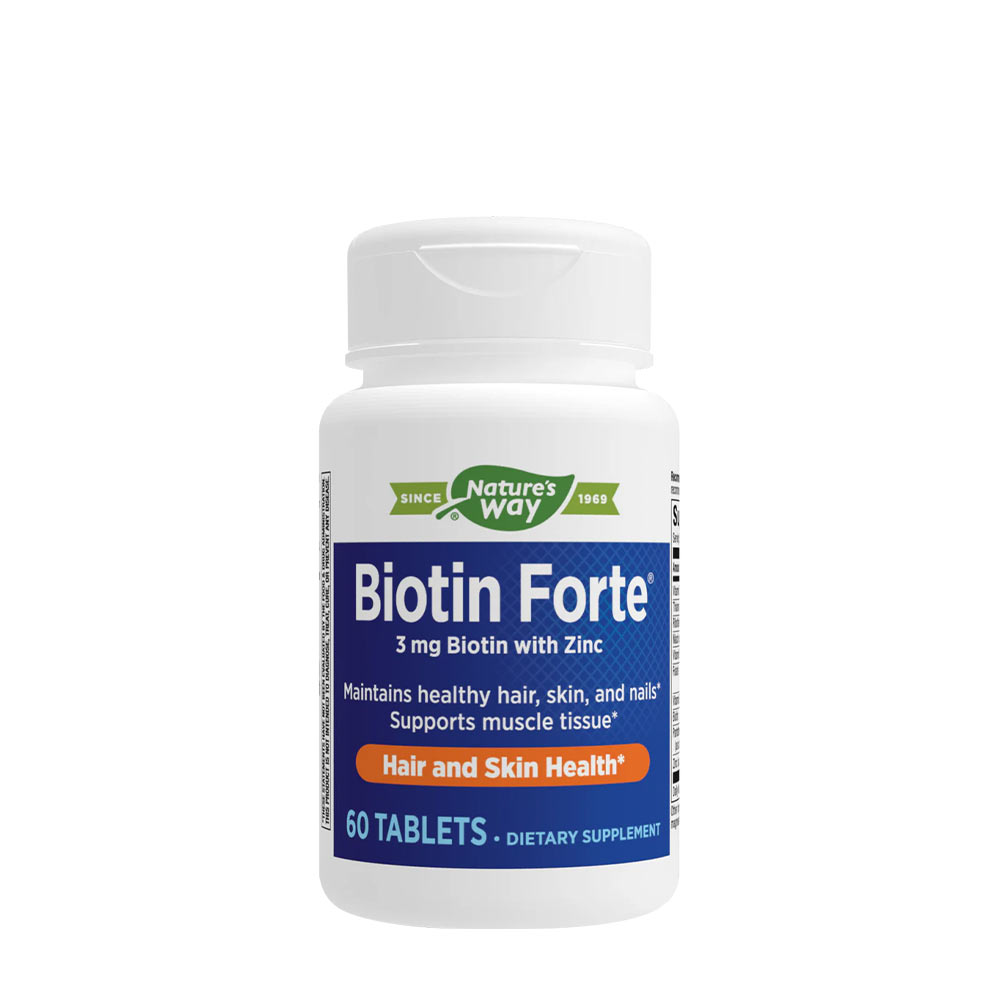
Nature's Way
Nature'S Way - Biotin With Zinc - 60 Tabs
192 krIn stockWhy is this shown? Innehåller alla ämnen artikeln handlar om · Renodlat tillskott — ämnet står i produktnamnet · I lager · Betyg 5.0 av 8 kunder
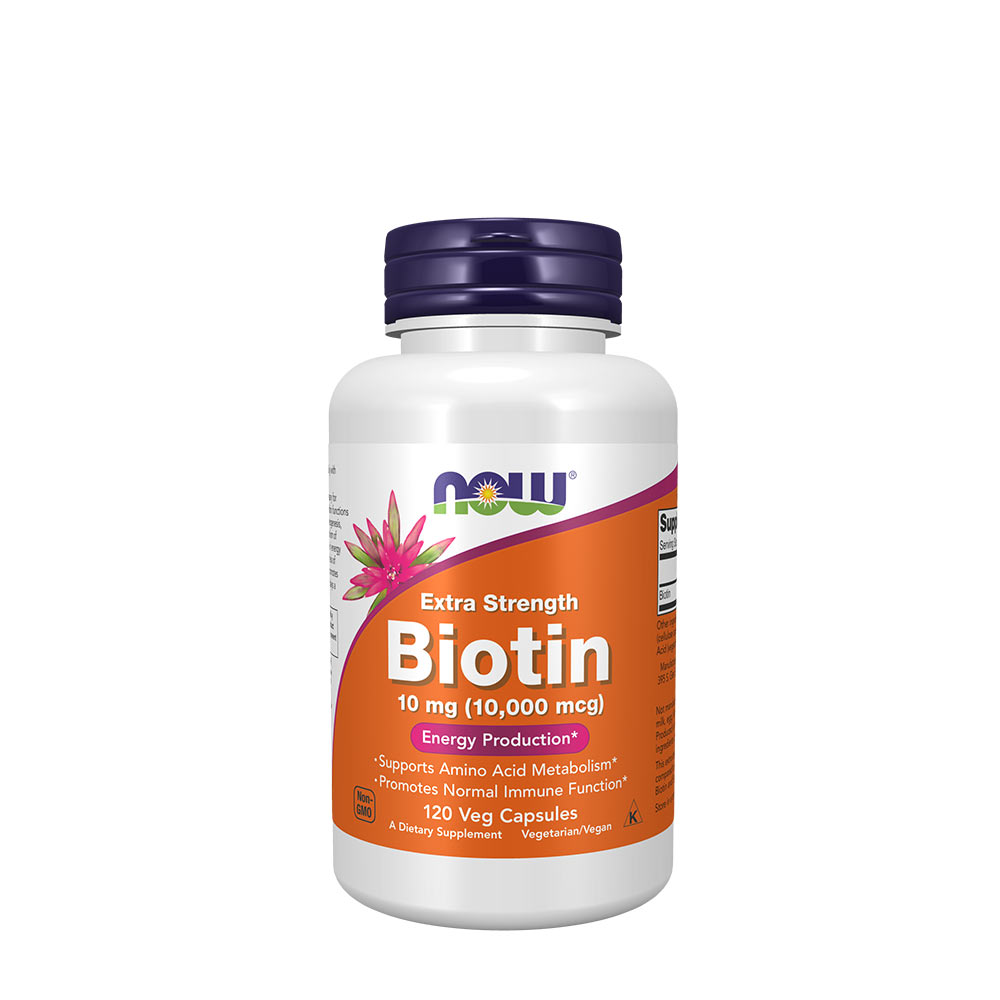
NOW Foods
Now Foods - Biotin Extra Strength - 120 Vcaps
204 krIn stockWhy is this shown? Innehåller alla ämnen artikeln handlar om · Renodlat tillskott — ämnet står i produktnamnet · I lager · Betyg 5.0 av 8 kunder

Life Extension
Life Extension - Alpha-Lipoic Acid With Biotin - 60 Caps
400 krIn stockWhy is this shown? Innehåller alla ämnen artikeln handlar om · Renodlat tillskott — ämnet står i produktnamnet · I lager · Betyg 5.0 av 7 kunder

Aura Herbals
Aura Herbals - Biotin B7 - 30 Caps
114 krIn stockWhy is this shown? Innehåller alla ämnen artikeln handlar om · Renodlat tillskott — ämnet står i produktnamnet · I lager
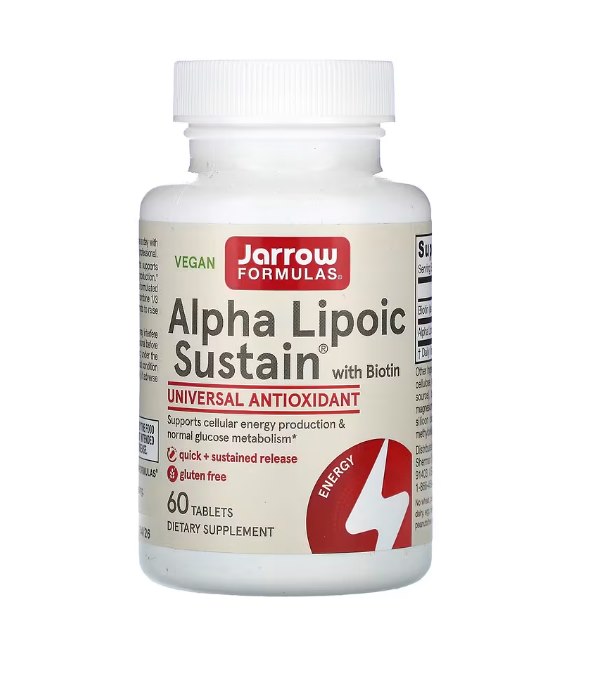
Jarrow Formulas
Jarrow Formulas - Alpha Lipoic Sustain With Biotin - 60 Tabs
260 krIn stockWhy is this shown? Innehåller alla ämnen artikeln handlar om · Renodlat tillskott — ämnet står i produktnamnet · I lager