What Is Folic Acid in Pregnancy?
Short answer
Folic acid is the synthetic form of vitamin B9 used in supplements and fortified foods. For pregnancy guidance, the usual routine amount is 400 to 800 micrograms a day starting before conception, with higher doses reserved for specific medical situations under supervision.
Quick facts
- Folate is vitamin B9; folic acid is the synthetic form used in supplements and fortified foods.
- Routine guidance for most people planning pregnancy is 400 to 800 micrograms daily.
- The usual start time is at least 1 month before conception.
- The early pregnancy window is the first 2 to 3 months, or the first 12 weeks.
- Higher doses of 4,000 to 5,000 micrograms a day are used only in specific high-risk situations under medical supervision.
- Morning or night both work; the best time is the one you can repeat every day.

What does folic acid do in pregnancy?
Folate and folic acid are vitamin B9
Folate is vitamin B9. EFSA says it is an essential micronutrient needed for RNA and DNA synthesis, with roles in cell division, tissue growth, methylation reactions, and amino acid metabolism; the NIH Office of Dietary Supplements says it is required for DNA and other genetic material synthesis and for cell division. EFSA folate overview NIH pregnancy fact sheet
Folic acid is the synthetic form of folate used in supplements and fortified foods. The NIH describes folic acid as the synthetic form, and the FDA notes it is found in dietary supplements and foods fortified with folic acid. PMC review on folic acid FDA pregnancy advice
| Form | What the evidence says |
|---|---|
| Folate | Vitamin B9 from foods; used for DNA and RNA synthesis and cell division. NIH folate fact sheet |
| Folic acid | Synthetic vitamin B9 used in supplements and fortified foods. PMC review on folic acid |
Why the first month matters so much
The timing is unusually early: the FDA says the neural tube begins developing into the baby’s spinal cord and brain during the first month of pregnancy, when someone may not yet know they are pregnant. The FDA and NIH both state that folic acid taken before and during early pregnancy is linked with a reduced risk of neural tube defects such as anencephaly and spina bifida. FDA pregnancy advice NIH pregnancy fact sheet
What official guidance says it supports
EFSA and the NIH connect folate deficiency with impaired DNA replication and cell division, and EFSA notes that deficiency can lead to megaloblastic anemia. EFSA folate overview NIH folate fact sheet
That is why folic acid is used as a supplement alongside food folate, not instead of it. The FDA still recommends a balanced diet for pregnancy, with folic acid coming from supplements or fortified foods as one part of the overall intake. FDA pregnancy advice
How much folic acid do you need in pregnancy?
Routine daily amount for most people
For average-risk women planning a pregnancy, NIH Office of Dietary Supplements guidance points to 400 to 800 micrograms (µg) of folic acid a day, starting at least 1 month before conception and continuing through the first 2 to 3 months of pregnancy. The same fact sheet says pregnant women need about 600 µg dietary folate equivalents (DFE) per day, while the FDA public advice uses the simpler message: if you are or may become pregnant, consume 400 µg daily.

| Authority | Who it applies to | Amount | Unit shown |
|---|---|---|---|
| NIH ODS | Planning pregnancy / capable of becoming pregnant | 400–800 µg/day | Folic acid |
| NIH ODS | Pregnancy | 600 µg/day | DFE |
| FDA | If you are or may become pregnant | 400 µg/day | Folic acid |
| EFSA | Pregnancy | 600 µg/day | DFE |
When the dose is much higher
Higher-dose regimens are used only in specific medical situations. The ODS pregnancy fact sheet lists 4,000 µg/day (4 mg) for women with a previous pregnancy affected by a neural tube defect or with familial risk, started 1 to 3 months before conception and continued through the first 12 weeks. It also notes 4,000 to 5,000 µg/day in some high-risk situations under medical supervision. For pregnant women with sickle cell disease, the same source reports a recommendation of 4 mg/day folic acid, cited from the Society for Fetal-Maternal Medicine and endorsed by ACOG (ODS pregnancy fact sheet).
Why labels use different numbers
Dietary guidance may be written as folic acid or as DFE. That means a supplement label showing 400 µg folic acid is not the same wording as a guideline showing 600 µg DFE, even though both are used in pregnancy advice.
Recommendations vary a little by country, but the core message is consistent: 400 µg folic acid daily before conception and in early pregnancy is the common baseline, while 4 mg to 5 mg is reserved for specific higher-risk situations with medical supervision.
When should you start and stop taking it?
Start before conception if possible
The clearest timing advice is to start folic acid before pregnancy if you can. The NIH Office of Dietary Supplements says people planning pregnancy or capable of becoming pregnant should take 400–800 micrograms per day starting at least 1 month before conception and continuing through the first 2–3 months of pregnancy. The same fact sheet cites WHO guidance that says to start ideally 2 months before conception and continue through the first 12 weeks. NIH ODS pregnancy fact sheet
The reason the start date matters is that the neural tube begins developing in the first month of pregnancy, when many people do not yet know they are pregnant. FDA pregnancy advice says folic acid helps prevent neural tube defects when taken before and during pregnancy. FDA pregnancy advice
If pregnancy is already underway
If you have not started yet and then find out you are pregnant, the practical step is to begin as soon as pregnancy is recognized, because the key developmental window is already running in the first month. That timing is consistent with the FDA’s wording that folic acid is used before and during pregnancy, and with the NIH statement that supplementation should cover the earliest weeks. FDA pregnancy advice NIH ODS pregnancy fact sheet
When routine folic acid usually ends
For an average-risk pregnancy, the usual end point for routine low-dose folic acid is the end of the first trimester. NIH ODS describes the early-pregnancy window as the first 2–3 months; its pregnancy fact sheet also cites ACOG’s advice to continue through the first 12 weeks. NIH ODS pregnancy fact sheet
| Authority | Start | Routine stop point |
|---|---|---|
| NIH ODS | At least 1 month before conception | First 2–3 months of pregnancy |
| ACOG, as cited by NIH ODS | At least 1 month before conception | First 12 weeks of pregnancy |
| WHO, as cited by NIH ODS | Ideally 2 months before conception | First 12 weeks of pregnancy |
Some people continue a prenatal vitamin later in pregnancy for broader nutritional reasons, but that is separate from the early folic-acid timing used for the neural-tube window. NIH ODS pregnancy fact sheet
Morning or night: when is best to take it?
No meaningful timing advantage
A small randomized crossover study tested a prenatal vitamin containing 1.1 mg folic acid in six healthy, nonpregnant women, taken either in the morning or in the evening. Serum folate exposure was similar in both schedules: the area under the curve, peak concentration, and time to peak did not differ significantly. The study did not include pregnant participants and did not assess side effects, so it answers the timing question only, not pregnancy-specific outcomes. PubMed record for the folate pharmacokinetics study

For ordinary folic acid use, that means there is no meaningful absorption advantage to morning versus night.
Pick the time you can repeat every day
The practical choice is the one you are most likely to remember. If breakfast is already your fixed routine, morning works well. If evenings are quieter and easier to keep consistent, night is just as reasonable.
If you already take a prenatal vitamin or another daily medicine at a set time, it is usually simplest to place folic acid in that same slot rather than create a separate reminder.
With food is fine if it suits your routine
Taking folic acid with food can be a sensible choice if that is when you reliably remember it, or if you prefer not to take tablets on an empty stomach. The key is convenience and consistency, not a special absorption window.
The FDA says that if you are or might become pregnant, you should consume 400 micrograms of folic acid daily. FDA advice on folic acid before and during pregnancy
Morning or night is fine for ordinary folic acid use; choose the time that fits your day and stick with it.
If a clinician has asked you to follow a specific schedule for another medicine, follow that instruction and fit folic acid around it. Otherwise, the simplest answer is the best one: morning or night both work.
Which foods contain folate, and do any need avoiding?
There are no routine foods you need to avoid because of folic acid itself. The practical question is usually the opposite: how to include both natural folate foods and fortified foods, because official guidance still asks people who are or might become pregnant to get folic acid from supplements or fortified foods rather than relying on diet alone. See the FDA pregnancy guidance and the NIH ODS folate consumer fact sheet.
Natural folate foods to put on the list
The NIH Office of Dietary Supplements lists folate-rich foods as beef liver; vegetables such as asparagus, Brussels sprouts, spinach, and mustard greens; fruits and fruit juices such as oranges and orange juice; and nuts, beans, and peas such as peanuts, black-eyed peas, and kidney beans. Those are the foods to keep in regular rotation, not foods to avoid. Source: NIH ODS folate consumer fact sheet.
| Food source type | Examples named by NIH ODS and FDA | What to look for |
|---|---|---|
| Natural folate | Beef liver; asparagus; Brussels sprouts; spinach; mustard greens; oranges; orange juice; nuts; beans; peas | Whole foods with naturally occurring folate |
| Fortified folic acid | Enriched breads, flours, pasta, rice, breakfast cereals, cornmeal, and corn masa flour | Ingredient lists that show folic acid |
Why labels do not look the same
Natural folate and fortified folic acid are not the same food source. The FDA says folic acid is added to staple foods such as enriched breads, pasta, rice, breakfast cereals, and corn masa flour, and it advises checking ingredient lists if you want to know whether a product contains folic acid. That is why a diet rich in vegetables and legumes can look very different from a supermarket basket full of fortified grains. See Dietary Advice Before and During Pregnancy.
Why food alone may not be enough
For people who are or might become pregnant, the FDA advises 400 micrograms of folic acid daily, and NIH ODS notes that pregnant women need about 600 micrograms dietary folate equivalents per day. EFSA also advises women of childbearing age to consume an additional 400 micrograms per day of folic acid on top of food folate. In practice, that is the clearest sign that even a healthy diet with leafy greens, beans, and citrus is not always the whole answer. Source: NIH ODS pregnancy fact sheet and EFSA folate presentation.
Bottom line: do not cut out foods because of folic acid; instead, keep folate-rich foods in the diet and use fortified foods and supplements as directed on official guidance.
Which folate form should you choose?
Start with the form named in pregnancy guidance
For pregnancy advice, the most directly named supplement form is folic acid. The FDA says to consume 400 micrograms daily if you are or might become pregnant, and the NIH Office of Dietary Supplements says pregnant women need about 600 micrograms of dietary folate equivalents per day, with 400 micrograms of folic acid daily advised for people who can become pregnant.

That makes folic acid the simplest default when you want a product that matches common pregnancy guidance. Food folate is the natural form found in foods, while 5-methyltetrahydrofolate, or 5-MTHF, is a reduced folate form used in some supplements (NIH ODS).
How the forms differ on paper
| Form | What it is | Practical label check |
|---|---|---|
| Folic acid | Synthetic folate used in supplements and fortified foods (NIH ODS) | Look for the amount per daily serving, in micrograms, and whether the product is a single ingredient or part of a prenatal blend |
| Food folate | Natural folate from foods (NIH ODS) | Check the food label and serving size if you are counting dietary folate alongside supplements |
| 5-MTHF | Reduced folate form used in supplements (systematic review) | Check whether the label lists folate in micrograms of 5-MTHF or in dietary folate equivalents |
Absorption and label reading
These forms are not handled exactly the same way. The NIH ODS says food folate is less bioavailable than supplemental folic acid, and that supplemental folic acid is absorbed at about 85% when taken with food and nearly 100% when taken alone (NIH ODS).
A systematic review of oral folate forms found that only three of 23 human studies reported statistically significant bioavailability differences, and those differences favored 5-MTHF in those studies (systematic review). EFSA also proposes dose-dependent dietary folate equivalent conversion factors for 5-MTHF, which is a reminder to read the unit on the label, not just the front-of-pack name (EFSA conversion review).
Best rule: choose the form that gives you the right daily amount in the format you will take consistently, rather than relying on marketing claims.
For most shoppers, the simplest check is still the same: dose per daily serving, tablet or capsule format, and whether the product is a stand-alone folate supplement or a prenatal multivitamin with folate already included.
Who needs caution with folic acid?
Higher-risk situations are not routine supplement use
The clearest example in the retrieved guidance is a previous neural tube defect-affected pregnancy: the NIH ODS pregnancy fact sheet says high-risk women may be advised to use 4,000 to 5,000 micrograms a day under medical supervision, rather than choosing a standard over-the-counter product on their own.
The ODS folate fact sheet and EFSA UL summary tables set the adult upper limit, including in pregnancy, at 1,000 micrograms a day unless a clinician is deliberately prescribing more.
Medicines that matter
Those are not a reason to stop treatment on your own, but they are a reason not to add high-dose folic acid without the prescribing clinician’s input. ODS folate fact sheet
| Situation | Why caution is needed | Practical takeaway |
|---|---|---|
| Previous neural tube defect-affected pregnancy | ODS describes this as a higher-risk situation and gives 4,000 to 5,000 micrograms a day under supervision. | Use clinician-led advice rather than self-starting a high-dose product. ODS pregnancy fact sheet |
| High-dose folic acid above 1,000 micrograms a day | Exceeds the usual upper limit for adults, including pregnancy. | Only use this range when it has been specifically advised. EFSA UL summary tables |
Why vitamin B12 is part of the safety check
Very high folic acid intake can mask vitamin B12 deficiency, which is one reason the 1,000 microgram upper limit matters. In practical terms, a high-dose regimen should not be treated as just a stronger version of a routine prenatal supplement. ODS folate fact sheet
High-dose folic acid is a supervised regimen, not a casual upgrade from an ordinary supplement.
Is glycolic acid in pregnancy a folic acid issue?
No. The two searches are easy to mix up because the names sound similar, but they refer to different things. FDA’s pregnancy nutrition guidance places folic acid in the supplement-and-food category, while FDA’s alpha hydroxy acid page places glycolic acid in skincare and cosmetics.
What each term actually means
Folic acid is a B vitamin. Glycolic acid is an alpha-hydroxy acid used topically for exfoliation, and the FDA says AHAs can increase skin’s sensitivity to UV light; its cosmetic guidance says products should contain no more than 10% AHA, have a pH of at least 3.5, and include sun-safety labeling. That is a skincare formulation question, not a folate or nutrition question.
| Term | Category | What to check |
|---|---|---|
| Folic acid | Vitamin and pregnancy nutrition topic FDA | Food, fortified foods, or supplements |
| Glycolic acid | Topical skincare ingredient FDA | Strength, pH, and whether it is a peel |
Pregnancy considerations belong to the skincare label
Topical glycolic acid has its own pregnancy considerations and should be assessed separately from folic acid supplementation. The FDA has warned against buying or using high-concentration chemical peel products, such as glycolic acid 70%, without professional supervision because of the risk of chemical burns, skin injury, pigmentation changes, and scars. A medical review of a glycolic-acid product also notes that clinical studies generally exclude pregnant people, which means pregnancy-specific evidence is limited. FDA chemical peel warning and FDA medical review
If a product says glycolic acid, you are reading a skincare ingredient label, not a folic-acid supplement label.
That distinction matters because the practical questions are different: for folic acid, the issue is nutrition; for glycolic acid, the issue is cosmetic use, product strength, and whether a pregnant reader should review the specific skin product separately.
Safety and precautions
Do not start high-dose folic acid on your own. The usual upper limit for adults, including pregnancy, is 1,000 micrograms a day unless a clinician has specifically told you to take more.
If you take any medicines, are pregnant, or are choosing a folic acid product for a child, ask a healthcare professional before using it or combining it with other supplements.
Frequently asked questions
Can I take folic acid with my prenatal vitamin?
The article does not give a special rule for taking them together. It says some people continue a prenatal vitamin later in pregnancy, so the practical step is to check the label and daily serving directions before adding another folic acid product. If you also take other medicines, keep folic acid in the routine that is easiest to follow.
What if I miss a dose of folic acid?
The article does not give a formal catch-up schedule. It focuses on taking folic acid every day at a time you can keep using, so the simplest approach is to return to your normal next dose. If you were given a higher-dose plan, follow that plan from your clinician.
Is folic acid safe while breastfeeding?
The article does not give a breastfeeding-specific dose or timing rule. If you are breastfeeding, use the product label and ask a healthcare professional whether it fits your overall supplement plan. That is the safest way to check it against your own situation.
Can men take folic acid?
The article does not provide a men-specific recommendation. It describes folic acid as vitamin B9 used in supplements and fortified foods, so the key is to follow the label and any clinician guidance. If you take medicines or other supplements, it is sensible to check with a healthcare professional.
Sources
- Folate (1) ▪ It is an essential micronutrient, re (external link)
- Dietary Supplements and Life Stages: Pregnancy - Health Professional Fact Sheet (external link)
- Dietary Advice Before and During Pregnancy | FDA (external link)
- Folate - Health Professional Fact Sheet (external link)
- Folate - Consumer (external link)
- Study on circadian variation in folate pharmacokinetics - PubMed (external link)
- Unmetabolized Folic Acid: Biology, Epidemiology, and Clinical Consequences: A Systematic Review - PMC (external link)
- The Bioavailability of Various Oral Forms of Folate Supplementation in Healthy Populations and Animal Models: A Systematic Review - PubMed (external link)
- Conversion of calcium-l-methylfolate and (6S)-5-methyltetrahydrofolic acid glucosamine salt into dietary folate equivalents - PubMed (external link)
- Version 10 (June 2024) (external link)
- Alpha Hydroxy Acids | FDA (external link)
- FDA warns against purchasing or using chemical peel skin products without professional supervision | FDA (external link)
- 21-184S002 Avage Medical Review (external link)
Read more
Products related to this article
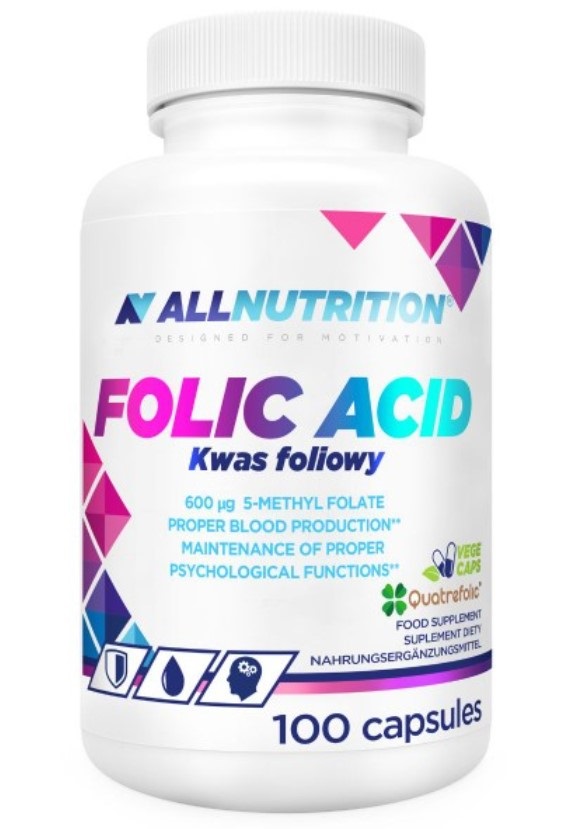
Allnutrition
Allnutrition - Folic Acid - 100 capsules
193 krIn stockWhy is this shown?
Historiskt katalogurval. Innehåll, mängd och form behöver kontrolleras mot aktuellt underlag.
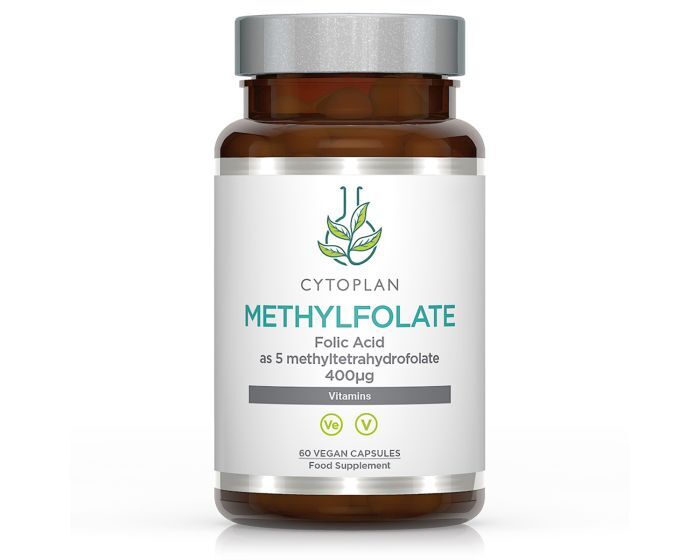
Cytoplan
Cytoplan - Methylfolate - 60 Vcaps
165 krIn stockWhy is this shown?
Historiskt katalogurval. Innehåll, mängd och form behöver kontrolleras mot aktuellt underlag.
FORMEDS
Formeds - BICAPS Menofem - 60 Caps
262 krIn stockWhy is this shown?
Historiskt katalogurval. Innehåll, mängd och form behöver kontrolleras mot aktuellt underlag.
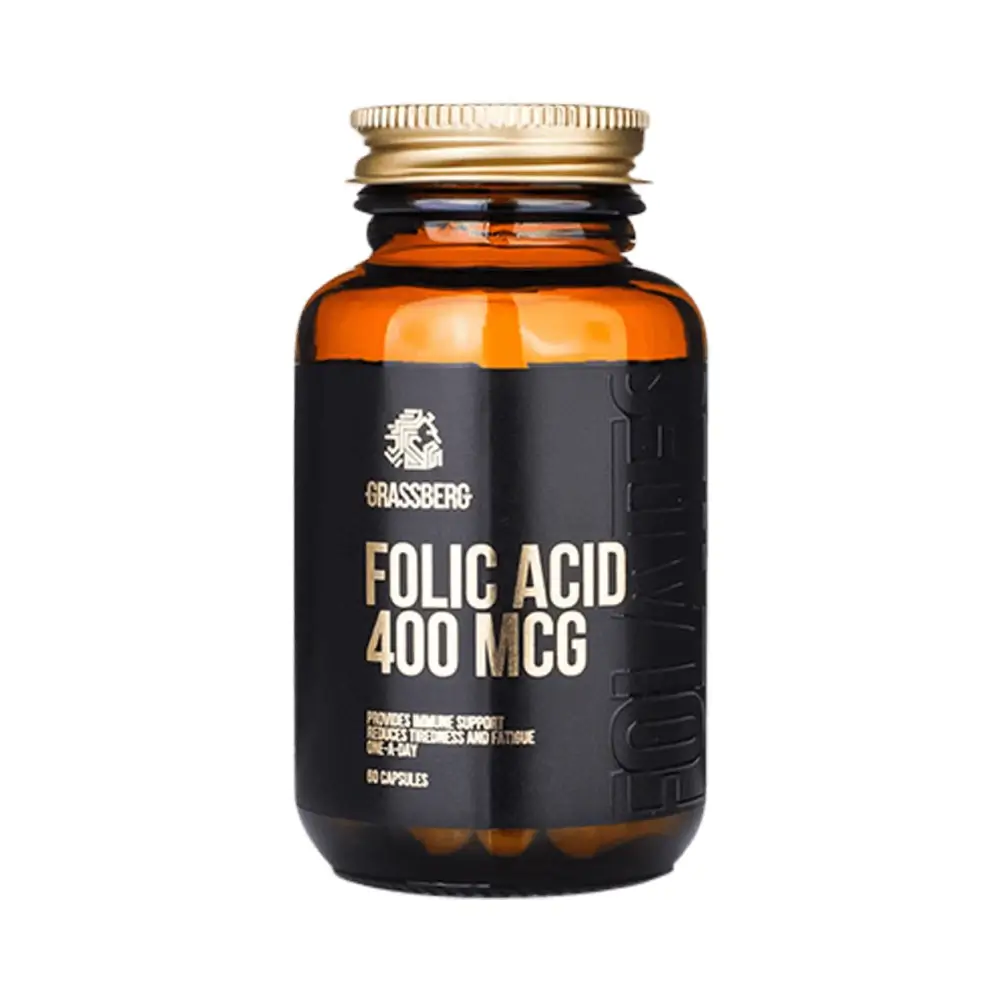
Grassberg
Grassberg - Folic Acid 400 mcg - Unflavoured
129 krIn stockWhy is this shown?
Historiskt katalogurval. Innehåll, mängd och form behöver kontrolleras mot aktuellt underlag.
OstroVit
Ostrovit - Magnesium Citrate - 60 Caps
70 krIn stockWhy is this shown?
Historiskt katalogurval. Innehåll, mängd och form behöver kontrolleras mot aktuellt underlag.


