Vitamin D3 Supplement: What to Know, How to Choose, Safety
Short answer
Vitamin D3 is cholecalciferol, the supplement form your body converts into the active hormone used in calcium and phosphate regulation. The best choice depends on the dose, age, diet, and whether you want D3 on its own or in a combined formula. Safety mainly means avoiding duplicate vitamin D and staying within age-specific upper limits.
Quick facts
- D3 is cholecalciferol and is inactive until the body converts it in the liver and kidney.
- 25(OH)D is the main blood marker used to assess vitamin D status.
- NHS advice says adults and children from age 1 need 10 micrograms a day; EFSA gives 15 micrograms a day for healthy people over 1 year.
- Adults should not take more than 100 micrograms a day; children aged 1 to 10 should not have more than 50 micrograms; infants under 12 months should not have more than 25 micrograms.
- Taking vitamin D3 with a meal that includes some fat is a practical choice because absorption is best with dietary fat.
- Oily fish, eggs, meat, and enriched mushrooms are named food sources.

What does vitamin D3 do in the body?
D3 is the form you take; the body turns it into the active hormone
Vitamin D3 is cholecalciferol, the form commonly used in supplements. It is biologically inactive until the body converts it in two steps: first in the liver to 25-hydroxyvitamin D [25(OH)D], then in the kidney to the active hormone 1,25-dihydroxyvitamin D [1,25(OH)2D] (calcitriol). NIH ODS vitamin D fact sheet explains this pathway, and EFSA’s scientific opinion describes the active form as the one that acts on calcium and phosphate handling.
| Stage | What it is | Why it matters |
|---|---|---|
| D3 (cholecalciferol) | Supplement form, not yet active | Provides the starting material your body can convert |
| 25(OH)D | Liver-made intermediate | The main circulating form used in vitamin D status testing |
| 1,25(OH)2D | Kidney-made active hormone | Acts in calcium and phosphate regulation |
Why calcium and phosphate regulation matters
The NHS says vitamin D helps regulate calcium and phosphate in the body, and that these nutrients are needed to keep bones, teeth and muscles healthy. NHS vitamin D guidance
Vitamin D3 is not the active substance itself; your body has to convert it before it can take part in calcium and phosphate regulation.
Why low vitamin D matters
When vitamin D is lacking, mineral balance can be disturbed over time. The NHS notes that deficiency can lead to rickets in children and osteomalacia in adults, while EFSA also points to soft bones in children and fragile, misshapen bones in adults. For readers choosing a supplement, the practical point is simple: vitamin D3 is there to support the body’s normal mineral-handling system, not to act as a shortcut around it. NHS vitamin D guidance EFSA dietary reference values for vitamin D
How much vitamin D do people in Ireland need?
Two public reference points
For a practical benchmark, the NHS says children from age 1 year and adults need 10 micrograms a day, which the same page converts to 400 IU. It also says babies up to 1 year need 8.5 to 10 micrograms a day (340 to 400 IU). EFSA’s European press summary gives an adequate intake of 15 micrograms a day for healthy people over 1 year of age, including pregnant and lactating women, and 10 micrograms a day for infants aged 7 to 11 months.

| Group | NHS / UK public advice | EFSA Europe |
|---|---|---|
| Adults and children 1+ year | 10 micrograms daily = 400 IU | 15 micrograms daily = 600 IU |
| Pregnancy and breastfeeding | 10 micrograms daily = 400 IU | 15 micrograms daily = 600 IU |
| Babies under 1 year | 8.5 to 10 micrograms daily = 340 to 400 IU | EFSA’s press summary gives 10 micrograms daily for infants aged 7 to 11 months |
What changes the amount you need?
These figures are total daily intake targets, not supplement-only doses. The NHS separately says most people can make enough vitamin D from sunlight from late March or early April to the end of September, but not from October to early March, and that it is difficult to get enough from food alone in autumn and winter (NHS). The County Durham and Darlington NHS page adds that vitamin D risk is shaped by skin colour, older age, pregnancy or breastfeeding, weight (BMI), how often you go outdoors, and whether clothing covers most of your skin (County Durham and Darlington NHS Foundation Trust).
Upper limits are not routine targets
1 microgram of vitamin D equals 40 IU, so 10 micrograms is 400 IU and 15 micrograms is 600 IU (NHS).
For upper limits, the NHS says adults, including pregnant and breastfeeding women and the elderly, should not take more than 100 micrograms a day (4,000 IU). It gives 50 micrograms a day (2,000 IU) for children aged 1 to 10 years and 25 micrograms a day (1,000 IU) for infants under 12 months. EFSA’s 2012 update also raised the adult and adolescent UL to 100 micrograms a day and the UL for children aged 1 to 10 to 50 micrograms a day.
Which foods and sun exposure can raise vitamin D?
Very few foods naturally contain enough vitamin D. The cited public-health pages do not give per-portion vitamin D amounts, so label checking is the most practical way to compare foods.
Food sources named in the public-health guidance
| Food source | Examples named in the sources | What to look for |
|---|---|---|
| Oily fish | Salmon, sardines, trout, herring, mackerel | One of the clearest natural food sources listed by the NHS |
| Eggs and meat | Egg yolks, red meat, liver | Present, but not described as enough on their own |
| Other foods | Mushrooms enriched with vitamin D | Only some products are enriched, so the label matters |
If you are relying on food, the key habit is to read the pack rather than assume a food contains vitamin D.
How sunlight makes vitamin D
“From about late March or early April to the end of September, most people should be able to make all the vitamin D they need from sunlight on their skin.” NHS vitamin D guidance
The body creates vitamin D from direct sunlight on the skin when outdoors, and EFSA says its dietary reference values assume minimal sun exposure, with only limited vitamin D synthesised from sunlight (NHS vitamin D guidance, EFSA). The NHS also says adults and children over 4 who are not often outdoors, live in an institution, or usually wear clothes that cover most of their skin may not make enough vitamin D from sunlight (NHS vitamin D guidance).
In practice, sunlight is a seasonal help, not a year-round guarantee. The NHS says that between October and early March the sun is not strong enough for the body to make enough vitamin D, while spring and summer are the months when outdoor exposure matters most (NHS vitamin D guidance). That is why food choices and fortification checks matter more once the days shorten and outdoor skin exposure falls.
What benefits are proven for vitamin D supplements?
EFSA’s press note says vitamin D helps maintain normal bones and muscle function, and EFSA’s scientific opinion explains that active vitamin D increases absorption of calcium and phosphate, which are needed for ossification and bone mineralization; the NHS also says vitamin D helps regulate calcium and phosphate, nutrients needed to keep bones, teeth and muscles healthy (EFSA dietary reference values press note; EFSA scientific opinion on vitamin D; NHS vitamin D guidance).

| Supported role | What the retrieved sources say |
|---|---|
| Normal bones and muscle function | Named directly in EFSA’s press note and reflected in NHS guidance (EFSA press note; NHS vitamin D guidance). |
| Calcium and phosphate absorption and utilisation | |
| Bone mineralization | EFSA links vitamin D action to ossification and bone mineralization (EFSA scientific opinion on vitamin D). |
What the research supports most consistently
For adults as a whole, the strongest systematic-review finding is not a large, universal supplement effect. A meta-analysis of 81 randomised trials with more than 53,000 participants found no significant effect on total fractures, hip fractures, falls, or bone mineral density, whether doses were high or low (Bolland et al., 2018). A later review found that intermittent or single high-dose supplementation did not prevent falls or fractures and may slightly increase fall risk (Myung and Cho, 2023).
Where vitamin D looks more useful is in narrower dosing patterns. A 2022 meta-analysis found daily 800–1,000 IU was associated with lower osteoporotic fracture risk and lower fall risk, while lower, higher, or intermittent dosing did not show the same pattern (Kong et al., 2022). That is why the evidence is best read as context-dependent: baseline vitamin D status, dose, schedule, and participant risk all matter.
Vitamin D is supported most clearly for bone and muscle physiology, not as a guaranteed all-purpose supplement.
What not to infer from the marketing
The ODS fact sheet recognises research on immune regulation and broader systemic effects, but says evidence beyond bone health is less conclusive (ODS vitamin D Health Professional Fact Sheet). That means vitamin D should not be sold to readers as a proven treatment for fatigue, weight loss, depression, or routine infection prevention. The practical takeaway is simpler: the best-supported uses are about correcting low intake or low status, not promising broad wellness effects for everyone.
How do you choose a vitamin D3 supplement in Ireland?
The best choice depends on the dose you need, your diet, age, how easily you swallow pills, and whether you want vitamin D on its own or in a combined formula. The label should say whether the product uses vitamin D3 or D2, and how much is in each capsule, drop, tablet, or daily serving. The NHS notes that 1 microgram equals 40 IU, so the same product can be compared in either unit if the pack is clear: NHS vitamin D guidance.
Compare the form before you compare the brand
| Form | When it is practical | What to check on the label |
|---|---|---|
| Capsules | Simple if you want a fixed daily serving | Number of capsules per day; capsule shell material |
| Softgels | Useful when you want one easy-to-take unit | Whether the shell is gelatin-based or vegetarian |
| Tablets | Good for straightforward, shelf-stable dosing | Serving size and any added ingredients |
| Drops | Practical when you want to measure a small serving precisely | How many drops equal one daily serving |
| Sprays | Handy if you prefer not to swallow pills | How many sprays make up the serving |
| Chewables | Useful if tablets are difficult to swallow | Sweeteners, flavourings, and serving count |
Read the panel, not the front of the box
Check whether the amount is given per unit or per daily serving, because a bottle may list a large number on the front while the serving is smaller or larger than expected. If the label uses only IU, convert it with the NHS rule that 1 microgram equals 40 IU; if it uses only micrograms, you can still compare it to other packs on that basis. The daily supplement advice on the NHS page is 10 micrograms for most adults and children from age 1, which also helps you see whether a product is meant for a simple once-daily routine or a different schedule: NHS vitamin D guidance.
Ingredients, diet, and storage matter
If you follow a vegetarian or vegan diet, look for a clearly marked vegan-friendly product and check the excipients, because NHS pharmacy guidance notes that D3 may not suit vegans and that vegan-friendly options exist: NHS pharmacy guidance on vitamin D products. Also check for allergen disclosure, gelatin in capsules, and any storage instructions such as keeping the pack closed and away from heat or moisture.
Buy the formulation that matches your routine and ingredients, not the shop logo.
A supplement sold in a pharmacy chain, supermarket, or online shop is not automatically better or worse than another one. For shoppers in Ireland, the useful comparison is the formula itself: D3 or D2, the amount per serving, the delivery form, and whether the label gives enough detail to use it exactly as intended.
Do you need vitamin D with calcium or vitamin K2?
Why vitamin D and calcium are linked
Vitamin D and calcium are often discussed together because vitamin D helps regulate the amount of calcium and phosphate in the body, and the County Durham and Darlington NHS trust notes that calcium cannot be absorbed properly without adequate vitamin D. The same NHS material says calcium is the mineral that can be taken as a supplement if dietary needs cannot be met from food alone. NHS vitamin D guidance County Durham and Darlington NHS vitamins and minerals guidance

A calcium-plus-vitamin-D product can therefore be a practical label choice when you want one tablet or capsule to cover both nutrients. It is not automatically the right choice for everyone, though: if you already get enough calcium from food, adding a separate calcium product may simply increase what you are taking without giving you more flexibility. If a clinician has set out a plan that includes both nutrients, a combined product can make the maths easier.
| Product choice | When it may suit | What to check on the label |
|---|---|---|
| Combined calcium + vitamin D | When both nutrients are being taken together as part of one routine | Total vitamin D from all products, plus total calcium |
| Separate calcium and vitamin D3 | When each nutrient needs to be adjusted separately | Whether another multivitamin already contains vitamin D |
| Vitamin D3 plus vitamin K2 | Only if you specifically want both as separate products | Do not assume K2 is required just because you take D3 |
What about vitamin K2?
Vitamin K2 is often sold alongside vitamin D, but the retrieved evidence here does not show that routine pairing is necessary. For that reason, it is better to treat K2 as a separate supplement decision, not as an automatic add-on to vitamin D3.
The biggest mistake is double-counting vitamin D: a multivitamin plus a standalone D3 plus a calcium-D tablet can add up quickly.
The NHS says adults and children aged 11 to 17 should not take more than 100 micrograms of vitamin D a day, children aged 1 to 10 should not have more than 50 micrograms, and infants under 12 months should not have more than 25 micrograms. Before buying a combined product, add up the vitamin D on every label first. NHS vitamin D upper limits
Is vitamin D3 safe in pregnancy and other risk groups?
Pregnancy and breastfeeding
NHS guidance says pregnant and breastfeeding women should consider 10 micrograms (400 IU) a day during autumn and winter. If a clinician has recommended a different amount, follow that advice. NHS vitamin D advice
Who needs closer review?
People with kidney disease need extra caution because the ODS conference summary says impaired renal function reduces the body’s ability to convert vitamin D to its active form and raises the risk of hypercalcaemia, vascular calcification, and nephrocalcinosis if intake is excessive. NHS vitamin D advice
| Group or medicine | Why it matters | Safer next step |
|---|---|---|
| Kidney disease | Excess intake can increase the risk of hypercalcaemia and calcium deposits | Use only with medical supervision |
| Orlistat | Can reduce absorption of vitamin D from foods and supplements | Ask about timing and dose |
Babies, children, older adults, and people with very low sun exposure or dark skin may need tailored advice as well. NHS guidance says adults and children over 4 who are not often outdoors, live in institutions, usually cover most of their skin, or have dark skin may need a daily supplement throughout the year, and it also sets age-specific upper limits for adults, children, and infants. NHS vitamin D advice
If you are taking more than one product, read every label and total the vitamin D before you buy another bottle. ODS vitamin D fact sheet
How should you take vitamin D3 and avoid common mistakes?
Build the dose into a simple daily routine
For most people, a daily supplement is the easiest pattern to keep. The NHS says children from age 1 and adults need 10 micrograms a day, and it also states that 1 microgram equals 40 IU, so 10 micrograms is 400 IU. NHS vitamin D guidance
Taking vitamin D3 with a meal that includes some fat is a practical choice, because the NIH Office of Dietary Supplements notes that vitamin D is absorbed best with dietary fat. The exact hour matters less than repeating the same habit consistently. NIH ODS vitamin D fact sheet
Why follow-up blood checks may be needed
When a clinician is checking status, the main blood marker is 25-hydroxyvitamin D, written as 25(OH)D. The ODS notes that vitamin D is first converted in the liver to 25(OH)D, and that measuring serum 25-hydroxyvitamin D is used to assess vitamin D status and adequacy of intake. NIH ODS vitamin D fact sheet NIH ODS consumer fact sheet
That is why blood re-checks may be used when someone is being treated for low status or is in a group a clinician wants to monitor. The consumer fact sheet also notes that levels below 30 nmol/L (12 ng/mL) are considered deficient, while levels above 125 nmol/L (50 ng/mL) may cause problems. NIH ODS consumer fact sheet
Common mistakes that are easy to avoid
| Mistake | Safer way to handle it |
|---|---|
| Confusing IU and micrograms | Check the label carefully: 1 microgram equals 40 IU, so 10 micrograms equals 400 IU. NHS vitamin D guidance |
| Stacking several supplements without checking the total | The NHS says adults, including pregnant and breastfeeding women, should not take more than 100 micrograms (4,000 IU) a day; children aged 1 to 10 should not have more than 50 micrograms, and infants under 12 months should not have more than 25 micrograms. NHS vitamin D guidance |
| Assuming summer sunlight guarantees enough vitamin D | The NHS says most people can make enough vitamin D from sunlight from about late March or early April to the end of September, but between October and early March sunlight is not strong enough. NHS vitamin D guidance |
| Using a product made for a different age group | Check the intended age band on the pack, because supplement amounts and upper limits differ for adults, children, and infants. NHS vitamin D guidance |
Used this way, vitamin D3 is a straightforward supplement: match the label to the person, keep the total intake in range, and use lab checks only when a clinician is following vitamin D status more closely. NIH ODS vitamin D fact sheet NHS vitamin D guidance
Safety and precautions
If you have kidney disease, use vitamin D only with medical supervision because excess intake can raise the risk of high calcium and calcium deposits. If you take orlistat, are pregnant or breastfeeding, or are buying for a child, ask a healthcare professional for advice on timing, dose, and the right age-specific product.
Read every label and total all vitamin D from multivitamins, calcium-D products, and standalone supplements before adding another bottle. Keep within the age-specific upper limits and seek healthcare advice if you are unsure which product fits your situation.
Supplements with the ingredients in this article
Compare contents, dose and price
Frequently asked questions
Can I take vitamin D3 with breakfast or do I need fat in the meal?
You can take vitamin D3 with breakfast if that meal includes some fat. The body absorbs vitamin D best with dietary fat, so the exact time matters less than taking it consistently.
What is the difference between vitamin D3 and vitamin D2?
Vitamin D3 is cholecalciferol, the form commonly used in supplements and the one described in this article. The practical difference for shoppers is which form the label says you are buying, so check whether the product is D3 or D2.
Do I need a blood test before starting a vitamin D supplement?
Not everyone needs one before starting, but blood checks may be used when a clinician is monitoring vitamin D status or low intake. The main marker is 25-hydroxyvitamin D, so ask a healthcare professional if you have a reason to monitor levels.
Can I take vitamin D3 and a multivitamin together?
Yes, but you need to add up the vitamin D from both products. The main risk is double-counting, so check the total daily amount against the age-specific upper limit.
Is vitamin D3 suitable for vegans and vegetarians?
Some vitamin D3 products are suitable, but others are not. Look for a clearly marked vegan-friendly product and check the capsule shell and excipients, because gelatin may be used in some softgels or capsules.
Can I use the same vitamin D supplement all year in Ireland?
Sometimes, but it depends on the person and the season. The body text says many people can make enough vitamin D from sunlight in spring and summer, while autumn and winter are different, and people with low sun exposure or other risk factors may need year-round supplementation.
Sources
- Vitamin D - Health Professional Fact Sheet (external link)
- complet_chapitres.indd (external link)
- Vitamin D (external link)
- Vitamin D: EFSA sets dietary reference values | EFSA (external link)
- Vitamins and minerals :: County Durham and Darlington NHS Foundation Trust (external link)
- Effects of vitamin D supplementation on musculoskeletal health: a systematic review, meta-analysis, and trial sequential analysis - PubMed (external link)
- Effects of intermittent or single high-dose vitamin D supplementation on risk of falls and fractures: a systematic review and meta-analysis. (external link)
- Effect of Vitamin D Supplementation on Risk of Fractures and Falls According to Dosage and Interval: A Meta-Analysis - PubMed (external link)
- Guidelines for Treating Vitamin D (external link)
- Upper intake levels reviewed for vitamin D and calcium | EFSA (external link)
- Vitamin D: Moving Toward Evidence-based Decision Making in Primary Care (external link)
- Vitamin D - Health Professional Fact Sheet (external link)
- 2 • VITAMIN D FACT SHEET FOR CONSUMERS (external link)
Read more
Products related to this article

Child Life
Child Life - Vitamin D3 - 1 fl oz
124 krIn stockWhy is this shown?
Katalogkoppling till 1 av 2 valda ingredienser · Ämnesnamnet förekommer i produktnamnet · I lager · Betyg 5.0 av 16 kunder
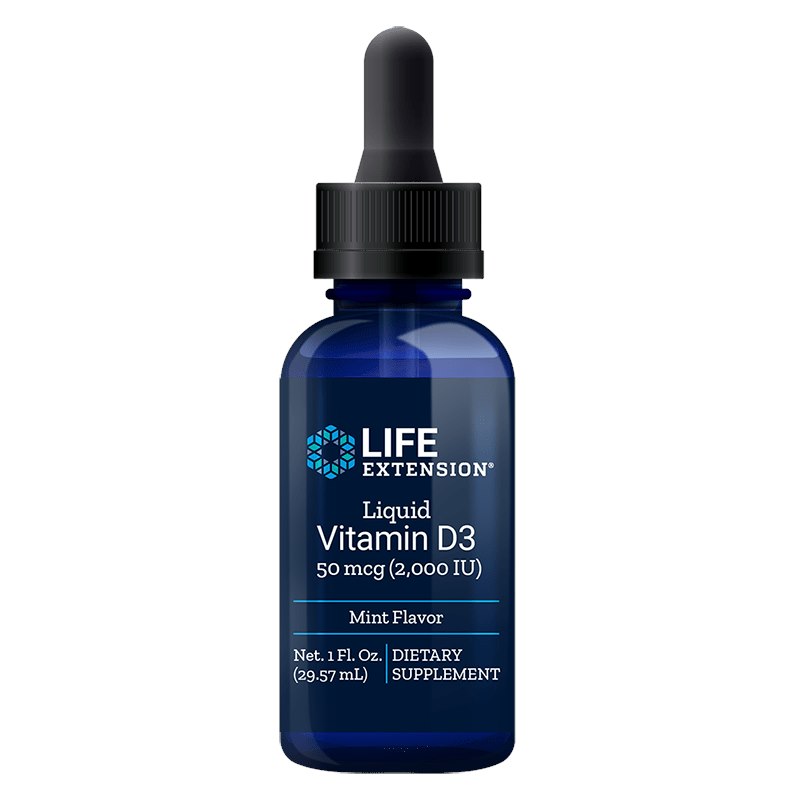
Life Extension
Life Extension - Liquid Vitamin D3 - 29.57ml
288 krIn stockWhy is this shown?
Katalogkoppling till 1 av 2 valda ingredienser · Ämnesnamnet förekommer i produktnamnet · I lager · Betyg 5.0 av 13 kunder
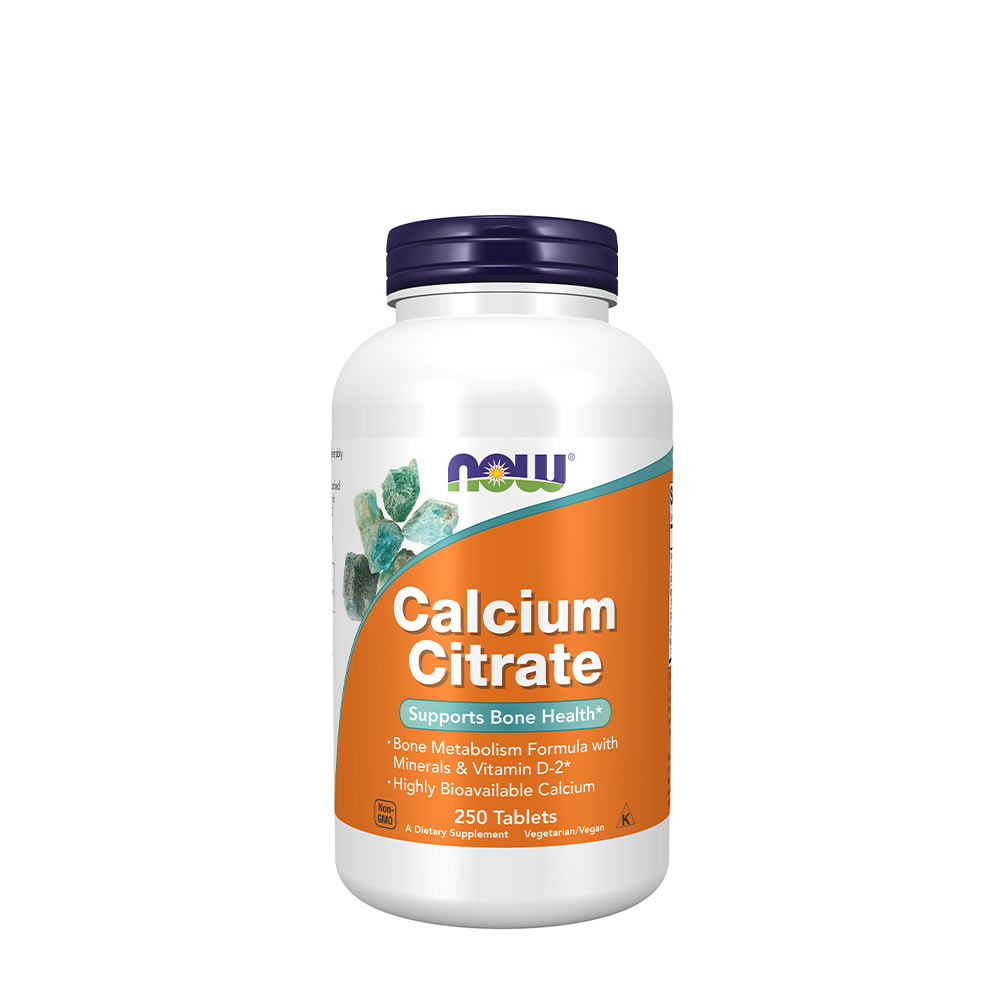
NOW Foods
NOW Foods - Calcium Citrate With Minerals & Vitamin D2 - 250 Tabs
439 krIn stockWhy is this shown?
Katalogkoppling till 1 av 2 valda ingredienser · Ämnesnamnet förekommer i produktnamnet · I lager · Betyg 5.0 av 16 kunder

NOW Foods
NOW Foods - Calcium & Magnesium, Citrate Powder With Vitamin D3 - 227g
221 krIn stockWhy is this shown?
Katalogkoppling till 1 av 2 valda ingredienser · Ämnesnamnet förekommer i produktnamnet · I lager · Betyg 4.9 av 13 kunder
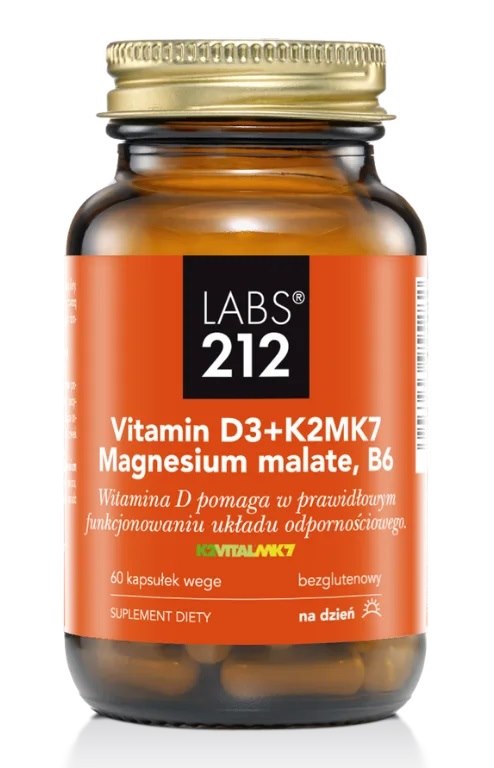
LABS 212
LABS 212 - Vitamin D3 + K2MK7 Magnesium Malate B6 - 60 Caps
254 krIn stockWhy is this shown?
Katalogkoppling till 1 av 2 valda ingredienser · Ämnesnamnet förekommer i produktnamnet · I lager


