What is zinc in chemistry and nutrition?
Short answer
Zinc is a chemical element, and in nutrition the same word also names a mineral found in food and supplements. On a supplement label, elemental zinc is the amount of zinc itself, which is the number you use to compare products.
Quick facts
- Zinc is a chemical element with an atomic mass of 65.39 Da.
- In nutrition, zinc is also used as a mineral name.
- Supplement labels list elemental zinc, not the full compound weight.
- Common supplement forms include zinc sulfate, zinc gluconate, zinc acetate, zinc citrate, and zinc oxide.
- EFSA's adult upper limit for zinc is 25 mg/day.
- Zinc-rich foods listed include oysters, beef, crab, pumpkin seeds, fortified cereals, and oats.

What does zinc mean in chemistry and nutrition?
Zinc as a chemical element
Zinc is the name of a chemical element in chemistry, and EFSA’s zinc opinion gives it an atomic mass of 65.39 Da and describes it as the 24th most abundant element in Earth’s crust. EFSA zinc opinion
In nutrition writing, the same word is also used for a mineral. EFSA defines a mineral as a naturally occurring inorganic element needed in the diet for normal growth, development and health, and it gives zinc as one of the examples. EFSA mineral definition
Zinc as a dietary nutrient
EFSA defines an essential nutrient as any substance a living organism must consume from the diet in order to support normal health, development and growth. In that sense, zinc belongs to the group of nutrients that must come from food rather than being made in sufficient amounts by the body. EFSA essential nutrient definition
The NIH Office of Dietary Supplements describes zinc as an essential mineral found throughout the body. Its fact sheet says zinc is needed for catalytic activity of enzymes, immune function, growth, wound healing, DNA synthesis, taste and development, and it notes total body zinc of about 1.5 g in women and 2.5 g in men, mostly stored in muscle and bone. NIH ODS zinc fact sheet
Element, compound, and label wording
What appears on a supplement label is not always the same as the ingredient name. The NIH fact sheet explains that labels list the amount of elemental zinc, not the weight of the full zinc-containing compound. EFSA also describes food supplements as concentrated sources of nutrients marketed in dose form, which is why the distinction matters when comparing products. NIH ODS zinc fact sheet EFSA food supplements
| Term | What it means here |
|---|---|
| Zinc | A chemical element and also the mineral discussed in nutrition |
| Mineral | A naturally occurring inorganic element needed in the diet |
| Essential nutrient | Something the body must consume from the diet to support normal health, development and growth |
| Elemental zinc on a label | The amount of zinc itself, not the full weight of the zinc-containing compound |
EFSA’s zinc opinion also says meat, legumes, eggs, fish, and grains and grain-based products are rich dietary zinc sources. EFSA zinc opinion
Key takeaway: in nutrition, “zinc” can mean the element, the dietary mineral, or the elemental amount listed on a supplement label.
What does elemental zinc mean on a label?
Elemental zinc is the amount of zinc itself that a product provides, not the full weight of the zinc-containing compound. The NIH Office of Dietary Supplements says supplement labels list the amount of elemental zinc, rather than the weight of the whole compound such as zinc gluconate or zinc sulfate. NIH Zinc Health Professional Fact Sheet
What the label is counting
On a label, “elemental” is a counting term. It tells you how much zinc is being counted as zinc, regardless of whether the source ingredient is a salt or another compound. That is why the zinc line is the figure to compare between products, while the compound name tells you which source was used. EFSA describes food supplements as concentrated sources of nutrients marketed in dose form, and its labelling rules require the name of the nutrient category or substance and the daily portion to be stated. EFSA on food supplements
The zinc source can be named in different ways, but the number tied to zinc is the amount you should read as the zinc content. The compound name is not a separate zinc total; it is the source description. The NIH fact sheet gives zinc sulfate, zinc acetate, and zinc gluconate as common supplement forms. NIH Zinc Health Professional Fact Sheet
How to read common label wording
| What you see on the panel | How to read it |
|---|---|
| Zinc with a source name in brackets | The product is naming both the zinc amount and the compound used as the source. |
| Zinc followed by a number and no source name | The number attached to zinc is the amount of elemental zinc shown on the label. |
| Only a zinc compound name is listed | Check whether the panel also states the zinc amount, because the compound name alone does not give the elemental zinc figure. |
A practical way to avoid mistakes
If you are comparing products, look for the line that says zinc and then find the amount given with it. That is the figure that lets you compare one product with another. The compound name tells you the source; the elemental amount tells you how much zinc the label is counting. NIH explanation of elemental zinc on labels
Key takeaway: elemental zinc is not a stronger kind of zinc; it is the zinc amount on the label, separate from the weight of the compound that supplies it.
Elemental zinc vs zinc: why the numbers differ
“Zinc” is the nutrient name; the label may also name the source
EFSA defines a mineral as a naturally occurring inorganic element needed in the diet for normal growth, development and health, and zinc is one of the examples it gives. EFSA also defines an essential nutrient as something the body must consume from the diet because it cannot make enough on its own.
EFSA says food supplements are concentrated sources of nutrients marketed in dose form, and its summary of EU rules says labelling must identify the names of the categories of nutrients or substances that characterise the product and the portion recommended for daily consumption. EFSA on food supplements
Elemental zinc is the number you compare
The NIH Office of Dietary Supplements states that supplement labels list the amount of elemental zinc, not the weight of the full zinc-containing compound, such as zinc gluconate or zinc sulfate.
That distinction matters because a tablet or capsule can contain a zinc salt whose total weight is greater than the elemental zinc it delivers. A label that lists only the source compound weight is not directly comparable with a label that lists elemental zinc. For buying decisions, the useful line is the one that states elemental zinc per serving. NIH ODS zinc fact sheet
Compare products by elemental zinc per serving, not by tablet or capsule weight alone.
Same elemental zinc, different source ingredients
The NIH fact sheet names common supplement source ingredients including zinc sulfate, zinc acetate, zinc gluconate, and zinc oxide. NIH ODS zinc fact sheet Those names tell you the form of the ingredient, but the label still expresses the zinc amount as elemental zinc. That means two products can present the same zinc amount on the label while using different source ingredients and having different total weights.
| Label term | What it means | How to read it |
|---|---|---|
| Zinc | The nutrient name | Look for the serving amount and the source ingredient name |
| Elemental zinc | The actual zinc amount declared on the label | Use this number to compare products |
| Zinc sulfate, zinc gluconate, zinc acetate, zinc oxide | The source ingredient supplying zinc | The compound name can differ even when the elemental zinc amount is the same |
The practical rule is simple: if you want to compare two supplements, compare the elemental zinc per serving and ignore capsule or tablet weight unless the label explicitly connects that weight to elemental zinc. The ingredient name helps you understand the source; the elemental zinc figure is the number that lets you compare what the label says each serving provides. NIH ODS zinc fact sheet; EFSA on food supplements
How does zinc work in the body?
Zinc is a helper for enzymes and gene control
EFSA says zinc has a catalytic role in each of the six classes of enzymes and a key biochemical role in regulation of gene expression. The NIH Office of Dietary Supplements describes it as critical for enzyme catalysis, immune function, growth, and other roles. NIH Office of Dietary Supplements: Zinc fact sheet

That is why zinc appears in many different cell processes at once. EFSA Scientific Opinion on Dietary Reference Values for zinc
Why low zinc can show up in several body systems
| Body role | What the source says |
|---|---|
| Enzymes | Zinc has a catalytic role in each of the six enzyme classes. EFSA Scientific Opinion on Dietary Reference Values for zinc |
| Gene expression | EFSA identifies regulation of gene expression as a key biochemical role. EFSA Scientific Opinion on Dietary Reference Values for zinc |
| Whole-body functions | NIH describes zinc as critical for immune function, growth, and other roles. NIH Office of Dietary Supplements: Zinc fact sheet |
A mineral that helps enzymes work and helps regulate gene expression can influence more than one body process at the same time.
The body keeps zinc on a tight budget
NIH reports total body zinc stores of about 1.5 to 2.5 grams.
What do research and authorised claims actually support?
Normal function is the clearest evidence
EFSA defines a mineral as a naturally occurring inorganic element needed in the diet for normal growth, development and health, and an essential nutrient as something the body must consume from the diet to support normal health, development and growth. The NIH Office of Dietary Supplements describes zinc as an essential mineral found throughout the body, needed for catalytic activity of enzymes, immune function, growth, wound healing, DNA synthesis, taste and development. It also reports total body zinc of about 1.5 g in women and 2.5 g in men. NIH Zinc Health Professional Fact Sheet
What an EU health claim does, and does not, mean
EFSA says a health claim is any statement linking a food or ingredient to a specific health benefit, and that claims are only approved after rigorous scientific assessment. Its public overview says EFSA has evaluated more than 2,300 health-claim applications, and that over 260 health claims were approved in the EU as of 2023, while more than 70% were rejected because of a lack of scientific evidence. EFSA Health Claims
For supplements, EFSA also says presentation and advertising must not attribute to food supplements the property of preventing, treating or curing a human disease. In the zinc-specific assessment retrieved here, EFSA examined a claim about preventing bad breath by neutralising volatile sulphur compounds and found it did not meet the health-function criteria. EFSA Food Supplements Zinc and prevention of bad breath
Where the research is more specific
| Area | What the evidence says | How to read it |
|---|---|---|
| Age-related macular degeneration | Dietary zinc intake in the highest decile, at 15.8 mg/day or more, was associated with about 44% lower risk of any AMD and 46% lower risk of early AMD over 5 to 10 years. AREDS and AREDS2 found that daily formulations including zinc, together with antioxidants and copper, reduced progression to advanced AMD by about 25% over 5 years. NIH Zinc Health Professional Fact Sheet | Specific trial results for specific formulations, not a general disease promise for all zinc products |
| Type 2 diabetes | A meta-analysis of 16 studies with 146,027 adults found that the highest zinc-intake group had about 13% lower risk than the lowest group, but the evidence was still insufficient to recommend zinc supplementation for prevention or management. NIH Zinc Health Professional Fact Sheet | Observational signal, not enough for a supplement claim about disease care |
The practical rule is simple: an authorised claim is about a normal body function under set conditions, not a free-floating promise that zinc will diagnose, prevent, or treat a disease.
So when readers see zinc mentioned for immune support, wound healing, or other everyday functions, the evidence-backed takeaway is about helping the body do normal jobs well. When the claim moves into disease language, EU rules require explicit authorisation, and the retrieved EFSA material shows that this bar is high. EFSA Health Claims
How much zinc do you need, and which foods supply it?
Reference intakes are set by authority and life stage
For a European reader, the key point is that EFSA’s zinc values are not one fixed number. In its scientific opinion on dietary reference values for zinc, adult women have an AR of 6.2 to 10.2 mg/day and a PRI of 7.5 to 12.7 mg/day, while adult men have an AR of 7.5 to 12.7 mg/day and a PRI of 9.4 to 16.3 mg/day, depending on phytate intake. The U.S. NIH Office of Dietary Supplements fact sheet uses a simpler set of reference values: 8 mg/day for adult women, 11 mg/day for adult men, 11 mg/day in pregnancy, and 12 mg/day during lactation.

| Group | EFSA reference intake | NIH ODS / NASEM reference intake |
|---|---|---|
| Infants, children, teens | PRIs span roughly 2.9 to 14.2 mg/day across life stages | About 2 to 3 mg/day for infants, 3 to 8 mg/day for children, and 8 to 11 mg/day for teens and adults |
| Adult women | AR 6.2 to 10.2 mg/day; PRI 7.5 to 12.7 mg/day | 8 mg/day |
| Adult men | AR 7.5 to 12.7 mg/day; PRI 9.4 to 16.3 mg/day | 11 mg/day |
| Pregnancy | Separate EFSA values are given in the opinion | 11 mg/day |
| Lactation | Separate EFSA values are given in the opinion | 12 mg/day |
These are reference intakes for daily total intake, not supplement serving sizes.
Foods that contribute zinc to the day
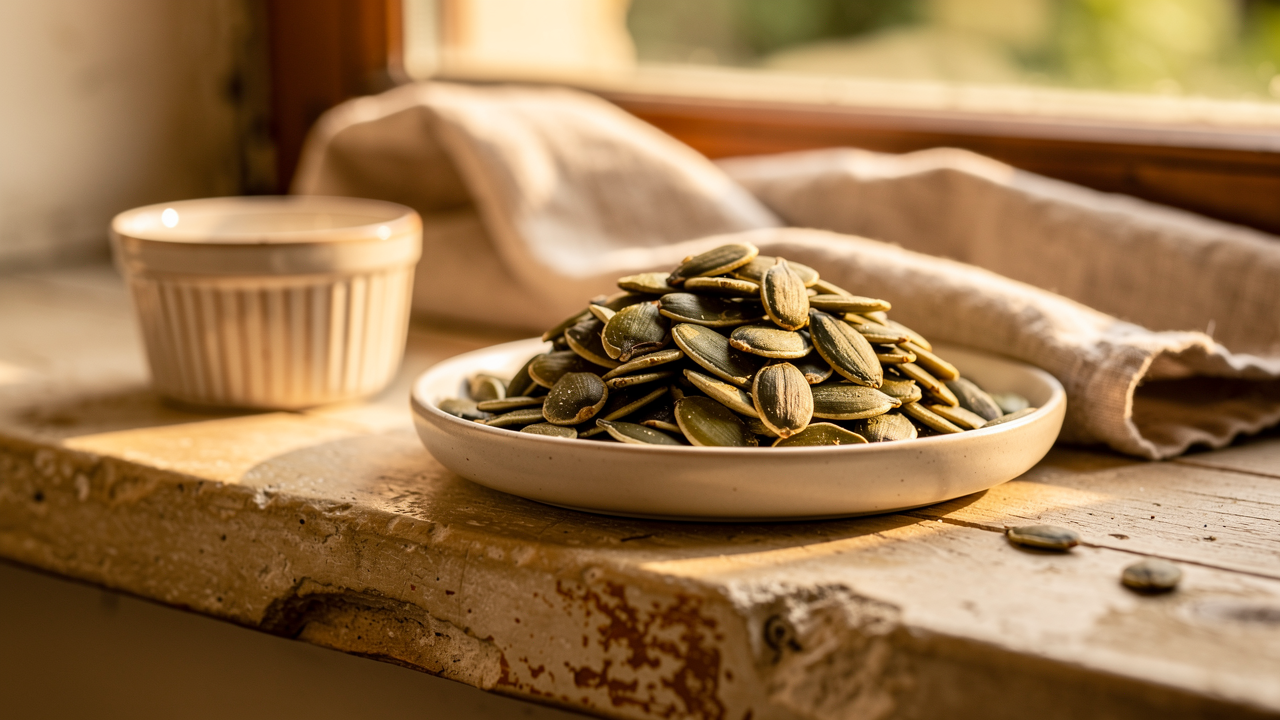
The NIH fact sheet lists oysters, beef, crab, pumpkin seeds, fortified cereals and oats among zinc-rich foods, and also notes dairy, legumes and grains as contributors. Typical amounts cited there include at least 28 mg in 3 oz of oysters, about 3.8 mg in beef, 3.2 mg in crab, 2.2 mg in pumpkin seeds, 2.8 mg in fortified cereals and 2.3 mg in oats.
| Food | Typical zinc amount | How it can fit a meal |
|---|---|---|
| Oysters | ≥28 mg per 3 oz | Very concentrated source |
| Beef | About 3.8 mg | Main-course contributor |
| Crab | About 3.2 mg | Seafood contributor |
| Pumpkin seeds | About 2.2 mg | Snack or topping |
| Fortified cereals | About 2.8 mg | Breakfast contributor |
| Oats | About 2.3 mg | Grain-based contributor |
A higher-phytate menu can require more attention to food choices because phytate can reduce zinc absorption.
Turning the numbers into a day of eating
EFSA’s phytate-adjusted reference values show why a menu based mostly on high-phytate foods may need more planning than one that includes a mix of zinc-containing foods.
Which zinc supplement forms are used, including zinc sulfate?
EFSA describes food supplements as concentrated sources of nutrients sold in measured doses, and EU labelling rules require the category of nutrient or substance and the portion recommended for daily consumption to be stated. EFSA also says it assesses the safety and relative bioavailability of nutrient sources used in supplements. EFSA food supplements
Read the elemental zinc number first
NIH ODS says supplement labels list elemental zinc, not the weight of the whole zinc compound. So “zinc sulfate” is a source name, not a dose by itself: the number that lets you compare products is the elemental zinc per daily serving. The same logic applies to other zinc salts used in supplements, including zinc gluconate and zinc acetate. NIH ODS zinc fact sheet
Salt name first, dose number second: compare elemental zinc per serving, not tablet weight.
How the common forms compare on the shelf
| Form | What the retrieved sources show | What matters most for shopping |
|---|---|---|
| Zinc sulfate | Named by NIH ODS as one of the supplement forms used. NIH ODS | Elemental zinc per daily serving. |
| Zinc gluconate | NIH ODS notes absorption data for gluconate in young adults. NIH ODS | Elemental zinc per daily serving. |
| Zinc citrate | NIH ODS notes absorption data for citrate in young adults, with citrate or gluconate at about 61% absorption in the cited source notes. NIH ODS | Elemental zinc per daily serving. |
| Zinc acetate | Named by NIH ODS as a supplement form used. NIH ODS | Elemental zinc per daily serving. |
| Zinc picolinate | No direct comparative figure is given in the retrieved source text here. | Check the elemental zinc number on the label. |
| Zinc oxide | NIH ODS notes about 50% absorption for oxide in young adults in the cited source notes. NIH ODS | Elemental zinc per daily serving. |
What usually matters in practice
For most buyers, the practical choice is the product that gives the right elemental amount per serving in a dosage form you can take consistently. Ease of swallowing, taste, and tolerability often matter more than the salt name on the front of the pack. The source notes do show differences between forms, but they do not support a blanket rule that one zinc salt is always best for everyone. NIH ODS zinc fact sheet
Common mistakes to avoid: comparing total tablet weight instead of elemental zinc; assuming one named salt is always superior; and ignoring the amount of zinc per daily serving. EFSA’s labelling framework and NIH ODS’s elemental-zinc wording both point back to the same practical step: read the serving amount, not just the compound name. EFSA food supplements NIH ODS zinc fact sheet
When can zinc be harmful or need medical advice?
Upper limit: useful benchmark, not a target
For European readers, EFSA’s long-standing tolerable upper intake level for adults is 25 mg/day of zinc, and EFSA defines a UL as the highest chronic daily intake that is unlikely to pose a risk of adverse effects, not a recommended intake. EFSA also uses ULs when assessing the safety of nutrient sources in food supplements and when supporting EU decisions on maximum amounts in supplements and fortified foods (EFSA food supplements overview).
That matters because long-term intakes from supplements can push total intake above the level EFSA considers unlikely to cause harm, especially if the product is combined with zinc-rich foods or other fortified products (EFSA food supplements overview).
What excess zinc can do
EFSA’s safety work highlights copper balance as the main concern with chronic high zinc intake: too much zinc can alter copper status, and copper deficiency can lead to problems such as anaemia and neutropenia (EFSA DRVs summary report). In other words, the risk is not just “more zinc” — it is also pushing other minerals out of balance.
EFSA’s UL is a safety ceiling, not a daily goal.
Medicines that can interact
Zinc can reduce the absorption of some medicines, and some medicines can also change how much zinc you retain. The NIH Office of Dietary Supplements lists quinolone and tetracycline antibiotics, penicillamine, and iron as important examples, and notes that diuretics can increase zinc excretion (NIH ODS zinc fact sheet). The same source advises separating zinc from certain antibiotics by 2 to 6 hours and from penicillamine by at least 1 hour (NIH ODS zinc fact sheet).
| Interaction group | Why it matters | Practical point |
|---|---|---|
| Quinolone and tetracycline antibiotics | Absorption can be reduced | Separate doses by hours, not minutes |
| Penicillamine | Absorption can be affected | Leave at least 1 hour apart |
| Diuretics and high-dose iron | Zinc balance can be altered | Check timing with a clinician |
Who should not self-start zinc
If you take prescription medicines, have a condition that affects mineral balance, or are unsure whether symptoms are really due to zinc deficiency, self-supplementation is a poor shortcut: the same symptoms can have other causes, while the supplement can still interact with treatment (NIH ODS zinc fact sheet; EFSA DRVs summary report). Children and adolescents also have age-specific upper limits in the NIH ODS review, so a product chosen for an adult should not be assumed suitable for a younger person (NIH ODS zinc fact sheet).
Safety and precautions
Zinc supplements should be read by elemental zinc per serving, and the adult upper limit in the article is 25 mg/day. Do not self-start zinc if you take prescription medicines or are unsure about mineral balance, because zinc can affect some medicines and some medicines can affect zinc.
Ask a healthcare professional before use in pregnancy, for children and adolescents, or if you take quinolone or tetracycline antibiotics, penicillamine, iron, or diuretics.
Frequently asked questions
How is zinc deficiency diagnosed?
The article does not describe a specific diagnostic method. It does say that symptoms can have other causes, so symptoms alone are not enough to assume zinc deficiency.
Can a blood test confirm zinc status?
The article does not say that a blood test alone can confirm zinc status. It focuses instead on label reading, intake, and the fact that symptoms may have other causes.
Does cooking affect zinc content in food?
The article does not discuss cooking and zinc content. It does note that phytate can reduce zinc absorption, which is different from cooking losses.
Is zinc lost when grains are refined?
The article does not address refinement directly. It does say that grains and grain-based products can be zinc sources, and that phytate can reduce absorption in higher-phytate menus.
Is zinc stored in the body for a long time?
The article says the body contains about 1.5 to 2.5 grams of zinc, mostly in muscle and bone. It does not describe these stores as long-term reserves, only that zinc is kept on a tight budget.
Sources
- mineral | EFSA (external link)
- essential nutrient | EFSA (external link)
- Zinc - Health Professional Fact Sheet (external link)
- Food supplements | EFSA (external link)
- Dietary Reference Values for nutrients Summary report (external link)
- Health claims | EFSA (external link)
- Zinc and prevention of bad breath | EFSA (external link)
- Scientific Opinion on Dietary Reference Values for zinc (external link)
- complet_chapitres.indd (external link)