Which Foods Are Highest in Zinc?
Short answer
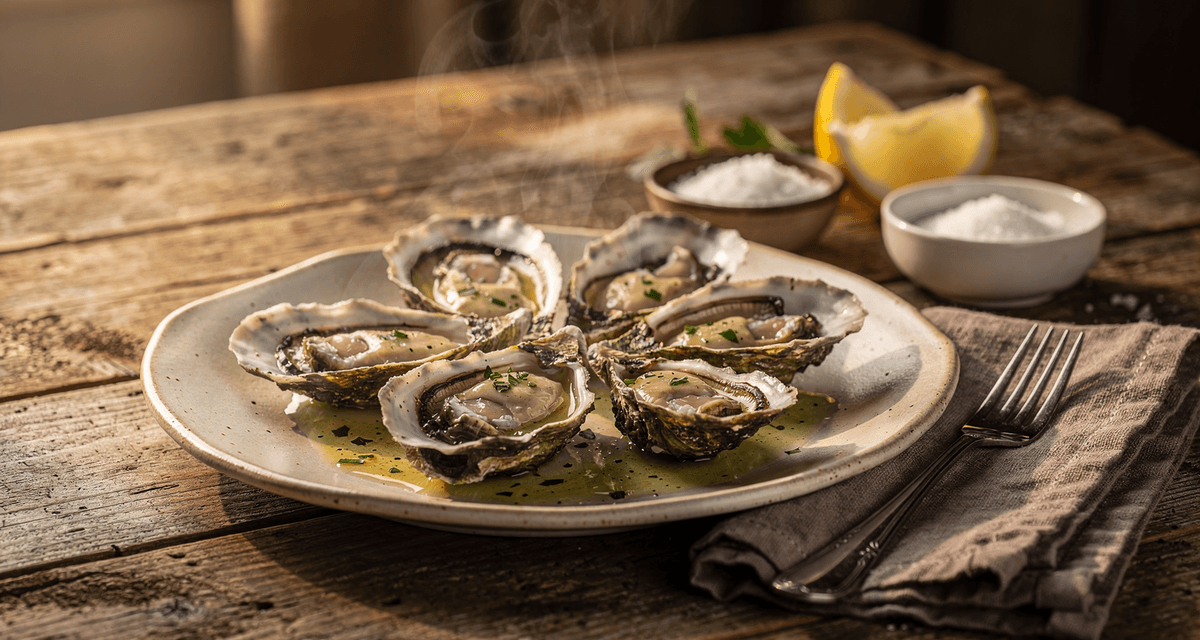
Oysters are the highest-zinc foods in the figures discussed here, far ahead of other foods on both serving-size and approximate 100 g comparisons. After oysters, beef ranks highly, while fortified cereals, pumpkin seeds, some beans, cheese, tofu, and yoghurt can also add meaningful amounts depending on the serving size.
Quick facts
- Cooked eastern oysters reached 74.06 mg zinc per 3 oz in the USDA list.
- Cooked top round beef provided 4.44 mg zinc per 3 oz.
- Quaker Oat Life was listed at 4.41 mg per 0.75 cup.
- Roasted pumpkin seeds were listed at 2.2 mg per 1 oz.
- Firm tofu was listed at 1.98 mg per 1/2 cup.
- EFSA adult reference intakes vary with dietary phytate.
Which foods are highest in zinc?
Top of the chart: oysters first, then red meat
The clearest zinc outliers in the USDA household-measure zinc list are oysters. Eastern oysters are listed at 74.06 mg per 3 oz when cooked, breaded and fried; 66.81 mg per 3 oz when wild and cooked with moist heat; 51.88 mg per 3 oz when wild and cooked with dry heat; and 32.23 mg per 3 oz when farmed and raw. After oysters, the same USDA ranking moves down sharply to red meat: beef chuck short ribs provide 10.16 mg per 3 oz, and beef shank crosscuts 8.92 mg per 3 oz.
USDA FoodData Central explains that nutrient data are expressed on a 100 g edible-portion basis and converted to portions with food weights. Using that 100 g convention, the approximate concentrations below are calculated from the USDA 3 oz household measures.
| Rank | Food | Typical serving in source | Zinc per serving | Approx. zinc per 100 g |
|---|---|---|---|---|
| 1 | Eastern oyster, cooked, breaded and fried | 3 oz | 74.06 mg | 87.1 mg |
| 2 | Eastern oyster, wild, cooked, moist heat | 3 oz | 66.81 mg | 78.6 mg |
| 3 | Eastern oyster, wild, cooked, dry heat | 3 oz | 51.88 mg | 61.0 mg |
| 4 | Eastern oyster, farmed, raw | 3 oz | 32.23 mg | 37.9 mg |
| 5 | Beef chuck short ribs, cooked, braised | 3 oz | 10.16 mg | 12.0 mg |
| 6 | Beef shank crosscuts, cooked, simmered | 3 oz | 8.92 mg | 10.5 mg |
A useful zinc-rich foods chart should go wider than shellfish
Authoritative lists do not stop at oysters and beef. In the same USDA zinc data, spiny lobster provides 6.18 mg per 3 oz; turkey leg 3.63 mg per 3 oz; Swiss cheese 5.77 mg per cup diced; plain low-fat yogurt 1.51 mg per 6 oz container; adzuki beans 9.93 mg per cup raw; pumpkin and squash seed kernels 9.02 mg per cup roasted; almonds 4.57 mg per cup; peanuts 4.04 mg per cup; tofu 1.98 mg per 1/2 cup; and whole-wheat pasta 2.7 mg per cup dry. EFSA also classifies meat, legumes, eggs, fish, and grains and grain-based products as rich dietary zinc sources.
Why “highest zinc foods” depends on how you compare
The ranking changes with the denominator. Per 100 g, oysters dominate concentration; per typical serving, they still dominate, but foods people eat more often can matter more in daily intake. In EU surveys reviewed by EFSA, the main contributors to zinc intakes were meat and meat products, grains and grain-based products, and milk and dairy products. Zinc also comes from fortified foods: NIH ODS notes that it occurs naturally in foods and is added to some products, and the USDA list shows branded cereals such as Quaker Oat Life at 4.41 mg per 0.75 cup and Maple Brown Sugar Life at 4.31 mg per 0.75 cup. The practical rule is to compare like with like: same cooked or raw state, same species or product, and the same serving basis.
How much zinc do you need each day?
The reference number depends on both authority and diet pattern
EFSA does not give one single adult zinc target for Europe. Its adult Population Reference Intakes rise with dietary phytate, because phytate can reduce zinc absorption: adult women range from 7.5 to 12.7 mg/day and adult men from 9.4 to 16.3 mg/day across diets containing about 300 to 1,200 mg/day of phytate. By contrast, the U. S. NIH ODS RDA table uses fixed targets for adults: 8 mg/day for women and 11 mg/day for men.
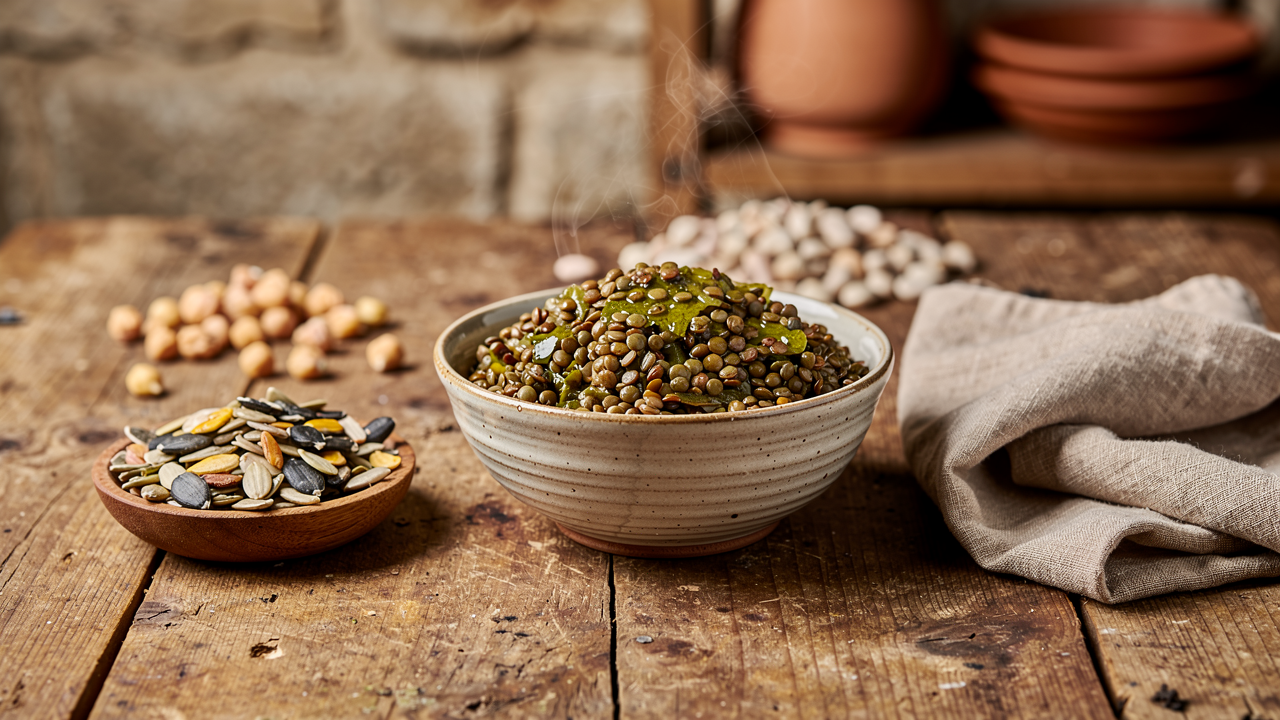
That difference matters in practice. A reader eating more whole grains and legumes may fit better with EFSA’s higher-phytate framework than with a single universal “adult zinc” number. For Nordic readers, the directly retrieved European benchmark here is EFSA.
Reference intakes by life stage
| Group | EFSA (Europe) source | NIH ODS (U.S.) source |
|---|---|---|
| Infants | 7–11 months: 2.9 mg/day | 0–6 months: 2 mg/day (AI); 7–12 months: 3 mg/day |
| Children | 1–3 y: 4.3 mg; 4–6 y: 5.5 mg; 7–10 y: 7.4 mg | 1–3 y: 3 mg; 4–8 y: 5 mg; 9–13 y: 8 mg |
| Pregnancy and lactation | Add 1.6 mg/day in pregnancy and 2.9 mg/day in lactation to the adult baseline | Pregnancy: 12 mg teens, 11 mg adults; lactation: 13 mg teens, 12 mg adults |
One easy mistake is comparing these tables as if the age bands were identical. They are not: EFSA uses different child and teen cut-offs, and only EFSA adjusts adult needs for phytate.
What that looks like in food
The USDA zinc list gives a rough reality check. A 3 oz cooked top round beef serving provides 4.44 mg; 0.75 cup Quaker Oat Life provides 4.41 mg; 1 cup roasted pumpkin and squash seed kernels provides 9.02 mg; and 3 oz cooked wild eastern oysters provides 66.81 mg. So a U. S. adult woman’s 8 mg/day is roughly covered by one cup of those seeds, or by about two 3 oz beef servings; a U. S. adult man’s 11 mg/day takes a bit more deliberate planning.
These are intake references for generally healthy people eating ordinary diets, not medical treatment doses for a diagnosed deficiency.
What does zinc do—and what can food realistically change?
Basic jobs the sources actually name
The public-health sources retrieved for this article describe zinc as part of basic body machinery rather than a catch-all “boost. ” The NIH Office of Dietary Supplements says zinc is needed for cell signaling, cell division, and fetal growth and development. In EFSA’s European zinc opinion, those broad effects are explained mechanistically: zinc has catalytic, structural and regulatory functions, is involved across all six enzyme classes discussed in the opinion, and the human transcriptome includes about 2,500 zinc-finger proteins linked to gene control and signal transduction.
| Area | What the cited sources say |
|---|---|
| Everyday physiology | Cell signaling and cell division; gene regulation and signal transduction |
| Life stages called out specifically | Pregnancy and fetal development; pregnancy and lactation require additional zinc |
Why steady intake matters
EFSA also explains why zinc has to arrive regularly in food. Most body zinc is in muscle and bone, virtually no zinc circulates as a free ionised form, albumin is the major transporter in blood, and zinc does not have an identified major storage site. That means the body handles zinc continuously, but not from a large, freely available reserve that can cover long gaps in intake.
Food helps most by keeping zinc intake adequate day after day; that is different from taking large short-term doses for a separate purpose.
What food can change—and what it cannot
A zinc-rich diet can support adequacy for those core processes, especially over months and years. Higher-dose supplement research in the NIH materials sits in a different category. The NIH consumer sheet describes 20 mg/day for 10–14 days in children with diarrhea, or 10 mg/day in infants under 6 months. Those are specific supplement protocols, not the same question as what ordinary food intake can realistically do. The same distinction matters when people compare long-term eating patterns with short-term products such as zinc lozenges: food is the steady route to adequacy, while a lozenge is a separate, short-duration supplement use.
What are the best vegetarian and vegan zinc foods?
For plant-based eaters, the most useful zinc foods are the ones that deliver a meaningful amount per realistic serving, not just foods that contain a trace. Using the FDA’s label rule of thumb, 20% of the Daily Value counts as “high”; for zinc, the adult Daily Value is 11 mg. That makes roughly 2.2 mg per serving a practical line between foods that really move the needle and foods that only add a little. FDA Daily Value guidance
Best bets: strong contributors first
| Food | Published measure | Zinc | Usefulness |
|---|---|---|---|
| Fortified ready-to-eat cereal | 0.75 cup Quaker Oat Life | 4.41 mg | Strong |
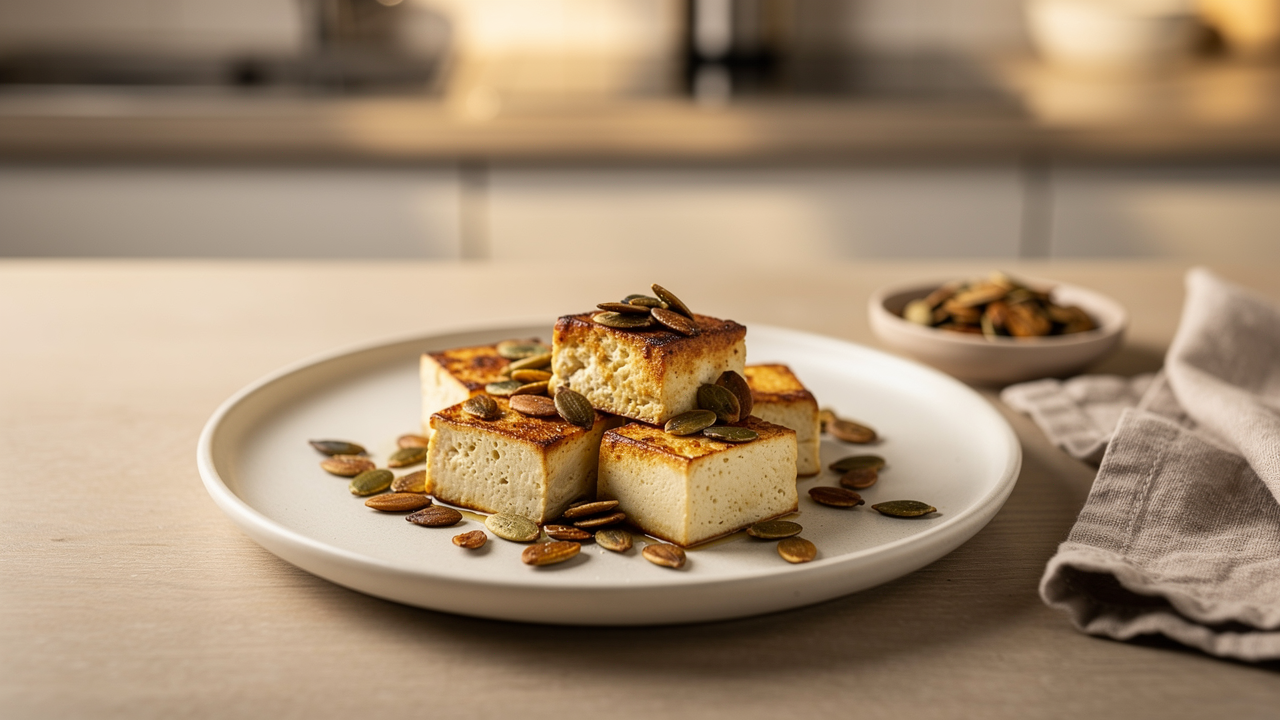
| Pumpkin seeds, roasted | 1 oz | 2.2 mg | Strong |
| Cooked oatmeal, unenriched | 1 cup | 2.3 mg | Strong |
| Tofu, firm | 1/2 cup | 1.98 mg | Moderate |
| Lentils, boiled | 1/2 cup | 1.3 mg | Moderate |
| Black turtle beans, cooked | 1 cup | 1.41 mg | Moderate |
| Yoghurt, plain, low fat | 1 container (6 oz) | 1.51 mg | Moderate |
| Cheese, Swiss | 1 cup, diced | 5.77 mg | Strong, but large portion |
The cereal, tofu, bean, yoghurt and cheese figures come from the USDA household-measure zinc list, while the pumpkin seed, oatmeal and lentil figures come from the NIH zinc fact sheet. USDA also notes that FoodData Central lets you convert nutrient values from 100 g into portions, which matters because some “high” foods in lists use very large measures. USDA zinc nutrient list NIH zinc fact sheet for health professionals USDA FoodData Central documentation
Useful versus merely present
This is where many vegetarian lists get fuzzy. Seeds and fortified cereals are genuinely helpful because they can provide around 2.2 mg or more in a standard serving. By contrast, foods such as yoghurt, tofu, lentils and cooked beans usually contribute around 1.3 to 2.0 mg per serving in the retrieved data: worthwhile, but usually not enough on their own. Cheese can contribute more for vegetarians, but the USDA figures often use a full cup as the measure, so the headline number can look bigger than what a usual slice or sprinkle would add. USDA zinc nutrient list FDA Daily Value guidance
How vegans and vegetarians can make the numbers work better
Food choice matters, but absorption matters too. EFSA states that phytate in grains and legumes can markedly reduce how much zinc is available for absorption, and the NIH notes that vegetarian diets often have lower zinc status for that reason. NIH also points to lower-phytate preparation methods such as soaking beans, grains and seeds, and using fermented foods. In practice, that means building meals around one stronger source, such as fortified cereal or pumpkin seeds, then adding moderate contributors like oats, tofu, lentils or beans instead of relying on a long list of tiny add-ons. Fortified foods can help close gaps, but they are simply one tool among others, not automatically the best choice for everyone. EFSA zinc opinion NIH zinc fact sheet for health professionals
How do you use a zinc-rich foods chart in real meals?
Read the unit before you read the ranking
Start by checking whether a chart is showing zinc per 100 g or per serving. USDA FoodData Central states that reported values are based on a 100 g edible portion, and gives the conversion formula N = (V×W)/100 to turn a 100 g value into the amount in a real portion weight in the Foundation Foods documentation. A food can rank very high on a 100 g list and contribute much less in the amount you actually put on a plate.
Household measures are the practical check. In the USDA zinc list, beef top round steak provides 4.44 mg per 3.0 oz, tofu provides 1.98 mg per 0.5 cups, plain low-fat yogurt provides 1.51 mg per 6 oz container, and roasted pumpkin and squash seed kernels provide 9.02 mg per 1.0 cups in USDA’s zinc list. That last number is useful precisely because it shows an easy mistake: a seed topping or small handful is not the same as a full cup.
A zinc chart also does not rank foods for everything else. The same USDA list includes items such as DIGIORNO cheese pizza at 2.85 mg per slice, black bean soup at 2.83 mg per cup, and a fast-food croissant with egg, cheese, and ham at 2.22 mg per item on that same USDA list. So use zinc as one comparison point, then check the full label if calories, sodium, or other nutrients also matter to you.
Build the day from repeatable servings
| Example day | Foods and zinc | Total zinc |
|---|---|---|
| Omnivorous | QUAKER OAT LIFE, 0.75 cup: 4.41 mg; beef top round steak, 3.0 oz: 4.44 mg; plain low-fat yogurt, 6 oz: 1.51 mg | 10.36 mg |
| Vegetarian | Breakfast cereal fortified with 25% DV, 1 serving: 2.8 mg; cooked oatmeal, 1 cup: 2.3 mg; lentils, boiled, 1/2 cup: 1.3 mg; pumpkin seeds, roasted, 1 oz: 2.2 mg; tofu, 0.5 cups: 1.98 mg | 10.58 mg |
The beef, yogurt, tofu, and QUAKER cereal values come from the USDA zinc list. The fortified-cereal, oatmeal, lentil, and pumpkin-seed values come from the NIH Office of Dietary Supplements zinc fact sheet. The point is not that these exact menus are required; it is that moderate amounts across two or three meals can add up without relying on one chart-topper.
Use labels to compare fortified foods
For packaged foods, the fastest screen is % Daily Value. FDA sets the Daily Value for zinc at 11 mg for adults and children aged 4 years and older, and says 20% DV or more is high while 5% DV or less is low on its Daily Value guide. NIH notes that a breakfast cereal fortified with 25% DV of zinc provides about 2.8 mg per serving on the NIH fact sheet.
Compare %DV and serving size together. Two cereals can look similar until you notice that one serving is smaller, or that one reaches its zinc number because zinc has been added. The label amount helps you compare intake; it does not, by itself, prove anything beyond how much zinc the product declares.
Three chart-reading mistakes to avoid
- Counting tiny portions as full servings. USDA’s 9.02 mg for roasted pumpkin and squash seed kernels is for 1.0 cups, while NIH lists roasted pumpkin seeds at about 2.2 mg per 1 oz USDA NIH.
- Ignoring absorption. NIH says zinc absorption can range from 5% to more than 50%, and EFSA says dietary phytate can have a major impact on how much zinc is available for absorption NIH EFSA. Equal milligram totals do not always translate equally in mixed diets.
- Assuming one standout food covers the whole day. A chart is most useful when it helps you choose foods you can repeat across breakfast, lunch, dinner, and snacks, not just the single highest line in a ranking.
What are the signs of low zinc intake or deficiency?
What symptoms are actually recognised?
In infants and children, the clearest verified signs in the material here are loss of appetite, growth retardation, skin changes, and impaired immune function, according to ODS conference material on zinc. efsa. europa. eu/sites/default/files/consultation/140514%2C0. pdf">EFSA zinc opinion.

EFSA’s description of the rare inherited disorder acrodermatitis enteropathica shows what more severe deficiency can look like: rapid-onset skin lesions, diarrhoea, progressive growth failure, susceptibility to infections, and early loss of appetite and taste perception when supplemental zinc becomes inadequate EFSA zinc opinion.
Low intake is not the same as proven deficiency
Symptoms alone cannot confirm zinc status. ODS notes that homeostatic mechanisms can keep plasma or serum zinc within the normal range even when intake is low ODS review on zinc supplements.
That means marginal low intake and clinical deficiency are not the same thing. Someone can have a diet that plausibly supplies too little zinc without the dramatic picture seen in severe deficiency, while symptoms such as hair loss, poor wound healing, skin changes, taste changes, or repeated infections can also have other explanations. Growth concerns are clearly supported in the sources here; puberty or sexual-maturation concerns should not be self-attributed to zinc on symptoms alone.
| Assessment clue | What the sources support | Main limit |
|---|---|---|
| Blood markers | Plasma or serum zinc is commonly discussed in assessment. | A normal value does not rule out low intake, and EFSA says biomarkers are not sufficient on their own ODS review; EFSA zinc opinion. |
| Diet and medical history | Higher-risk groups include older infants, people with gastrointestinal surgery, Crohn’s disease or ulcerative colitis, vegetarians or vegans, pregnant or breastfeeding women, people with alcohol use disorder, and some children with sickle cell disease NIH consumer fact sheet; NIH health professional fact sheet. | History can show risk, but not prove cause on its own. |
When food changes may help—and when to get assessed
One concrete example where food changes can matter is infancy. The NIH says breast milk alone does not provide enough zinc for infants older than 6 months, and ODS material notes that zinc concentration in human milk falls from about 2.5 μg/ml in the first month to 0.7 μg/ml after four months NIH health professional fact sheet; ODS conference material on zinc. In that situation, adding zinc-containing complementary foods is a food-first response to a plausible intake gap.
Persistent taste changes, slow wound healing, hair loss, repeated infections, or growth concerns are clues to investigate, not proof of low zinc.
od. nih. gov/pdf/factsheets/Zinc-Consumer. pdf">NIH consumer fact sheet; NIH health professional fact sheet.
Who should be careful with excess zinc or interactions?
Upper limits: useful guardrails, not daily goals
In the U. S. NIH tables, the tolerable upper intake level for total zinc from all sources is 4 mg/day for infants 0–6 months, 5 mg/day for 7–12 months, then higher through childhood up to 23 mg/day before age 14, 34 mg/day at 14–18 years, and 40 mg/day for adults 19+. Pregnancy does not raise that cap: the NIH pregnancy sheet keeps it at 34 mg/day for ages 14–18 and 40 mg/day for ages 19–50 according to the NIH zinc fact sheet and the NIH pregnancy fact sheet.
| Group | UL for total zinc |
|---|---|
| 0–6 months | 4 mg/day |
| 7–12 months | 5 mg/day |
| Childhood before age 14 | Rises through age bands up to 23 mg/day |
| 14–18 years | 34 mg/day |
| Adults 19+ | 40 mg/day |
| Pregnancy 14–18 / 19–50 | 34 / 40 mg/day |
Europe has used a stricter adult benchmark in one EFSA-linked safety report: 25 mg/day, derived from a 50 mg/day no-observed-adverse-effect level with a safety factor of 2 in the EFSA tolerable upper intake report. The NIH fact sheet links excess zinc with nausea, vomiting, loss of appetite, dizziness, headaches, and gastric distress, and says 50 mg/day or more over weeks can impair copper absorption, reduce immune function, and lower HDL cholesterol on the NIH health professional page.
Why excess usually comes from products, not meals
Ordinary foods rarely push intake that high on their own. In the USDA zinc list, a 3 oz serving of cooked top round beef provides 4.44 mg, while even a fortified cereal serving such as Quaker Oat Life provides 4.41 mg in USDA SR Legacy data. Concentrated products are a different story: the NIH fact sheet describes zinc-containing denture creams supplying 17–34 mg per gram, and chronic heavy use of 70 g/week or more over years has been linked with anaemia and neurological problems in the same NIH source.
Medicines, minerals, and who should ask for advice
Zinc can bind quinolone and tetracycline antibiotics in the gut, reducing absorption of both the mineral and the medicine. The NIH consumer sheet advises taking the antibiotic 2 hours before or 4–6 hours after zinc; penicillamine should be taken at least 1 hour apart on the NIH consumer sheet. NIH also says thiazide diuretics can increase urinary zinc losses, and iron supplements of 25 mg or more taken at the same time can reduce zinc absorption and plasma zinc concentrations on the NIH professional sheet.
Groups with a higher chance of low zinc status include vegetarians and vegans, because phytates in legumes and whole grains reduce absorption; people with gastrointestinal disease or surgery, including Crohn’s disease and ulcerative colitis; those who are pregnant or lactating; and people with alcohol use disorder according to the NIH consumer fact sheet. Older adults are also discussed by NIH in relation to lower zinc status and poorer function in elderly groups in this NIH session summary. Professional advice makes sense before long-term zinc use if you take these medicines, have gut disease or surgery, or fall into more than one of these higher-risk groups.
Safety and precautions
Total zinc intake matters, especially if supplements or fortified products are used regularly. The NIH upper limit is 40 mg per day for adults, while an EFSA-linked safety report used 25 mg per day for adults; both are guardrails rather than intake targets.
Ask a healthcare professional before long-term zinc use if you are pregnant, breastfeeding, giving zinc to a child, or taking quinolone or tetracycline antibiotics, penicillamine, thiazide diuretics, or high-dose iron supplements.
Frequently asked questions
Are eggs a high-zinc food or only a modest source?
Eggs do contain zinc, and EFSA includes eggs among rich dietary zinc sources in its broader food-group summary. In the article's numeric comparisons, however, eggs are not among the standout chart-toppers like oysters or beef, so they fit better as a supporting source than as one of the very highest-zinc foods.
Which nuts and seeds give the most zinc per usual serving?
In the figures discussed here, roasted pumpkin seeds were listed at 2.2 mg per 1 oz. USDA also listed pumpkin and squash seed kernels at 9.02 mg per 1 cup roasted, almonds at 4.57 mg per 1 cup, and peanuts at 4.04 mg per 1 cup. Because these serving measures differ a lot, the safest comparison is to check whether a chart uses ounces, cups, or another serving size before ranking them.
Do canned oysters and canned crab still provide much zinc?
The retrieved oyster tables show that preserved oyster products can still be extremely high in zinc: one USDA-linked oyster listing gave canned eastern oysters at 77.31 mg per 3 oz. For crab, the material retrieved here gave a figure for cooked queen crab of about 3.05 mg per 3 oz, which is much lower than oysters. A canned-crab value was not provided in the figures used here.
Is zinc-fortified breakfast cereal a useful option if you do not eat meat?
Yes. The article includes fortified cereals as practical contributors: one branded cereal was listed at 4.41 mg per 0.75 cup, and the NIH fact sheet notes that a cereal fortified with 25% of the Daily Value provides about 2.8 mg per serving. That makes fortified cereal one of the clearer non-meat ways to raise zinc intake on a realistic serving basis.
Does sourdough or sprouted grain bread improve zinc absorption?
The material used here states that lower-phytate preparation methods include soaking beans, grains, and seeds, and using fermented foods. So they should not be given a precise advantage here.
Which is more zinc-dense in practice: beef, pumpkin seeds, or cheddar cheese?
On the serving sizes cited in the article, beef top round provided 4.44 mg per 3 oz, pumpkin seeds provided 2.2 mg per 1 oz, and cheddar cheese was listed at 4.8 mg per 1 cup diced. Because the cheese number uses a much larger serving, direct ranking is tricky. The clearest practical comparison in the figures here is that a 3 oz beef serving provided about twice the zinc of a 1 oz serving of pumpkin seeds.
Sources
- USDA National Nutrient Database-Zinc (external link)
- Foundation Foods Documentation | USDA FoodData Central (external link)
- NIH National Institutes of Health (external link)
- Scientific Opinion on Dietary Reference Values for zinc (external link)
- Zinc - Health Professional Fact Sheet (external link)
- Dietary Supplements and Life Stages: Pregnancy - Health Professional Fact Sheet (external link)
- Zinc - Consumer (external link)
- Zinc - Health Professional Fact Sheet (external link)
- complet_chapitres.indd (external link)
- Daily Value on the Nutrition and Supplement Facts Labels | FDA (external link)
- 2 • ZINC FACT SHEET FOR CONSUMERS (external link)
- Session V, Zinc and the Central Nervous System (external link)
- ZINC: WHAT ROLE MIGHT SUPPLEMENTS PLAY? (external link)
- USDA National Nutrient Database for Standard Reference Release 28 November 02, 2015 16:25 EST (external link)