Skip to content

What Is a Steam Iron and How Does It Work?

Published · Reviewed · By Tigoo redaktionSupplements

Short answer

A steam iron is a household appliance for ironing clothes with steam and heat. It is designed to help remove creases and give ordinary laundry a neater finish. The body describes it as a garment-care tool for everyday domestic use.

Quick facts

  • It is made for ironing clothes, not for food or chemistry-related use.
  • Steam and heat work together to help smooth creases.
  • Steam output is measured in grams per minute.
  • Power rating is measured in watts.
  • Steam irons suit small to moderate ironing jobs.
  • Steam generators are better for larger loads and longer sessions.
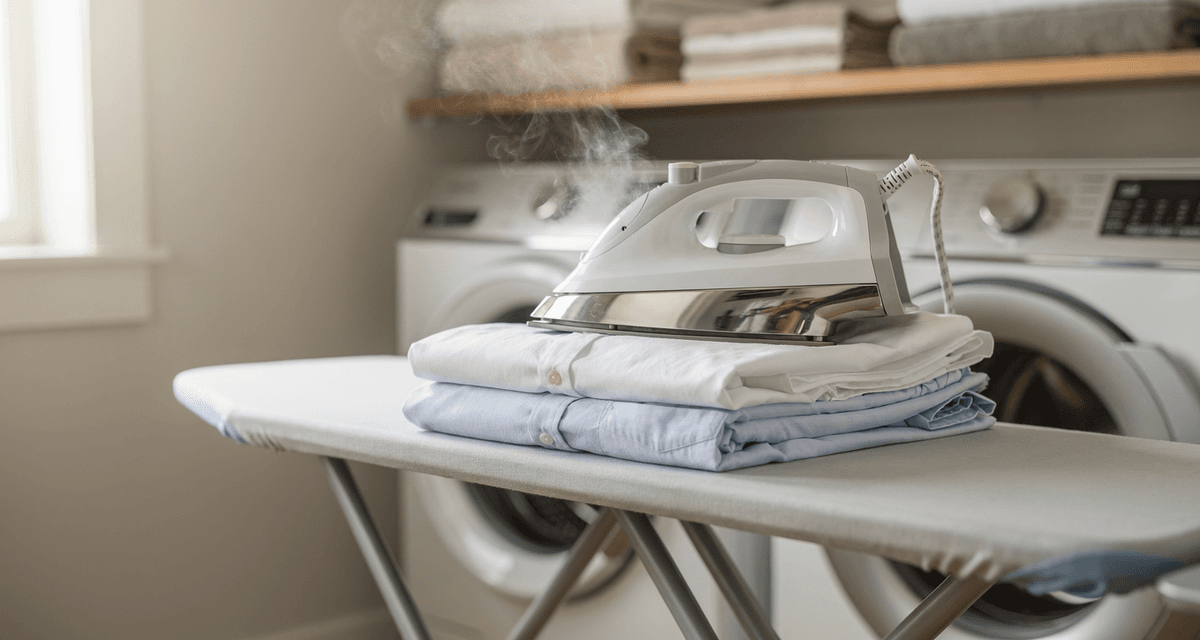
What Is a Steam Iron and How Does It Work?

What is a steam iron and what does it do?

A clothes-care appliance

Here, a steam iron means the household appliance used on clothes. EU competition material describes irons as appliances that use steam for ironing the clothes, which places the product in garment care rather than in any other meaning of the word iron.

The same source also distinguishes travel irons as models designed to be very easy to handle for ironing, showing that the wider iron category is built around clothing care and not around a different household task. In other words, the core idea is simple: a steam iron is made for fabric, not for food, and not for any chemistry-related use of the word iron.

What consumer guidance says it is designed to do

Consumer guidance on steam irons says they are intended for ironing small quantities of laundry, with steam helping to penetrate fibers. The same material says steam irons combine steam output and heat to iron away creases and treat everyday domestic garments.

That is the main promise shoppers expect from a steam iron: a neater finish on ordinary laundry, with steam and heat working together to help the fabric look smoother. The evidence describes this as everyday domestic use, not as a specialist function.

The practical promise for clothes care

Consumer-facing descriptions in the evidence consistently point to the same job: use steam for ironing clothes and handling everyday laundry. Taken together, the sources show a device meant to make creases easier to deal with and to support routine garment care.

For a shopper, that means the useful question is not what steam iron means in chemistry or nutrition, but what it does on fabric. The answer from the available guidance is straightforward: it is designed for ironing clothes, reducing creases, and making everyday laundry look better finished.

How does a steam iron actually produce steam?

The steam path in plain terms

Steam output tells you how much steam the iron can deliver; the heating specification tells you how much electrical power the appliance has available to build and maintain working heat. EU product-category decision on irons

How does a steam iron actually produce steam?
Steam output tells you how much steam the iron can deliver; the heating specification tells you how much electrical power the appliance has available to build and maintain working heat.

The specifications that show up on product pages

SpecificationWhat the supplied evidence showsWhy it matters in practice
Continuous steam outputThe EU decision gives output figures in grams per minute, from about 15 g/min for travel irons to 100–130 g/min for the most powerful steam irons and ironing stations.Higher output is the clearest sign of a stronger steam delivery.
Power ratingThe EU decision places irons and ironing stations in a broad range from about 700 W to 2,400 W.Wattage is a separate clue to heating capacity, not a direct measure of steam volume.
Heat-up time and soleplate typeThe supplied EU texts do not give a common benchmark for these features.These are still model-by-model comparison points, but they are not quantified in the cited EU sources.

Why steam and heat are different controls

Steam output is measured in g/min, while power is measured in watts; the sources use both numbers because they describe different parts of the iron’s job. EU decision on steam output and power ratings

Steam iron, steam generator or handheld steamer?

A European consumer guide separates the three formats by construction and use: a steam iron is a single unit with a built-in water reservoir for small to moderate ironing jobs; a steam generator iron, also called a steam station, uses a separate larger tank to deliver more steam for longer sessions; and a handheld steamer uses a steam wand connected to a tank to remove wrinkles without pressing, refresh fabrics, and work gently on delicate textiles. European consumer guide on iron types

FormatHow it is builtWhat it is forTrade-off
Steam ironSingle unit with a built-in water reservoir. European consumer guideSmall to moderate ironing jobs. European consumer guideMore compact than a station, but with less continuous steam. European consumer guide
Steam generator ironSeparate, larger water tank. European consumer guideLarger ironing tasks, heavier fabrics, longer sessions. European consumer guideBulkier, but the guide links it to higher steam volume and pressure. European consumer guide
Handheld steamerSteam wand connected to a tank. European consumer guideRemoving wrinkles without pressing, refreshing fabrics, and treating delicate textiles. European consumer guideWorks without a heated soleplate, so it is the weaker choice when you want a pressed finish. European consumer guide

When the extra bulk of a steam generator iron pays off

The consumer guide’s trade-off is clear: the separate larger tank is the price of more steam and longer continuous use. That makes a steam generator iron the format to consider for bigger laundry piles, frequent ironing, and sessions where uninterrupted steam matters more than a compact body. European consumer guide on steam stations

The European Commission’s appliance decision also places irons and ironing stations in separate subcategories and notes that steam output varies, depending on model, from 15 g/min for travel irons to 100-130 g/min for the most powerful steam irons and ironing stations. European Commission decision on irons and ironing stations

Where a handheld steamer fits

A handheld steamer sits at the refresh end of the spectrum. The guide describes it as the option for removing wrinkles without pressing and for delicate textiles, which makes it useful when you want to freshen fabric rather than create a fully pressed result. European consumer guide on handheld steamers

That also explains the main trade-off: a handheld steamer is simpler for quick de-wrinkling, but it does not smooth fabric in the same way a heated soleplate does. If sharp seams, crisp collars, or a flatter pressed finish matter most, the iron formats are the better fit. European consumer guide on handheld steamers

How should you choose a steam iron in Ireland?

Start with cost over the full life of the appliance

The Commission says the energy label shows how much energy an appliance uses compared with similar appliances, and its product portal says the cheapest product on sale is not necessarily the best option because electricity use, water consumption, durability and reparability all affect total cost of ownership. The same portal points consumers to EPREL for product information.

How should you choose a steam iron in Ireland?
The Commission says the energy label shows how much energy an appliance uses compared with similar appliances, and its product portal says the cheapest product on sale is not necessarily the best option because electricity use, water consumption, durability and reparability all affect total cost of ownership.
The cheapest product on sale is not necessarily the best option.

For a steam iron, that means price alone is not a complete filter.

Match the iron to the way your household irons

Household patternClosest evidence-backed fitWhat to prioritise

Which features are worth paying for?

Irish-home checks that the evidence does and does not settle

The retrieved EU sources do not give an Ireland-specific socket or mains-voltage rule for steam irons, and they do not give hard-water guidance for particular Irish regions.

Cord length and auto shut-off are not named in the retrieved EU sources as the main buying criteria, so they sit behind those core features here.

How do Irish retailer listings and sale pages compare?

Compare the exact model and the data attached to it, not the size of the discount.

The European Commission says the cheapest product on sale is not necessarily the best option, because electricity use, water consumption, durability and reparability can change the total cost of ownership over the product’s life. Energy Efficient Products - European Commission Consumers - Energy Efficient Products - European Commission

That is why a steam iron sale page should be read as a specification sheet first and a promotion second. The Commission also says EPREL can show detailed information for energy-labelled products and models, with additional information such as water consumption, noise emissions, spare parts availability, warranty extension, duration, or product support. Consumers - Energy Efficient Products - European Commission

What to line up across Irish listings

Start with the exact model name, then compare the fields that describe the product you actually want. European Curriculum for Domestic Help

Field to compareHow to use it on a sale page
Exact model nameUse it to make sure you are comparing the same appliance, not two versions from the same brand.
WattageIf a retailer shows it, use it only as a like-for-like field between similar models.
Soleplate typeCheck the material or coating named on the page so you are not comparing one model’s marketing wording with another model’s technical detail.
Warranty and return policyRead the listed coverage and return terms before judging a promotion on price alone; EPREL can also show warranty-related and support information for some products. Consumers - Energy Efficient Products - European Commission

How promotions can mislead

A discount can make a basic iron look like the better buy, even when the more expensive option is the one with stronger steam performance or a larger tank. The safer comparison is model against model, with the product type clearly identified before the price is used to decide. European Curriculum for Domestic Help

The store name on its own does not tell you whether the listing is for a basic iron, a steam iron for clothes, or a steam generator iron.

Brand searches, including Philips

For a brand search such as Philips, compare the exact model page against the features you need rather than stopping at the brand name. EPREL is built to help consumers compare models and can provide model-level information beyond energy use, which makes it a useful cross-check when a retailer page is vague or promotional. Consumers - Energy Efficient Products - European Commission EPREL - European Commission

If a sale page gives you only a headline price and a brand, use the model name, steam output, tank capacity, warranty details, and any EPREL entry shown to decide whether the product matches the job you need done.

How do you use a steam iron for clothes well?

What the retrieved sources do not spell out

The primary material available here does not provide a universal preparation checklist for sorting garments, filling the tank correctly, or waiting for a specific warm-up time. It also does not publish a fabric-by-fabric table for cotton, linen, wool, silk, and synthetics, so this section cannot honestly supply exact heat settings from the evidence at hand.

How do you use a steam iron for clothes well?
The primary material available here does not provide a universal preparation checklist for sorting garments, filling the tank correctly, or waiting for a specific warm-up time.

Using steam where it actually helps

The guidance also keeps the focus on everyday domestic use, not on a one-size-fits-all technique for every textile.

Technique and mistakes

The retrieved sources do not set out a standard ironing order, a pressing-versus-gliding rule, or a fabric-specific board sequence. They also do not itemise common user mistakes such as overfilling, choosing the wrong temperature, leaving water in the tank, or ironing very dry cloth without re-dampening; those details would need the exact manufacturer manual. For this evidence set, the safest answer is narrower: keep the iron within its intended purpose and use steam as the appliance guidance describes it.

What maintenance prevents poor steam output and limescale?

The clearest maintenance signal in the retrieved evidence is mineral buildup. The JRC study on electric irons says mineral deposits can impair steam function, and it also lists blocked steam or spray outlets among common faults. JRC study on electric iron faults and reparability

What the retrieved sources actually support

The sources here support the cause-and-effect chain, not a brand-specific cleaning recipe. They do not give a universal descaling schedule, a preferred cleaning liquid, a self-clean or anti-calc routine, or a step-by-step method for emptying the tank or wiping the soleplate safely. They also do not specify what users should do with water type, cleaning products, or storage after use. The EU decision that lists EN 60335-2-3:2016/A1:2020 confirms that electric irons are covered by a formal safety standard, but it does not add consumer maintenance instructions. EU decision listing the electric-iron safety standard

Mineral deposits and blocked outlets are the maintenance issues the evidence actually names; anything more detailed needs a model-specific manual.

That limit matters because a 45% repair success rate still leaves many irons that will not recover from a fault, and the study’s 33% end-of-life figure shows that some problems sit beyond routine cleaning. JRC study on repair outcomes for electric irons

Safety and precautions

Use the appliance only for its intended garment-care purpose and follow the model manual for cleaning and maintenance. The body links weak steam to mineral deposits and blocked outlets, but it does not give a universal descaling routine, so model-specific guidance matters.

If you take medication, are pregnant, or are buying for children, ask a healthcare professional for personalised advice before use.

Supplements with the ingredients in this article

Compare contents, dose and price

Frequently asked questions

Can I use tap water in a steam iron, or should I use distilled water?

The body does not give a universal rule for tap water or distilled water. It does say mineral deposits can reduce steam function, so the safest approach is to follow the water guidance in the manufacturer manual. If the iron starts steaming weakly or the outlets block, the water choice may need review.

Are cordless steam irons as effective as corded models for everyday laundry?

The body does not compare cordless and corded irons directly. What it does say is that steam irons are suited to small to moderate ironing jobs, while steam generators are better for larger loads and longer sessions. For everyday laundry, steam output and the iron type matter more than the cord style in the material provided.

What steam iron features matter most for shirts, trousers and linen?

The most useful features in the body are steam output, power rating, and the type of iron format. Higher steam output is presented as the clearest sign of stronger steam delivery, while steam generator irons are linked to bigger tasks and heavier fabrics. For a neater pressed finish, a heated soleplate matters more than a handheld steamer.

How often should I descale a steam iron in a hard-water area?

The material does not give a fixed descaling schedule, including for hard-water areas. It only says that mineral deposits can impair steam function and that blocked steam or spray outlets are common faults. Use the manufacturer manual and act sooner if steam weakens.

Is a steam burst more useful than high continuous steam?

The body only explains continuous steam output, not a separate steam-burst comparison. It says steam output in grams per minute is a clear sign of stronger steam delivery, and higher output is the key figure given for more powerful irons.

Can a steam iron safely be used on curtains or upholstery?

The body does not give guidance for curtains or upholstery. It describes steam irons as appliances for clothes and everyday domestic garments. Because that use is not covered here, the safest answer is to follow the manufacturer instructions for any non-clothing fabric.

Sources

  1. Water collection tank (external link)
  2. m2621_20031111_590_en.doc (external link)
  3. 5.1.2.16 Massage appliances (external link)
  4. What do I check for when buying a new energy efficient appliance? - Energy Efficient Products (external link)
  5. Energy Efficient Products - European Commission (external link)
  6. Implementing decision - 2021/1015 - CS - EUR-Lex (external link)
  7. Consumers - Energy Efficient Products - European Commission (external link)
  8. EPREL - European Commission (external link)

Read more

More in Supplements