Vitamin K2: What It Is, How It Works, and How to Choose
Short answer
Vitamin K2 is an umbrella term for menaquinones, including forms such as MK-4 and MK-7, and it is different from vitamin K1. When choosing a supplement, check the exact form, the amount per recommended daily serving, and whether the product is K2 alone or combined with other vitamins.
Quick facts
- Vitamin K2 is an umbrella term for menaquinones.
- MK-4 and MK-7 are common K2 forms.
- Vitamin K1 is the main form in leafy green vegetables.
- Natto is the standout measured food source of MK-7.
- The front label name alone does not tell you the exact form inside.

What is vitamin K2, and how is it different from K1?
Vitamin K2 is not one single ingredient. It is an umbrella term for menaquinones, a family of vitamin K compounds that includes better-known forms such as MK-4 and MK-7. EFSA describes vitamin K as a family of fat-soluble compounds with two natural groups in food: phylloquinone (vitamin K1) and menaquinones (vitamin K2). EFSA scientific opinion on vitamin K
K1 and K2 are different forms of the same vitamin family
K1, or phylloquinone, is the main dietary form of vitamin K in leafy green vegetables. K2 is a broader label for menaquinones, which are found mainly in animal products such as meat, cheese and eggs, and also in fermented foods. Bacteria can make menaquinones, and MK-4 can also be formed in animal tissues from other vitamin K forms. EFSA scientific opinion on vitamin K
| Form | Also called | Common natural sources | What the label means |
|---|---|---|---|
| K1 | Phylloquinone | Leafy green vegetables | The main dietary vitamin K form in plants. EFSA scientific opinion on vitamin K |
| K2 | Menaquinones, including MK-4 and MK-7 | Animal foods, fermented foods, and bacterial production | An umbrella term, not one compound. EFSA scientific opinion on vitamin K |
| Potassium | Separate mineral | Not what the K in vitamin K2 refers to | The "K" in vitamin K2 does not mean potassium. EFSA scientific opinion on vitamin K |
Why K2 gets discussed with bones and blood vessels
Vitamin K acts as a cofactor for enzymes that activate vitamin K-dependent proteins. EFSA notes that these proteins include blood coagulation factors and bone-related proteins such as osteocalcin, and it also discusses proteins involved in soft tissue calcification. That is why K2 is often mentioned alongside bone and vascular topics, even though a label saying only "vitamin K2" does not tell you whether the product contains MK-4, MK-7 or another menaquinone. EFSA scientific opinion on vitamin K
One concrete example is natto, fermented soybeans, which the NIH Office of Dietary Supplements lists as a very concentrated source of MK-7: about 850 µg in 3 oz, or about 85 g. NIH Office of Dietary Supplements vitamin K fact sheet
How does vitamin K2 work in clotting, bone and arteries?
Vitamin K2 is one set of menaquinones, but the chemistry that matters here is shared across vitamin K forms. Vitamin K acts as a cofactor for γ-glutamyl carboxylase (GGCX), which adds carboxyl groups to specific glutamic acid residues and turns them into γ-carboxyglutamic acid (Gla) residues in vitamin K-dependent proteins. Those Gla residues sit at calcium-binding sites, which is why vitamin K-dependent proteins can bind calcium and carry out their normal roles. EFSA scientific opinion on vitamin K

The same opinion describes a vitamin K cycle in which the reduced form of the vitamin is converted to vitamin K epoxide and then recycled back again. The cycle takes place in different tissues, especially the liver and bone, and warfarin blocks a critical step in that recycling pathway. That is the established biochemical reason vitamin K status matters to coagulation physiology; it is not a K2-only mechanism. EFSA scientific opinion on vitamin K
The proteins people mean when they talk about K2
| Protein group | What vitamin K-dependent carboxylation does | Why it comes up in articles about K2 |
|---|---|---|
| Coagulation factors II, VII, IX and X; anticoagulant proteins C, S and Z | Converts inactive Glu residues to Gla residues so the proteins can bind calcium and support coagulation | Explains the established link between vitamin K and blood clotting |
| Osteocalcin | Produces the active form of a bone protein | Osteocalcin is involved in bone mineralisation |
| Matrix Gla protein (MGP) | Produces the active form of a protein involved in soft-tissue mineral control | MGP is relevant to the control of mineral deposition in blood-vessel tissues |
EFSA’s opinion notes that osteocalcin is one of the most abundant non-collagenous proteins in bone, while MGP is made in tissues including vascular smooth muscle cells and chondrocytes. That is the biological logic behind the bone-and-vessel interest: vitamin K helps activate proteins that manage where calcium-related processes happen. EFSA scientific opinion on vitamin K
Why a mechanism is not the same as a supplement result
The key distinction is between activating a protein and proving a long-term health outcome. EFSA says MK-7 may have greater bioactivity than phylloquinone in stimulating γ-carboxylation, but the available data are insufficient to set different activity coefficients for phylloquinone and menaquinones. EFSA scientific opinion on vitamin K
That is also why trial results stay separate from the biochemical story. In a three-year trial in 142 postmenopausal women with osteopenia, 375 µg/day MK-7 changed an osteocalcin laboratory marker but did not improve bone mineral density or microarchitecture. In a six-month trial in 68 people with type 2 diabetes and cardiovascular disease, 360 µg/day MK-7 improved a vitamin K-dependent blood marker but showed no significant benefit on conventional CT calcification. A systematic review of nine randomized trials found improved MGP carboxylation, but not consistent prevention of calcification, atherosclerosis or arterial stiffness. Three-year MK-7 bone trial Systematic review of cardiovascular calcification trials Vitamin K supplementation and cardiovascular disease review
Vitamin K2 helps switch on proteins that bind calcium in the right place; that is real physiology, but it is not the same as proving a supplement changes long-term outcomes.
So the body-wide logic is straightforward: vitamin K-dependent carboxylation is central to clotting proteins, relevant to osteocalcin in bone, and relevant to MGP in blood-vessel tissues. What remains unproven is the step that matters most to shoppers: whether taking extra K2 reliably changes clinical outcomes.
How much vitamin K do adults need, and does K2 count?
No separate adult target for K2
Official reference intakes are usually set for vitamin K overall, not for K2 alone. EFSA states that it sets adequate intakes for phylloquinone only because the evidence on menaquinones is insufficient, and that there is no separate K2 target in the guidance it reviewed. EFSA vitamin K reference values
That matters because an adult intake figure is not the same thing as a capsule dose. The numbers below are reference values for the nutrient, not proof that any specific K2 product is necessary or superior. EFSA vitamin K reference values
The main adult numbers side by side
| Authority | Adults | What else the guidance says |
|---|---|---|
| EFSA | 70 µg/day for adults, including pregnant and lactating women | It also gives age-based values for children and adolescents, from 10 µg/day at 7–11 months to 65 µg/day at 15–17 years. |
| US National Academies | 90 µg/day for adult women and 120 µg/day for adult men | It also lists lower age-based intakes: 2 µg/day from birth to 6 months, 2.5 µg/day at 7–12 months, then 30, 55, 60 and 75 µg/day for ages 1–3, 4–8, 9–13 and 14–18 years. |
The adult figures are not identical because the authorities use different evidence bases and methods. EFSA’s review maintained an adequate intake of 1 µg phylloquinone per kilogram of body weight per day, which rounds to 70 µg/day for adults, while the US values are 90 µg/day for women and 120 µg/day for men. EFSA vitamin K reference values NIH vitamin K fact sheet
Why there is no precise deficiency cutoff
A single blood test does not define vitamin K status neatly. EFSA says none of the available biomarkers is suitable by itself to derive reference values, no cut-off value is available to define adequate status, and no biomarker has an established dose–response relationship with intake. EFSA vitamin K reference values
Bottom line: use the official vitamin K numbers as nutrient reference values, not as a separate K2 dose target.
Which foods are richest in vitamin K2?
Natto sits at the top of the measured list
Among foods with published composition data, natto is the clearest high-MK-7 example. One analysis of 17 fermented foods reported 902 µg MK-7 per 100 g in natto, and an earlier study described natto at 775 µg/100 g; the NIH fact sheet lists about 850 µg MK-7 in 3 oz of ready-to-eat natto natto composition study NIH vitamin K fact sheet. In that measured product, 10 g provided about 90 µg MK-7, so a small portion can already be a large contribution natto composition study.

| Food | Reported vitamin K form | Measured amount | Practical reading |
|---|---|---|---|
| Natto, fermented soybeans | MK-7 | 902 µg/100 g in one analysis; 775 µg/100 g in an earlier study; about 850 µg in 3 oz ready-to-eat natto | The strongest published K2 source in the material here natto composition study NIH vitamin K fact sheet |
| Danablu blue cheese | PKeq | 49 µg/100 g | High for a cheese sample, but not the same thing as 49 µg of MK-7 Danish vitamin K in food study |
| Chicken thigh with skin | PKeq | 53 µg/100 g | One of the higher values in the Danish analysis Danish vitamin K in food study |
| Cheese, one 28 g slice in the cheese study | Total vitamin K | 4.3 to 13 µg per slice | A practical serving-level example from the cheese data cheese content and bioaccessibility study |
Cheese and other fermented foods vary much more than labels suggest
That is why two foods with the same name can look very different on paper. In the Danish food analysis, the highest values were found in Danablu blue cheese and chicken thigh with skin, while the cheese study showed that a 28 g slice could contribute 4.3 to 13 µg depending on the product Danish vitamin K in food study cheese content and bioaccessibility study. Composition data are also much more complete for vitamin K1 than for K2, so broad food tables can only ever be a guide, not a guarantee NIH vitamin K fact sheet.
How to judge your own diet
If your week includes natto, some fermented cheeses or a few animal foods with measured vitamin K, your K2 intake is likely higher than a diet that rarely includes them. If those foods are occasional, intake is more likely to sit in the modest range seen in the cheese and chicken examples above natto composition study Danish vitamin K in food study cheese content and bioaccessibility study. For context, EFSA sets an adult adequate intake of 70 µg/day for vitamin K, and the natto values above show that food alone can sometimes reach that range EFSA vitamin K opinion.
Natto is the standout measured source here; cheeses and some animal foods can contribute meaningful amounts, but their vitamin K content is much more variable from product to product.
What do K2-7, K7 and D3+K2 actually mean?
Label shorthand and the form behind it
Vitamin K2 is not one ingredient. It is the umbrella name for menaquinones such as MK-4 and MK-7, while vitamin K1 is phylloquinone.
| Label term | What it signals | What to check |
|---|---|---|
| D3+K2 | Vitamin D3 plus a vitamin K2 form in one product | Read each ingredient and its dose separately |
Why D3 and K2 are sold together
A combined D3+K2 product is just that: two ingredients in one formula. The pairing itself does not prove any added benefit. What the label can tell you is the form and the amount. The US Daily Value for vitamin K on labels is 120 µg for adults and children aged four or older, while the EU adult labelling reference is 75 µg; neither figure is a K2-specific target dose. For the practical label reading, that means checking the exact micrograms per recommended daily serving, not only the amount per capsule. See NIH ODS on vitamin K labelling and reference values.
Absorption: why meals matter
Vitamin K is a fat-soluble vitamin, and phylloquinone is absorbed in the intestine in the presence of dietary fat. For MK-7, ODS notes that it remains detectable in circulation longer than supplemental K1, but that observation is not the same thing as proof of better health effects. If a supplement is taken with a meal, the label should still be read as a source of a specific form, not as evidence that the combination or the capsule shape is superior.
K2-7 and K7 are label shorthand; the key question is always which vitamin K form is actually inside the product.
What this means when you shop
For a vitamin 3D K2 or D3+K2 product, read the ingredient list line by line: the named vitamin K form, the vitamin D3 amount, and the amount per recommended daily serving. If the pack does not clearly state MK-7 or another menaquinone, the shorthand alone is not enough to compare products confidently.
What do research and authorised claims really show?
EU-authorised language is narrow. For a food that is at least a source of vitamin K, the only authorised claims here are: “Vitamin K contributes to normal blood clotting” and “Vitamin K contributes to the maintenance of normal bones”. They are claims for vitamin K generally, not a disease-treatment claim for any specific K2 form. EU claims list EFSA vitamin K opinion

What the authorised role covers
EFSA’s opinion says vitamin K acts as a cofactor for carboxylation of vitamin K-dependent proteins, including proteins involved in blood coagulation and bone mineralisation. The same opinion also notes that data were not sufficient to derive vitamin K requirements from bone or cardiovascular outcomes, and that biomarkers alone were not enough to set a vitamin K requirement. EFSA Scientific Opinion on vitamin K
What human trials suggest about bones
A 2019 updated systematic review and meta-analysis of randomised adult studies found that vitamin K was associated with fewer clinical fractures in the pooled analysis, with an odds ratio of 0.72 (95% CI 0.55–0.95). But when the analysis was restricted to low-bias trials, the estimate became 0.76 (95% CI 0.58–1.01), which was no longer statistically conclusive; vertebral fractures were not significantly reduced. Bone mineral density and fracture meta-analysis
What human trials suggest about arteries
The vascular evidence is mixed and often relies on imaging or blood markers rather than hard clinical outcomes. A review of five vitamin K trials in 1,074 people without chronic kidney disease found insufficient evidence to confirm a calcification benefit. In one 6-month trial, MK-7 360 µg/day in 68 people with type 2 diabetes and cardiovascular disease improved a vitamin K-dependent marker but did not significantly improve conventional CT calcification. A later 2-year trial in symptomatic coronary-disease patients using 360 µg MK-7/day reported less progression of CT calcium score, while another trial used 720 µg K2 plus 25 µg D3 daily and could not isolate K2’s effect. Systematic review of cardiovascular calcification trials
| Area | What was measured | What it means for shoppers |
|---|---|---|
| Clotting and bones | Authorised claims for vitamin K | Valid for foods that are a source of vitamin K, not a promise of disease treatment |
| Fractures | Meta-analysis of randomised trials | Signals are mixed; low-bias evidence was not conclusive |
| Vascular calcification | CT scores and biomarkers | Findings are inconsistent and mostly surrogate outcomes |
Research can suggest a mechanism or a biomarker change, but that is not the same as proof of clinical benefit.
How do you choose a vitamin K2 supplement?
Read the exact form, the amount per recommended daily serving, and the serving size first; the front label name alone does not tell you what is inside.
Check the form and the daily serving
Vitamin K2 is not a single ingredient. The NIH fact sheet says to look for an identified form such as menaquinone-7 (MK-7) or menaquinone-4 (MK-4), and to compare the amount per recommended daily serving rather than the amount per capsule alone. It also notes a U.S. Daily Value of 120 µg for vitamin K, which is a labelling reference, not a K2-specific dose target. NIH Vitamin K fact sheet
Compare the delivery format, not just the number on the front
Capsules, drops, dry tablets and oil-based formulas can all be labelled as “K2”, so the practical comparison is the ingredient list and serving size. EFSA’s vitamin K opinion describes absorption as dependent on the food or meal matrix and on dietary fat: in one set of studies, free phylloquinone absorbed at about 13% when given in oil in gelatin capsules without a meal, versus about 80% when given with a meal containing fat. That does not make one format automatically better, but it does show why the delivery system matters. EFSA vitamin K opinion
| Purchase choice | What to check | What the evidence supports |
|---|---|---|
| MK-4 or MK-7 | Exact chemical name | MK-7 and MK-4 are different menaquinones; some studies found MK-7 more absorbed than MK-4. |
| Capsule, drop or tablet | Serving size and amount per serving | The same front-of-pack number can mean different daily intakes if serving sizes differ. |
| Oil-based or dry | Whether the formula is meant to be taken with food | Vitamin K absorption is affected by the meal matrix and dietary fat. |
| Single nutrient or D3+K2 | Separate amounts for each vitamin | Combined products should state each ingredient clearly on the label. |
Use the label as your quality check
Prefer a product with a clear ingredient list, a stated amount per serving, and a serving size you can follow consistently. If you need a vegetarian or vegan option, check the capsule shell and the excipients. A bigger number on the front is not proof of greater benefit, and product amounts are label facts, not medical dose recommendations. MK-4 and MK-7 bioavailability study NIH Vitamin K fact sheet
What are the safety issues and drug interactions?
Vitamin K antagonists are the main concern
For people taking warfarin or similar vitamin K–antagonist medicines, vitamin K intake has to be kept consistent and any change should be discussed with the clinician managing anticoagulation. The NIH Office of Dietary Supplements says vitamin K from food or supplements can counteract these medicines, and the EFSA summary report notes that a study of 15 anticoagulated volunteers found that supplemental MK-7 at 10 µg/day already caused a clinically relevant INR reduction in some participants. NIH ODS vitamin K fact sheet EFSA summary report on vitamin K MK-7 and oral anticoagulant stability study
| Situation | Why it matters | Practical step |
|---|---|---|
| Warfarin or another vitamin K antagonist | Vitamin K from food or supplements can counter the medicine’s effect; even 10 µg/day MK-7 changed INR in some anticoagulated volunteers. NIH ODS vitamin K fact sheet MK-7 and oral anticoagulant stability study | Do not start, stop, or change a K2 supplement without medical advice. |
| Fat-malabsorption disorders or medicines that affect vitamin K status | The NIH ODS notes that fat-malabsorption disorders can affect vitamin K status, and names orlistat, bile-acid sequestrants and prolonged antibiotic treatment with poor dietary intake as examples. NIH ODS vitamin K fact sheet | Ask for individual advice before supplementing. |
| Any situation where vitamin K intake is already being medically managed | Unplanned supplement changes can disrupt that plan. NIH ODS vitamin K fact sheet | Keep intake consistent until the clinician says otherwise. |
Why consistency matters more than a “safe” dose
The absence of a tolerable upper intake level does not mean every dose is proven safe for every person. The NIH ODS says the Food and Nutrition Board has not established a UL for vitamin K, and EFSA’s summary report likewise says the available evidence was insufficient to derive one. NIH ODS vitamin K fact sheet EFSA summary report on vitamin K
With anticoagulants, the key issue is not chasing a higher K2 intake; it is avoiding unplanned changes in vitamin K intake.
What to do before you add K2
If you use a vitamin K antagonist, or if your vitamin K intake is being managed for a medical reason, treat any K2 supplement as a change that may need monitoring. The ODS fact sheet says INR monitoring and medicine-dose adjustment may be needed when intake changes. NIH ODS vitamin K fact sheet
Safety and precautions
If you take warfarin or another vitamin K antagonist, do not start, stop, or change a vitamin K2 supplement without medical advice. Ask for individual guidance if you have fat-malabsorption issues or use medicines that can affect vitamin K status, such as orlistat, bile-acid sequestrants, or prolonged antibiotics.
If you are pregnant, breastfeeding, or choosing a vitamin K2 product for a child, ask a healthcare professional first. This is especially important if vitamin intake is already being medically managed, because consistency matters more than changing your intake on your own.
Supplements with the ingredients in this article
Compare contents, dose and price
Frequently asked questions
Can vitamin K2 be taken with calcium and magnesium?
The article does not give a specific instruction about calcium or magnesium. It does explain that vitamin K helps activate proteins that bind calcium, but it does not say that K2 must be paired with, or separated from, those minerals.
Is vitamin K2 suitable for vegans or vegetarians?
It can be, depending on the source and the capsule materials. The article says K2 is found in animal foods and fermented foods, and it also gives natto as a fermented soy food rich in MK-7, so plant-based options may exist. For supplements, the capsule shell and excipients also need to be checked.
How is vitamin K status measured in practice?
In practice, it is assessed with laboratory markers, but the article says none of them is enough on its own to define status neatly. There is no single cutoff and no biomarker with a clear dose-response relationship, so results have to be interpreted in context.
How long does MK-7 stay in the body?
The article says MK-7 remains detectable in circulation longer than supplemental K1. It does not give an exact number of hours or days, so the precise duration is not stated here.
Does vitamin K2 need to be taken every day?
The article does not say that vitamin K2 must be taken every day. What it does stress is keeping intake consistent, especially if vitamin K is being managed for medical reasons or if you use a vitamin K antagonist.
Can vitamin K2 and vitamin D3 be taken at the same time?
Yes, they can be taken together in a combined product. The article says D3+K2 is simply two ingredients in one formula, so the important point is to check the exact vitamin K form and the amount of each vitamin per recommended daily serving.
Sources
- EFSA: Dietary reference values: EFSA publishes advice on vitamin K (external link)
- CL2012R0432EN0040010.0001_cp 1..1 (external link)
- Dietary Reference Values for nutrients Summary report (external link)
- Vitamin K - Health Professional Fact Sheet (external link)
- Dietary reference values for vitamin K - PMC (external link)
- PubMed: Determination of vitamin K composition of fermented food (external link)
- PubMed: Vitamin K - content in food and dietary intake among the Danes (external link)
- Content and Bioaccessibility of Vitamin K (Phylloquinone and Menaquinones) in Cheese - PMC (external link)
Read more
Products related to this article
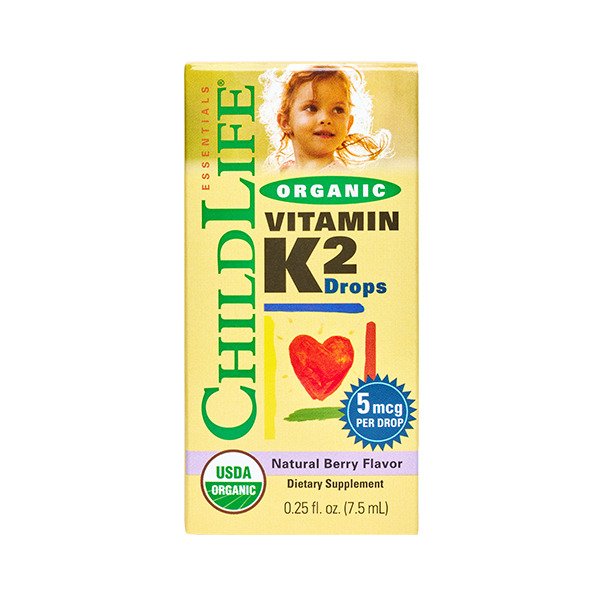
Child Life
Child Life - Vitamin K2 Drops - 0.25 fl. oz.
238 krIn stockWhy is this shown? Innehåller alla ämnen artikeln handlar om · Renodlat tillskott — ämnet står i produktnamnet · I lager · Betyg 5.0 av 8 kunder
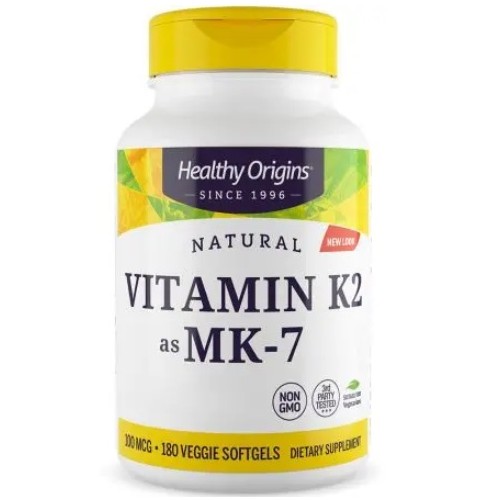
Healthy Origins
Healthy Origins - Vitamin K2 Mk7 - 180 Caps
502 krIn stockWhy is this shown? Innehåller alla ämnen artikeln handlar om · Renodlat tillskott — ämnet står i produktnamnet · I lager · Betyg 5.0 av 6 kunder
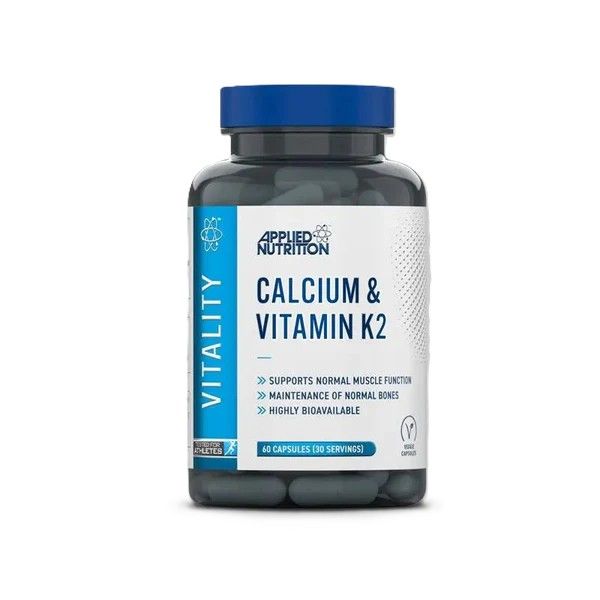
Applied Nutrition
Applied Nutrition - Calcium & Vitamin K2 - 60 Caps
213 krIn stockWhy is this shown? Innehåller alla ämnen artikeln handlar om · Renodlat tillskott — ämnet står i produktnamnet · I lager
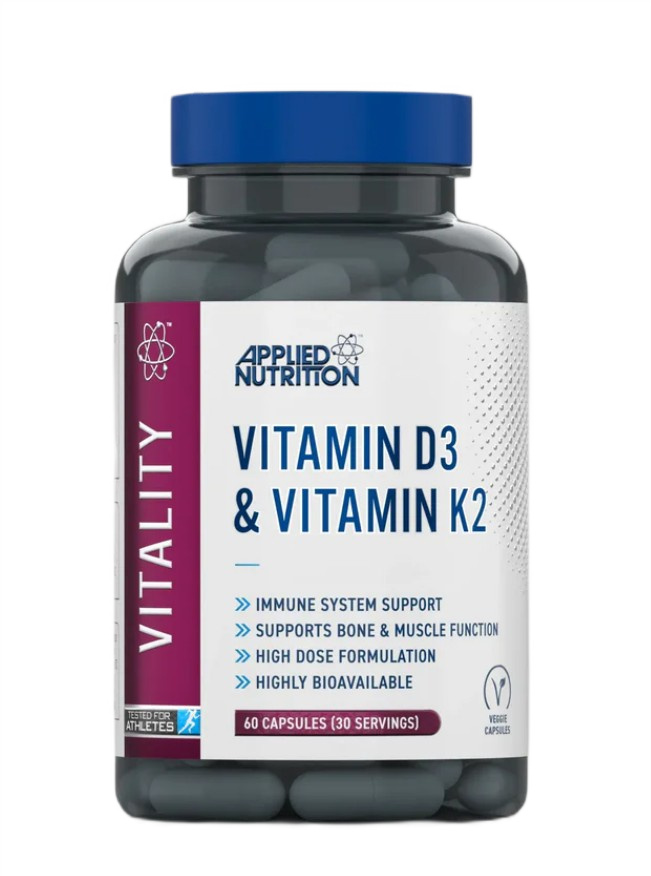
Applied Nutrition
Applied Nutrition - Vitamin D3 & Vitamin K2 - 60 Vcaps
154 krIn stockWhy is this shown? Innehåller alla ämnen artikeln handlar om · Renodlat tillskott — ämnet står i produktnamnet · I lager
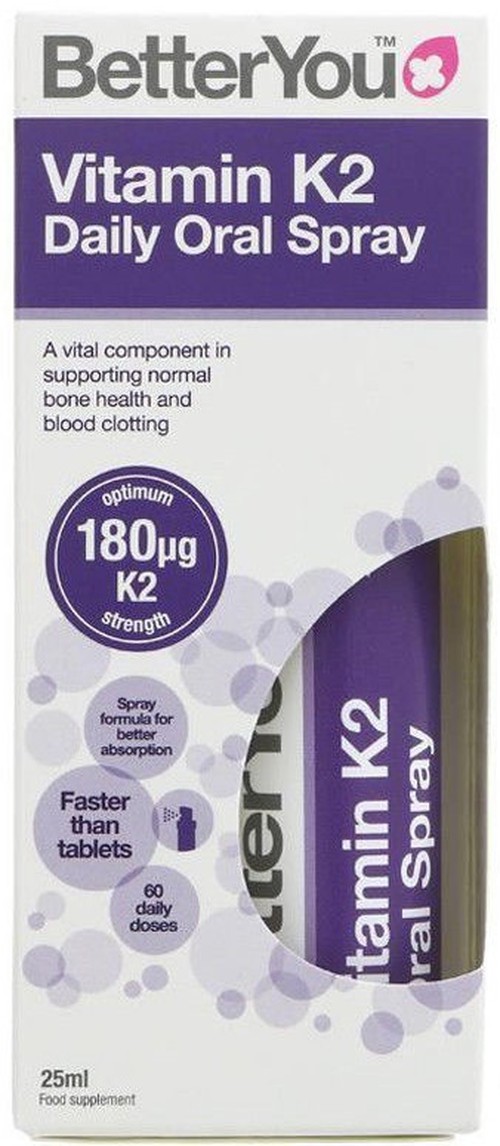
Better You
Better You - Vitamin K2 Oral Daily Spray - 25ml
241 krIn stockWhy is this shown? Innehåller alla ämnen artikeln handlar om · Renodlat tillskott — ämnet står i produktnamnet · I lager