How Much Protein Is in 1 Egg? Full Guide to Egg Protein Content
Short answer
A typical chicken egg has about 6 g of protein, and one large raw egg is listed at 6.28 g. The amount changes mainly with egg size, while cooking changes the figure only a little.
Quick facts
- One large raw egg has 6.28 g of protein.
- One large fried egg has 6.26 g of protein.
- One large poached egg has 6.25 g of protein.
- The NHS guide lists about 8 g for a medium egg, 9 g for a large egg, and 10 g for an extra-large egg.
- Protein estimates depend on egg size, not one universal number.
- Cooking changes the protein amount very little, but thorough cooking is safer.
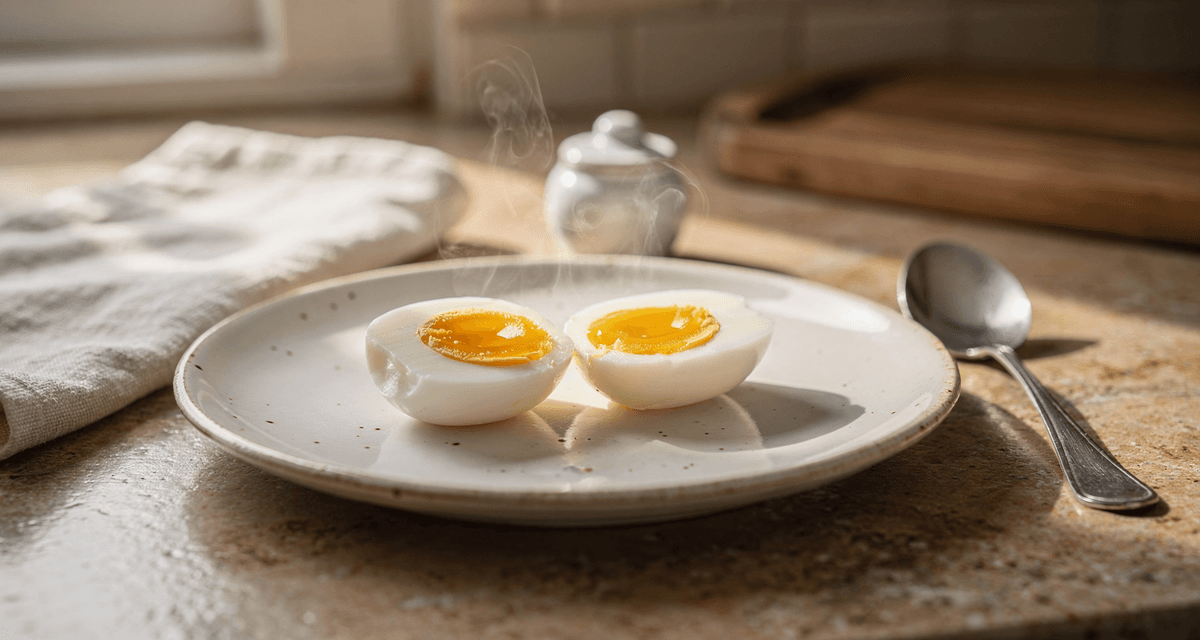
How much protein is in 1 egg?
The quick answer
A typical chicken egg gives you roughly 6 g of protein, and USDA food-composition data list 6.28 g for one large raw egg. The same USDA table gives 6.26 g for one large fried egg and 6.25 g for one large poached egg.
The exact number depends on the egg size used by the source. In the Guy’s and St Thomas’ NHS guide, the values are rounded and tied to egg weight: medium eggs are listed at 8 g, large eggs at 9 g, and extra-large eggs at 10 g of protein. Those figures are approximate portion values, not a fixed rule for every egg.
Why the numbers are not identical
Food tables do not all use the same size conventions. That is why two official sources can both be useful and still show different numbers for “large” eggs.
Use the size category on the egg, not one universal number, when you want the best estimate.
Two eggs of the same size are roughly double one egg, so two large eggs will be about twice one large egg and two medium eggs will be about twice one medium egg. The safest way to count protein is to start with the egg size you actually have.
Approximate protein by egg size
| Egg size | Approximate protein | Source |
|---|---|---|
| Small | Not stated in the supplied tables | No small-egg figure appears in the supplied USDA or NHS sources |
| Medium | 8 g | NHS guide |
| Large | 6.28 g in USDA data; 9 g in the NHS guide | USDA table and NHS guide |
| Extra-large | 10 g | NHS guide |
| Jumbo | Not stated in the supplied tables | No jumbo-egg figure appears in the supplied USDA or NHS sources |
How many grams are in the white and yolk?
What the official tables show
The retrieved official sources here give protein for whole eggs, not a separate white-versus-yolk split. The USDA legacy protein table lists one large raw egg at 6.28 g of protein, with very similar values for cooked forms: 6.26 g fried and 6.25 g poached. The NHS guide gives a size-based shortcut instead, listing 8 g for a medium egg (60 g), 9 g for a large egg (65 g), and 10 g for an extra-large egg (73 g).

That means the most reliable number depends on the exact egg you are counting. A shell egg, a carton of liquid egg, and a product made from only part of the egg are not the same thing, so whole-egg figures should not be copied across to every egg product. USDA’s FoodData Central is the USDA’s main food-composition system and includes analytical data, historical data, foundation foods, researchers’ data, and branded foods in one place.
Why whole-egg numbers are not enough for every product
The USDA protein table in the retrieved excerpt gives a value only for egg, whole. It does not provide a separate gram figure for egg white or egg yolk, and the NHS page in these results also reports only whole eggs by size. So if you are trying to total protein from an egg-white carton or from yolks used on their own, these exact source snippets do not give a verified per-part number.
For packaged egg products, the practical move is to check the exact product entry in FoodData Central or the product’s own nutrition information rather than assuming a whole-egg value applies. FoodData Central also includes label data collected through a public-private partnership, which is useful when the food is sold in a branded carton instead of as shell eggs.
| Egg form | Verified protein value in the retrieved sources | Source |
|---|---|---|
| Large raw whole egg | 6.28 g | USDA protein table |
| Large fried whole egg | 6.26 g | USDA protein table |
| Large poached whole egg | 6.25 g | USDA protein table |
| Medium whole egg | 8 g | NHS guide |
| Large whole egg | 9 g | NHS guide |
| Extra-large whole egg | 10 g | NHS guide |
| Egg white | No separate value in the retrieved excerpts | FoodData Central |
| Egg yolk | No separate value in the retrieved excerpts | FoodData Central |
Key takeaway: the verified numbers here are whole-egg numbers. If you are counting whites or yolks separately, use the exact product entry or label data rather than a whole-egg estimate.
Does cooking change egg protein?
The protein number changes very little
The USDA legacy protein table lists one large egg at 6.28 g protein raw, 6.26 g fried, and 6.25 g poached USDA Protein table. That is a spread of just 0.03 g across the three entries, so cooking does not materially change the protein amount listed for a large egg.
In the sources available here, the clean comparison is raw versus fried versus poached; there are no separate protein values shown for boiled, scrambled, or omelette-style eggs in the retrieved excerpt.
Cooking method matters more for safety than for protein grams
EFSA says that if Salmonella is present inside eggs, it can multiply more rapidly as storage time and temperature rise, and that thoroughly cooking eggs reduces the risk of infection EFSA on egg storage risks. EFSA’s Salmonella topic page also says Salmonella is commonly found in eggs and that thorough cooking, refrigeration, and good kitchen hygiene can prevent or reduce the risk posed by contaminated food EFSA Salmonella topic.
So the practical difference between raw and cooked eggs in the retrieved sources is not a bigger protein number. It is that cooked eggs are the safer choice.
For a large egg, the protein figure stays almost unchanged on paper; the bigger difference is safety, not grams.
Raw egg white is not a protein shortcut
The retrieved official sources do not provide human digestibility figures comparing raw and cooked egg protein, so they do not support any claim that raw egg white is a better protein strategy. What they do support is that uncooked or slightly cooked eggs carry more Salmonella risk than thoroughly cooked eggs EFSA on egg storage risks EFSA Salmonella topic.
When you compare egg data, check the basis of the number. The USDA table reports protein per egg, while the NHS guide gives approximate protein by egg weight: medium egg (60 g) 8 g, large egg (65 g) 9 g, and extra-large egg (73 g) 10 g NHS protein guide. Those are different ways of describing the food, so they should not be mixed without checking the serving basis first.
Is egg protein complete and high quality?
What protein quality means
In EFSA’s protein opinion, the adult Population Reference Intake is 0.83 g per kg body weight per day, which is a total-protein benchmark rather than a ranking of individual foods. EFSA Dietary Reference Values summary report EFSA sets population reference intakes for protein

Why eggs score well
EFSA Dietary Reference Values summary report The Health Benefits of Egg Protein
Comprehensive overview of the quality of plant- and animal-sourced proteins based on the digestible indispensable amino acid score The Health Benefits of Egg Protein
How eggs compare with other foods
| Food source | Protein-quality picture |
|---|
In the EU, protein claims sit inside the Regulation 1924/2006 framework, and EFSA’s 2022 opinion on nutrient profiles was written for restricting nutrition and health claims on foods. EFSA nutrient profiles opinion Understanding Dietary Protein Quality: Digestible Indispensable Amino Acid Scores and Beyond
How much protein do you need each day?
Start with the adult reference value
EFSA’s population reference intake for protein in healthy adults, including older adults, is 0.83 g per kilogram of body weight per day (EFSA protein PRI announcement). That is a daily target for a population, not a claim about eggs or any other single food.
To turn it into a personal figure, multiply body weight by 0.83. A 60 kg adult comes to about 49.8 g per day, 70 kg to 58.1 g, and 90 kg to 74.7 g. If you use the USDA legacy value for one large raw egg, 6.28 g protein, those targets equal roughly 8, 9, and 12 large eggs respectively (USDA Protein document).
Why egg counts are only rough estimates
The NHS guide for upper gastrointestinal surgery lists approximate protein values of 8 g for a medium egg, 9 g for a large egg, and 10 g for an extra-large egg (NHS protein guide). Because egg size changes the number, the same daily target can translate into different egg counts depending on which reference you use.
| Body weight | EFSA daily protein target | Approx. large eggs using USDA 6.28 g |
|---|---|---|
| 60 kg | 49.8 g | About 8 |
| 70 kg | 58.1 g | About 9 |
| 90 kg | 74.7 g | About 12 |
| 70 kg athlete | Up to about 140 g if using 2 g/kg/day | About 22 |
Higher intakes in athletic contexts
The NIH Office of Dietary Supplements notes that athletes may need considerably more protein, with recommendations reaching up to about 2 g per kilogram per day (NIH ODS exercise fact sheet). For a 70 kg athlete, that is about 140 g per day, which works out to roughly 22 large eggs using the USDA figure. That is a rough conversion, not a meal plan.
Eggs can help you move toward a protein target, but the target is for the whole day.
So the practical rule is simple: use the body-weight target first, then decide how many eggs fit alongside your other protein foods across the day. The common mistake is to treat a daily reference value like a protein claim for one food. EFSA’s number is a population intake target; the egg figures are food amounts.
How can eggs help you hit protein targets?
Use eggs as one protein component in a meal, then add another protein food beside them.
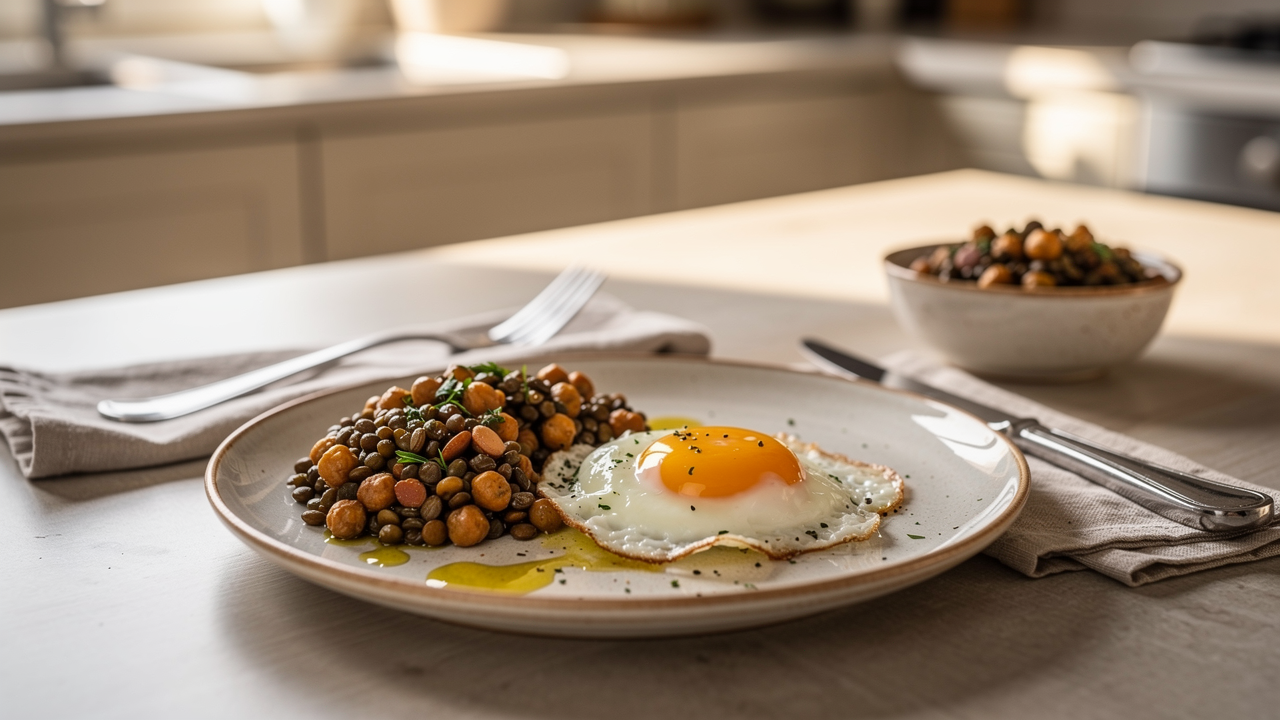
Build the plate around the egg, then add another protein food
One large egg is listed by USDA at 6.28 g protein raw, 6.26 g fried, and 6.25 g poached, so it is easy to use as a small, steady building block rather than the only protein on the plate.
| Meal | Simple egg-based build | What to count |
|---|---|---|
| Breakfast plate | Eggs plus a dairy food or another protein food | Count the egg and the add-on separately |
| Lunch bowl | Eggs with legumes, whole grains, or soy | Use the whole bowl, not just the egg, to track the total |
| Dinner plate | Eggs alongside fish or meat | Count each protein item on the plate |
| Snack | An egg with a second protein food if you want another checkpoint in the day | Keep the snack simple enough to log accurately |
Count the egg correctly
Use the same basis every time you log a meal. The USDA figures above show that the same large egg has slightly different protein values in raw, fried, and poached form, so switching between raw and cooked numbers can make your total look cleaner than it is. Count the whole egg you actually ate, and add any other ingredients in the dish separately instead of folding them into the egg number.
Spread protein across the day
Which egg forms should you buy for protein?
For a shell egg, USDA’s legacy protein table lists 6.28 g of protein for one large raw egg, with cooked values staying very close: 6.26 g fried and 6.25 g poached.
Compare the exact form you are buying
For cartons and dried products, use the protein figure for the exact item on the pack rather than assuming it matches a shell egg. The NHS guide from Guy’s and St Thomas’ says its tables show average portions and that you should check the product you buy because the numbers can change between brands and packs: Guy’s and St Thomas’ NHS protein guide.
| Egg form | Best use for shopping | What to verify |
|---|---|---|
| Shell eggs | The standard whole-egg option | Egg size and the protein figure for that size |
| Pasteurised liquid egg products | A carton format that is easy to portion | Protein per serving and serving size |
| Egg whites | The egg-white product as sold | Protein per serving and serving size |
| Dried egg products | A dry ingredient for recipes | Protein per serving and the exact product name |
Read the numbers, not the slogan
For any packaged egg product, the most useful figures are the protein amount and the serving size. If a pack also gives a per-100 g value, use that as a second comparison point so two products can be judged on the same basis.
Freshness and storage still matter for shell eggs
For shell eggs, EFSA says that extending storage time at home or at retail would increase Salmonella food-poisoning risks, and EFSA also notes that Salmonella is most frequently found in eggs: EFSA on egg storage and Salmonella risk, EFSA Salmonella topic. So the date on the pack and how the eggs have been handled are part of the buying decision as well.
Who should be cautious with eggs?
EFSA says Salmonella is commonly found in eggs and raw meat, and that eggs are the most important source of human infections in the EU. The clearest safety issue in the retrieved evidence is raw or lightly cooked eggs, because the estimated risk rises as storage time increases and as cooking becomes less thorough. EFSA Salmonella topic EFSA egg storage assessment
Raw and lightly cooked eggs are the main caution area
In EFSA’s 2014 assessment, extending the sell-by date from 21 to 28 days increased the estimated risk by 40% for uncooked eggs and 50% for slightly cooked eggs. In the worst-case scenario EFSA modelled, a 42-day sell-by date and a 70-day best-before date meant the risk was around three times higher than current conditions for both uncooked and slightly cooked eggs. EFSA also states that thoroughly cooking eggs reduces the risk of infection, while refrigeration is the only way to reduce the extra risk caused by longer storage. EFSA egg storage assessment
| EFSA scenario | Uncooked eggs | Slightly cooked eggs |
|---|---|---|
| Sell-by date extended from 21 to 28 days | Risk +40% | Risk +50% |
| Sell-by date 42 days and best-before date 70 days | Around 3x higher risk | Around 3x higher risk |
That means the safest reading of the evidence is simple: do not treat raw or only partially cooked eggs as a low-risk choice, especially if eggs have been stored for longer than usual. EFSA Salmonella topic
Thorough cooking and refrigeration are the two controls EFSA highlights most clearly for lowering egg-related Salmonella risk. EFSA egg storage assessment
Allergy, cholesterol, and other medical questions need individual advice
So if a clinician has already given you personal advice on food safety, dietary cholesterol, or a condition that changes how you should eat eggs, that advice should take priority over any general protein discussion. This section is about safety and risk, not about protein amount. EFSA Salmonella topic
For readers who want the shortest rule from this evidence set: keep eggs refrigerated, cook them thoroughly, and be especially careful with any egg dish that is meant to be runny, lightly set, or eaten after prolonged storage. EFSA egg storage assessment
Safety and precautions
Keep eggs refrigerated and cook them thoroughly, because the article says raw or lightly cooked eggs carry a higher Salmonella risk. Longer storage can raise that risk, and refrigeration plus thorough cooking are the main controls mentioned.
If you take medication, are pregnant, or are feeding children, ask a healthcare professional for personal advice before changing how you eat eggs.
Supplements with the ingredients in this article
Compare contents, dose and price
Frequently asked questions
Are brown eggs higher in protein than white eggs?
The article does not give a separate protein figure for brown eggs. It says the best estimate is based on egg size, not on a single universal number. So shell color is not used in the protein count provided here.
Do duck eggs have more protein than chicken eggs?
The article only verifies chicken egg figures, so it does not give a duck-egg number. It also says you should check the exact product or egg size rather than assuming one egg type matches another. So there is no duck-egg protein value confirmed in the body.
How much protein is in a quail egg?
The article does not list a quail-egg protein value. The verified numbers it provides are for whole chicken eggs by size. So there is no quail-egg figure in the information supplied.
Do omega-3 eggs contain more protein?
The article does not verify a special higher-protein value for omega-3 eggs. It says packaged egg products should be checked on their own label or product entry, because you should not assume the whole-egg number applies to every egg product. So the protein amount depends on the exact product.
Is there protein in an eggshell?
The article gives protein figures for whole eggs, not for the shell. It does not provide a separate eggshell protein value in the retrieved tables. So there is no verified protein amount for the shell in this information.
Do egg substitutes have the same protein as whole eggs?
The article does not say egg substitutes have the same protein as whole eggs. Instead, it says carton and dried egg products should be checked by their exact serving size and protein amount. So you should use the label for the specific product rather than a whole-egg estimate.
Sources
- <table id="e1"> (external link)
- Protein in your diet for upper gastrointestinal surgery - Planning your food | Guy's and St Thomas' NHS Foundation Trust (external link)
- EFSA sets population reference intakes for protein | EFSA (external link)
- Dietary Supplements for Exercise and Athletic Performance - Consumer (external link)
- USDA FoodData Central (external link)
- Salmonella | EFSA (external link)
- Egg storage times: EFSA assesses public health risks | EFSA (external link)
- untitled (external link)
Read more
Products related to this article
Doctor's Best
Doctor's Best - Pure Collagen Types 1 and 3 - 7.1 oz
245 krIn stockWhy is this shown? Innehåller alla ämnen artikeln handlar om · I lager

Tierlieb
tierlieb - Brewer's Yeast Tablets - 400 tablets
80 krIn stockWhy is this shown? Innehåller alla ämnen artikeln handlar om · I lager

Forpro
Forpro - Chicken Breast Fillet In Own Sauce - 160g
68 krOut of stockWhy is this shown? Innehåller alla ämnen artikeln handlar om · I lager