What is soy protein isolate?
Short answer
Soy protein isolate is the most refined soy protein fraction, made from defatted soy flakes after more non-protein material is removed. It is usually about 90% protein or more on a dry-matter basis and is used in foods for its protein content and functional properties.
Quick facts
- Made from soybeans after cleaning, dehulling, flaking and defatting.
- Typically about 90% protein or more on a dry-matter basis.
- More insoluble carbohydrates are removed than in soy protein concentrate.
- Used in foods for solubility, emulsifying and thickening properties.
- Compare products by protein per 100 g and the ingredient list.
- Soybeans and soy products are listed allergens.

What exactly is soy protein isolate?
Where it sits in soy processing
Soy protein isolate (SPI) is the protein-rich fraction made after soybeans have been cleaned, dehulled, flaked, defatted, and then processed so that more non-protein material is removed. In the soy-processing review, soy flour is made first, soy protein concentrate comes next after soluble carbohydrates are removed, and soy protein isolate is obtained after additional removal of insoluble carbohydrates from defatted soy flakes. Processing review of soy flour, concentrate and isolate
| Form | Typical protein level in the retrieved evidence | What the processing removes |
|---|---|---|
| Soy protein isolate | About 90% protein or more on a dry-matter basis | Additional insoluble carbohydrates are removed |
The figures above are category-level ranges, not guarantees for a specific retail packet. One comparative experiment reported 52.72% protein for a defatted soy flour sample, while the concentrate and isolate figures describe ingredient categories rather than fixed values for every product on sale. Soy isolate composition study Soy product processing and classification review
Why it is called an isolate
The word isolate signals that the soy fraction has been separated more completely from the rest of the bean than flour or concentrate. A laboratory example in the retrieved material describes the common extraction route: defatted soy flour was mixed with water, the protein was dispersed at alkaline pH, insoluble material was separated away, and the protein was then precipitated at pH 4.5 and dried. That is an example of how isolate can be recovered, not a fixed recipe for every commercial plant. Laboratory preparation example from soy protein isolate research
What it does in food
The retrieved studies link SPI to functional behaviour in food systems, especially solubility and emulsifying properties. One paper reported that changes in secondary structure were significantly associated with solubility and emulsifying activity, and another study examined the rheological and solubility properties of soy protein isolate. In other words, SPI is not only a protein source; it is also a refined ingredient used because it behaves in a particular way when it is mixed into foods. Study on structural and functional properties of soy protein from extruded flakes Rheological and Solubility Properties of Soy Protein Isolate
What the label can and cannot tell you
How good is soy protein isolate as protein?
Complete amino acids, with methionine usually the weak point
Soy protein isolate supplies all indispensable amino acids, so it is generally treated as a complete protein source. In soy, sulfur-containing amino acids such as methionine are often the first limiting amino acids, meaning they are relatively lower than in some animal proteins, not absent. Processing can also shift the usable amino-acid profile: a quantitative review found that heat and other post-processing conditions could either improve or reduce measured soy-protein quality. Protein quality of soy and the effect of processing

That makes soy isolate a practical choice for people avoiding dairy or looking for a plant-based protein, but it is not nutritionally magical. Protein quality of soy and the effect of processing
What PDCAAS and DIAAS actually measure
Two common quality scores appear in the evidence. PDCAAS uses fecal digestibility, while DIAAS uses ileal digestibility, so they look at different points in the gut. In the soy review, mean DIAAS across all soy products was 84.5 ± 11.4 and mean PDCAAS was 85.6 ± 18.2, with broad variation within soy groups and across processing methods. Protein quality of soy and the effect of processing
| Measure | Plain-language meaning | What the review showed |
|---|---|---|
| PDCAAS | Protein quality score based on fecal digestibility | Mean 85.6 ± 18.2 across soy products |
| DIAAS | Protein quality score based on ileal digestibility | Mean 84.5 ± 11.4 across soy products |
| Why they differ | They use different digestibility endpoints | Processing and study conditions can move both scores up or down |
What human studies have actually tested
Evidence in people does not reduce soy isolate to a single winner-or-loser verdict. One randomized trial in men and women reported no significant differences in muscle growth and strength development when soy and whey protein supplements were matched for leucine during a 12-week resistance-training program. Another study in young men compared whey hydrolysate, casein, and soy protein isolate for mixed muscle protein synthesis at rest and after resistance exercise. 12-week resistance-training trial Muscle protein synthesis study in young men
Protein quality matters, but the evidence here shows that quality scores, processing, and study setup are not the same thing as a guaranteed real-world outcome.
So, soy protein isolate can sit comfortably alongside other high-quality proteins, especially for vegans and people wanting a dairy-free option. Protein quality of soy and the effect of processing
How much soy protein do you need each day?
Start with the total daily protein target
At 70 kg, that is about 46 g/day and 58 g/day from the whole diet. These are reference values for total protein intake, not soy isolate doses.
Active adults and older adults use different ranges
For people with athletic demands, NIH’s Office of Dietary Supplements describes an evidence-informed range of 1.2–2.0 g/kg/day. At 70 kg, that is roughly 84–140 g/day. Nordic Nutrition Recommendations 2023 also discuss 1.2–1.5 g/kg/day for older adults in relation to physical functioning, while retaining 0.83 g/kg/day as the basic recommended intake. These are total daily protein ranges, not prescriptions for one powder.
Count soy isolate toward your day’s total protein; do not add it on top of an already complete diet as if it were an extra requirement.
What the powder math looks like
The serving size depends on the product’s actual protein percentage as sold. A 30 g serving of a powder that is 90% protein as sold contributes 27 g protein, and a figure of 90% on a dry-matter basis does not automatically mean the same thing in every 30 g scoop. A simple way to estimate powder needed is to divide the protein target by the protein fraction.
| Protein content as sold | Powder needed for about 20 g protein | Powder needed for about 30 g protein | Protein in 30 g powder |
|---|---|---|---|
| 70% | about 29 g | about 43 g | 21 g |
| 80% | 25 g | about 38 g | 24 g |
| 90% | about 22 g | about 33 g | 27 g |
How soy isolate compares with common soy foods
If you are comparing a powder with whole soy foods, use the label percentage on the tub and the portion size on the plate. That keeps the calculation focused on the day’s total protein rather than on a single serving size.
Which health claims are actually allowed?
Nutrition claim versus health claim
In EU labelling, “source of protein” means at least 12% of a food’s energy comes from protein, while “high protein” means at least 20% of energy comes from protein. Those are nutrition claims. They do not, by themselves, authorise a separate health claim for a soy isolate product. EU health-claim rules apply to the finished food that bears the claim, not simply to soy protein isolate as an ingredient.
The protein claims you will see most often
The same evidence base also makes clear that the label wording has to sit on a compliant finished food; the presence of soy protein isolate alone does not automatically qualify the product to use the claim. Source
| Claim type | What the law allows | What to check on the product |
|---|---|---|
| Nutrition claim | “source of protein” or “high protein” | Whether the finished food meets the 12% or 20% energy threshold from protein source |
| Health claim | Whether the finished food is eligible to carry the claim under EU rules source | |
| Blood cholesterol claim | No authorised soy-protein cholesterol claim is shown in the supplied evidence | A proposed claim for isolated soy protein was refused; a historical extract also lists a proposed 25 g/day soy-protein cholesterol claim as non-authorised source |
What the cholesterol row means
Do not read a product name, a research dose or an ingredient list as permission to make a cholesterol claim. The supplied evidence shows that Commission Regulation (EU) No 1228/2014 refused authorisation of a proposed claim that isolated soy protein lowers blood cholesterol, and the historical register extract mentioned a proposed 25 g/day soy-protein cholesterol claim as non-authorised. That is a legal status, not a promise of a specific result for every person.
A legal claim tells you what may appear on a compliant label; it does not turn soy protein isolate into a guarantee of superior benefit.
For shoppers, the practical step is simple: read the finished product’s nutrition declaration and claim wording together. A soy isolate ingredient can be part of a compliant product, but the claim only exists if the whole food meets the legal conditions.
What forms of soy protein isolate are sold?
Powders, flavours, and processing labels are not the same thing
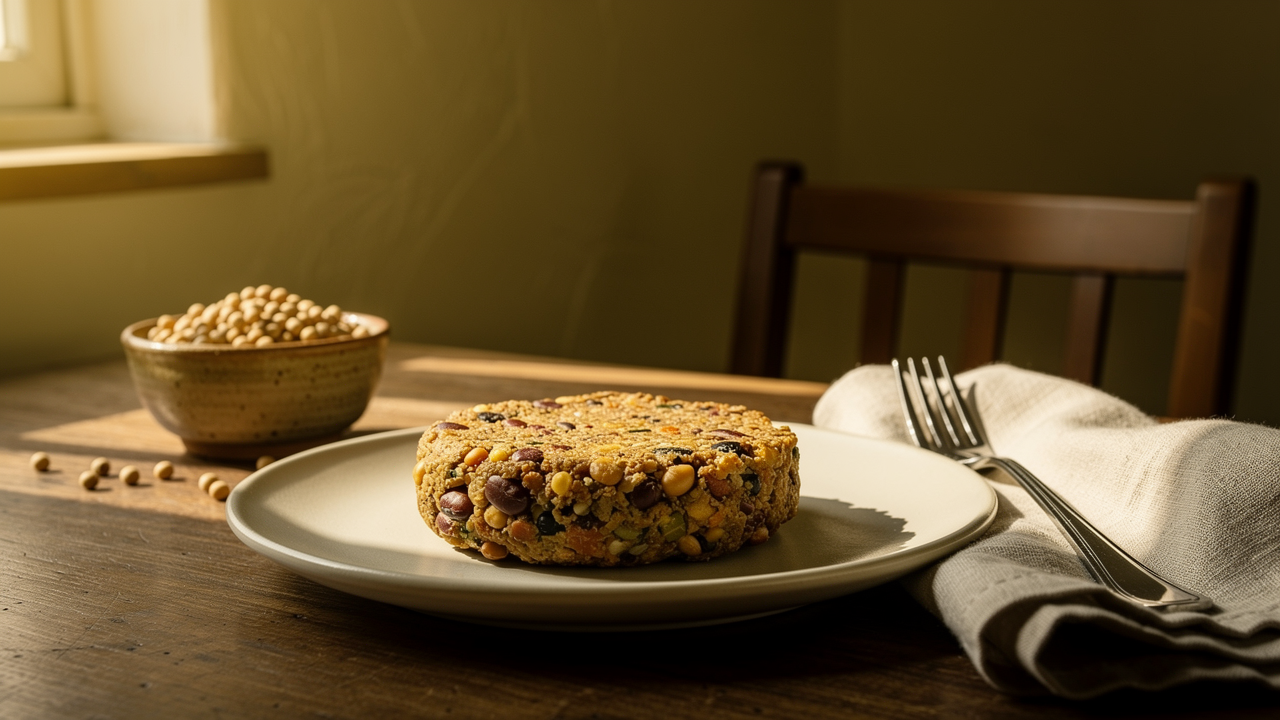
In the evidence base, soy protein isolate is the most refined of the soy fractions discussed here: it is obtained after additional removal of insoluble carbohydrates from defatted soy flakes. The same review separates soy flour, soy protein concentrate, and soy protein isolate as different raw materials used in plant-based foods, especially meat-style products.
A practical mistake is to treat every tub with “soy isolate” on the front as the same product. The finished item may be a simple powder or a more processed formula, so the ingredient list and the protein declaration per 100 g matter more than the name alone. If other ingredients are added, the product is no longer just one soy fraction.
How the main soy forms differ
| Form | What changes | What that means in practice |
|---|---|---|
| Soy protein isolate | Further removal of insoluble carbohydrates from defatted soy flakes | Highest protein purity among the soy fractions in the review, but not automatically the highest protein quality score |
| Soy protein concentrate | More carbohydrates are removed than in soy flour, but less than in isolate | Less refined than isolate; the review notes higher crude protein and fewer starch, fiber, and antinutritional factors than soy flour |
| Texturised soy protein | Made by extrusion | Designed to create fibrous, meat-like structure rather than a smooth drink |
The same review also reports that soy flour, concentrate, and isolate are the main raw materials used in plant-based meat products, and that post-processing such as extrusion can change protein quality. That means a lighter, more elastic, or more “instant” texture is a formulation feature, not proof that one product is inherently superior.
How soy isolate compares with common alternatives
The supplied studies directly compare soy with whey in a 12-week resistance-training trial, and the doses were matched for leucine, so the result should not be read as proof that equal weights of different powders are interchangeable. A separate human comparison found that hydrolysates produced faster rises in blood amino acids than non-hydrolysed counterparts, but that is a short-term laboratory outcome, not a claim about long-term training results.
Faster mixing, a smoother texture, or a quicker amino-acid rise does not automatically make one protein powder the better buy for every use.
If you are comparing blended plant proteins, check the finished product’s protein per 100 g and the serving size first. The blend may be built for flavour, texture, or formulation convenience, while the soy fraction inside it still needs to be read as one part of the recipe rather than the whole product.
How do you choose a good soy isolate product?
Compare protein per 100 g, not the scoop
Start with the nutrition panel and compare protein per 100 g across packs, then use the ingredient list to see whether you are buying a plain isolate or a blended powder. In one published soy-isolate study, the finished isolate had 91.21% crude protein, and the paper notes that soy product is recognised as an isolate only if it contains at least 90% protein. Soy isolate composition and yield study A stated serving size can be misleading if two products use different scoop weights, so the per-100 g figure is the cleaner comparison.
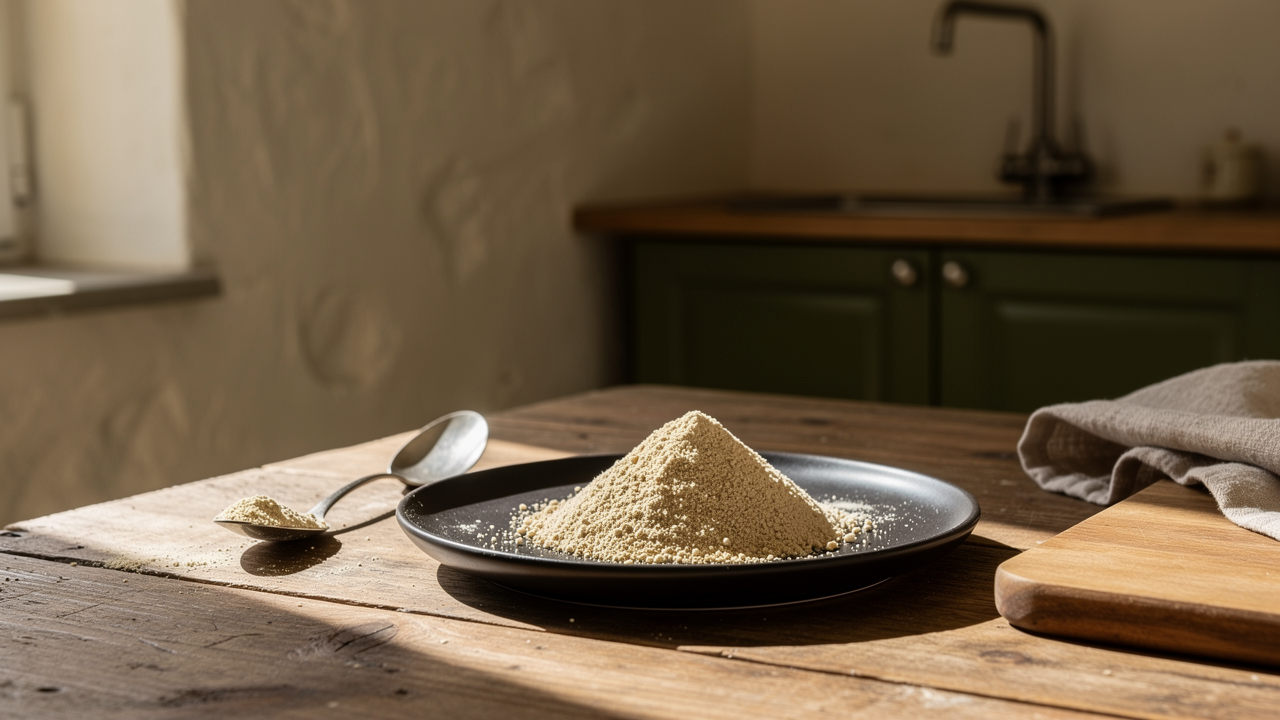
If a powder is truly 90% protein as sold, a 30 g scoop contributes 27 g protein. That kind of arithmetic is why bag size alone does not tell you value.
Read the ingredient list for extras
If you want a neutral protein ingredient, a shorter ingredient list is easier to use in cooking and mixing. The FDA lists soy protein isolate as a food substance used as an emulsifier, formulation aid, nutrient supplement, stabilizer or thickener, and texturizer, which helps explain why some products are plain while others are built into a more processed powder. FDA soy protein isolate listing
For a plain base, check whether the label adds sugar, strong flavouring, salt, or a long list of additives. Those extras may be intentional in a dessert-style product, but they matter if your goal is an unflavoured ingredient for shakes, porridge or baking.
Check restrictions and quality cues separately
Under EU allergen rules, soybeans and their products are listed allergens, and milk and its products are listed too, so soy isolate is not an allergy-free form of soy. Read the allergen statement and any cross-contamination warning on the pack. EU food-information and allergen rules If you need a product that is gluten-free, lactose-free, or vegan, look for those statements explicitly rather than assuming them from the word isolate.
| Label check | What to look for | Why it helps |
|---|---|---|
| Protein per 100 g | Use the nutrition panel, not scoop size alone | Lets you compare protein density directly |
| Ingredient list | Plain isolate or a flavoured blend with extras | Shows whether sugar, salt, or additives were added |
| Allergen statement | Soy, milk, and any cross-contamination warning | Helps match the pack to dietary restrictions |
| Non-GMO, organic, third-party testing | What the label says and what it documents | Useful sourcing and quality cues, but not proof of protein density |
Judge value by protein density and intended use
Non-GMO, organic, and third-party testing claims are best read as sourcing and documentation cues, not as proof that a powder contains more protein. A cheaper bag is not automatically the better buy if it delivers less protein per 100 g or if you will not use the flavour and additives it contains. If two products have different protein densities, compare the cost against the actual grams of protein you will get, not against pack weight alone.
Choose the pack that gives you the protein density, ingredient profile, and label information that match the way you plan to use it.
How should you use soy protein isolate?
Mix it gradually
For shakes and fruit smoothies, put the liquid in first, then add the powder gradually while whisking or blending. The same approach works for porridge and yogurt alternatives: start with a wet base, mix in a little at a time, and stop before the texture becomes too thick. A study of SPI rheology found that solubility and thickness changed with pH and heating, so one powder’s behaviour does not automatically predict another’s. Rheological and Solubility Properties of Soy Protein Isolate
| Everyday form | Practical starting point | What to watch |
|---|---|---|
| Shakes and fruit smoothies | Add liquid first, then use a shaker or blender and build up the powder slowly. | Too much at once can clump or thicken the drink quickly. |
| Porridge and yogurt alternatives | Stir into the wet food a little at a time. | Unflavoured powder can change taste, sweetness and mouthfeel. |
| Pancake batter and baked goods | Whisk in part of the powder first, then adjust the rest. | The batter may turn heavier or drier if you add too much. |
| Soups, stews and gravies | Blend or whisk in small amounts until the texture suits the dish. | Its thickening effect can show up faster than expected. |
Cook with the texture in mind
SPI can also be worked into pancake batter, baked goods, soups, stews and gravies because it can help bind and thicken recipes. In a lab study at neutral pH, soy-protein gels began forming at around 84°C and became firmer at 90°C, which is a texture finding, not a home-cooking rule. A practical consequence follows from that: if a dish starts to feel heavy or pasty, stop adding powder and thin it with more liquid instead of piling in more isolate.
One is expecting a single serving to replace a balanced meal. Another is ignoring the taste impact of an unflavoured powder, especially in plain drinks or delicate soft foods. A third is over-thickening: if the recipe tightens too much, add liquid rather than more powder.
When to fit it into the day
Breakfast, between meals, after exercise, or alongside a meal that is otherwise low in protein are all practical times to use SPI. Nordic Nutrition Recommendations 2023 set adult protein reference values of 0.66 g/kg/day as average requirement and 0.83 g/kg/day as recommended intake; at 70 kg, that is about 46 g and 58 g per day in total from the day’s food, not a mandatory SPI target.
A serving size on the package is manufacturer guidance, not a universal dose recommendation; use the nutrition panel and the rest of your day’s food to decide how much fits.
That approach matters because the same ingredient can behave differently in a drink, a batter or a simmered dish, and because the product itself is not standardised to one fixed isoflavone content.
Who should be careful with soy protein isolate?
People with a diagnosed soy allergy should avoid soy protein isolate. Soybeans are listed as a major food allergen under U.S. labelling rules, and EU allergen rules also list soybeans and soy products, so purification does not make soy isolate allergy-free. FDA major food allergens EU food-information allergen rules
Allergy and label reading
| Group | Why to be cautious | Practical step |
|---|---|---|
| Soy allergy | Soy protein isolate is still soy, and soy is a major listed allergen. | Avoid SPI and check both ingredient and allergen declarations. |
| Levothyroxine users | Food timing can matter with thyroid medicine. | Ask the prescriber or pharmacist how to fit soy into the day. |
| CKD or prescribed protein limits | Protein targets depend on the person and the clinical plan. | Get individual advice before regular use. |
Levothyroxine needs timing, not guessing
If you take levothyroxine, NHS England advises taking it at least one hour before food, including soya products. The four-hour spacing in that guidance applies to antacids and calcium or iron supplements, not as a blanket soy rule. A published case report described impaired thyroxine control after a person introduced a protein supplement, but a single-patient report cannot prove that soy protein isolate caused the change. NHS England advice for prescribers Case report on impaired thyroxine absorption
With thyroid medicine, the safest move is to ask how soy should fit around the prescription rather than guessing at a gap.
Kidney disease and medically prescribed diets
People with chronic kidney disease, or anyone on a protein-restricted plan, should get individual advice before using protein powder regularly. NIDDK’s CKD guidance describes about 0.8 g/kg/day as adequate protein intake and stresses that needs are individualized, so a sports-style scoop should not be treated as a one-size-fits-all target. NIDDK CKD guidance
Pregnancy, breastfeeding, children, and hormone-related advice
For pregnancy and breastfeeding, NCCIH says soy amounts greater than those commonly found in foods may be unsafe in pregnancy and that little is known about such amounts during breastfeeding. For children, and for anyone who has been told to limit soy or isoflavones for a personal medical reason, supplement-style use should be discussed with a clinician rather than assumed to be appropriate. Soy protein isolate is a protein ingredient, not an isoflavone supplement, and it should not be presented as a disease treatment. EFSA’s review of isoflavone supplements was limited to the postmenopausal women and exposure periods studied there. NCCIH soy safety overview EFSA isoflavone assessment Soy protein isolates with varied isoflavone content and thyroid hormones
Safety and precautions
People with a soy allergy should avoid soy protein isolate, because purification does not make soy harmless for someone who reacts to soy. If you take levothyroxine, or if you are pregnant, breastfeeding, buying for a child, or following a medically prescribed protein limit, ask a healthcare professional for personalised advice.
If you have kidney disease or another medical condition that affects protein intake, get individual guidance before using protein powder regularly. Always check the allergen statement and any cross-contamination warning on the pack.
Frequently asked questions
What is soy protein isolate?
Soy protein isolate is the most refined soy fraction described in the article. It is made by removing more non-protein material from defatted soy flakes, which increases protein density. It is used in foods because of how it behaves when mixed, not just because it contains protein.
How is soy protein isolate different from soy flour or soy concentrate?
Soy flour is less processed, soy concentrate has more carbohydrates removed than flour, and isolate goes a step further by removing additional insoluble carbohydrates. That is why isolate is usually the most protein-dense of the three. Processing also affects texture and other functional properties.
How should I use soy protein isolate in recipes?
For shakes and smoothies, add the liquid first and mix the powder in gradually so it does not clump or thicken too quickly. It can also be used in porridge, yogurt alternatives, baking, soups, stews and gravies. If the texture becomes too thick, add more liquid rather than more powder.
What should I look for on the label?
Compare protein per 100 g instead of relying on scoop size, because scoops can vary between products. Read the ingredient list to see whether it is plain isolate or a blended powder with sugar, salt or other additives. Also check the allergen statement and any cross-contamination warning.
Who should be careful with soy protein isolate?
Anyone with a diagnosed soy allergy should avoid it. If you take levothyroxine, have kidney disease, are pregnant or breastfeeding, or are buying it for a child, ask a healthcare professional for individual advice. The right timing or amount depends on the person and the product.
Sources
- Characterizing the Structural and Functional Properties of Soybean Protein Extracted from Full-Fat Soybean Flakes after Low-Temperature Dry Extrusion - PMC (external link)
- Effects of synthetic and natural extraction chemicals on yield, composition and protein quality of soy protein isolates extracted from full-fat and defatted flours - PMC (external link)
- Substances Added to Food <em>(formerly EAFUS)</em> (external link)
- Protein quality of soy and the effect of processing: A quantitative review - PMC (external link)
- Ingestion of whey hydrolysate, casein, or soy protein isolate: effects on mixed muscle protein synthesis at rest and following resistance exercise in young men. (external link)
- No Significant Differences in Muscle Growth and Strength Development When Consuming Soy and Whey Protein Supplements Matched for Leucine Following a 12 Week Resistance Training Program in Men and Women: A Randomized Trial - PubMed (external link)
- Dietary Reference Values for nutrients Summary report (external link)
- Dietary Supplements for Exercise and Athletic Performance (external link)
- What Are Major Food Allergens? (external link)
- Over-the-counter protein supplement resulting in impaired thyroxine absorption in a hypothyroid patient. (external link)
- Regulation - 432/2012 - SV - EUR-Lex (external link)
- Regulation - 1228/2014 - EN - EUR-Lex (external link)
- Comparison of different sources and degrees of hydrolysis of dietary protein: effect on plasma amino acids, dipeptides, and insulin responses in human subjects - PubMed (external link)
- Regulation - 1169/2011 - LT - Food Information to Consumers Regulation - EUR-Lex (external link)
- Soy protein isolates of varied isoflavone content do not influence serum thyroid hormones in healthy young men. (external link)
- Rheological and Solubility Properties of Soy Protein Isolate. (external link)
- Heat-induced gel formation by soy proteins at neutral pH. (external link)
- NORDIC NUTRITION RECOMMENDATIONS 2023 (external link)
- NHS England » Liothyronine – advice for prescribers (external link)
- Slow Progression & Reduce Complications - NIDDK (external link)
- Soy: Usefulness and Safety | NCCIH (external link)
- Isoflavones in food supplements for post-menopausal women: no evidence of harm | EFSA (external link)
- Functionality of Ingredients and Additives in Plant-Based Meat Analogues - PMC (external link)
- Effects of homogenization on the molecular flexibility and emulsifying properties of soy protein isolate - PMC (external link)