What is Protein? Forms, Uses, and How to Choose
Short answer
Protein is a chain of amino acids that the body uses to make its own proteins, including proteins needed to grow and maintain tissues. Choosing a product means looking at the full-day protein total, the protein per serving, the ingredient list, the allergen panel, and the format you will actually use.
Quick facts
- Dietary proteins are made of amino acids.
- Nine amino acids are indispensable and must come from food.
- For healthy adults, EFSA sets a population reference intake of 0.83 g/kg body weight/day.
- Protein targets are daily totals, not one scoop or one meal.
- Whey, casein, soy, egg and plant blends can differ in composition and digestibility.
- Check protein per 100 g, protein per serving, and the full ingredient list on the finished product.

What is protein, and what does it do?
Protein is a chain of amino acids
Dietary proteins are made of amino acids. During digestion, those amino acids are released and used to make the body’s own proteins, including proteins needed to grow and maintain tissues. EFSA also notes that dietary protein supplies nitrogen and energy, so it is not just a “muscle” nutrient. EFSA Dietary Reference Values summary report
Nine amino acids are indispensable: histidine, isoleucine, leucine, lysine, methionine, phenylalanine, threonine, tryptophan and valine. “Indispensable” means the body must get them from food. That is why two foods with the same grams of protein can still differ in how useful their amino-acid mix is. EFSA on indispensable amino acids and protein quality
| What you eat | What happens | Why it matters |
|---|---|---|
| Dietary protein | Digestion releases amino acids | Those amino acids are used to build the body’s own proteins |
| Food proteins with different composition | Digestibility and amino-acid profile vary | Some combinations, such as legumes and grains, can provide a good distribution of indispensable amino acids |
What the body uses protein for
The source material describes proteins with immune roles, such as immunoglobulins, and proteins that bind metals, such as lactoferrin. It also notes that whey proteins have specific physiological actions in the immune and digestive systems.
Protein is the food source of amino acids the body uses to build its own proteins.
Why it matters for everyone
A common mistake is to think protein only matters to athletes. So the real question is not whether protein matters, but whether your overall diet provides enough of the amino acids your body cannot make on its own. EFSA on protein functions and deficiency
How much protein do you actually need?
For healthy adults, EFSA sets an average requirement of 0.66 g/kg body weight/day and a population reference intake of 0.83 g/kg/day; the Nordic Nutrition Recommendations 2023 use the same adult figures, and NIH ODS cites the US adult RDA as 0.8 g/kg/day. For a 70-kg adult, that is about 46 g/day at 0.66 g/kg, 58 g/day at 0.83 g/kg, and 56 g/day at 0.8 g/kg. These are whole-day totals from the diet, not a scoop size or one meal. EFSA DRVs summary report Nordic Nutrition Recommendations 2023 NIH ODS exercise and athletic performance fact sheet
| Body weight | 0.66 g/kg/day | 0.83 g/kg/day | 0.8 g/kg/day |
|---|---|---|---|
| 50 kg | 33 g/day | 42 g/day | 40 g/day |
| 70 kg | 46 g/day | 58 g/day | 56 g/day |
| 90 kg | 59 g/day | 75 g/day | 72 g/day |
Calculated from the cited EFSA, Nordic and NIH adult figures. EFSA DRVs summary report Nordic Nutrition Recommendations 2023 NIH ODS exercise and athletic performance fact sheet
Older adults: planning may move higher
NNR says the evidence is insufficient to raise older adults’ average requirement, so its adult RI stays at 0.83 g/kg/day. Separately, for planning food for groups of older adults, it suggests 18% of energy from protein, corresponding to about 1.2 g/kg/day, to help prevent declining physical function. For a 70-kg older adult, that is about 84 g/day. EFSA DRVs summary report Nordic Nutrition Recommendations 2023
Active people often plan above the adult reference intake
NIH ODS summarizes sports-nutrition evidence at about 1.2–2.0 g/kg/day, and the International Society of Sports Nutrition gives 1.4–2.0 g/kg/day for most exercising adults seeking to build or maintain muscle. At 70 kg, that is about 84–140 g/day with the ODS range, or 98–140 g/day with the ISSN range. A meta-analysis of 49 resistance-training trials involving 1,863 healthy adults found supplements added an average 0.30 kg of fat-free mass, with no further fat-free-mass gain beyond about 1.62 g/kg/day total protein. NIH ODS exercise and athletic performance fact sheet ISSN position stand on protein and exercise Protein supplementation and resistance training meta-analysis
Protein targets are set as daily totals: one meal or one supplement serving is only part of the picture.
ISSN suggests roughly 0.25 g/kg of high-quality protein, or 20–40 g per serving, spaced about every 3–4 hours for exercising adults. That is practical sports guidance, not a rule that every meal must look the same. When total energy intake is lower, it becomes easier to miss the day’s protein total, so the label math should always start with the whole day rather than one shake. ISSN position stand on protein and exercise NIH ODS exercise and athletic performance fact sheet
Which foods provide the most protein?
Animal foods: concentrated protein in smaller portions
Animal foods usually give a strong indispensable-amino-acid profile and high digestibility, but dairy is not one single thing: EFSA notes that foods differ in amino-acid composition and digestibility, and the ODS explains that casein releases amino acids more slowly than whey. In a small human tracer study cited by EFSA, tryptophan digestibility was about 90-96% in eggs, chicken and goat milk, versus about 68-75% in mung beans, chickpeas and peas. That is one amino-acid study in a few people per food, so it should not be read as a whole-protein score for every meal or every food in a category. EFSA dietary reference values summary report
For quick portion estimates, the USDA’s archived protein table gives 6.25 g protein for one large poached egg and 7.05 g for two slices of oven-roasted, fat-free chicken breast. Those are amounts for the stated prepared portions, not per 100 g. USDA protein table
Plant foods: quality varies, but combinations work
Plant protein is not one uniform category. EFSA notes that combinations such as legumes and grains can provide a good distribution of indispensable amino acids, which is why complementary eating patterns matter when you build meals around plants. The same EFSA review also warns against treating plant proteins as if they all share one digestibility value. EFSA dietary reference values summary report
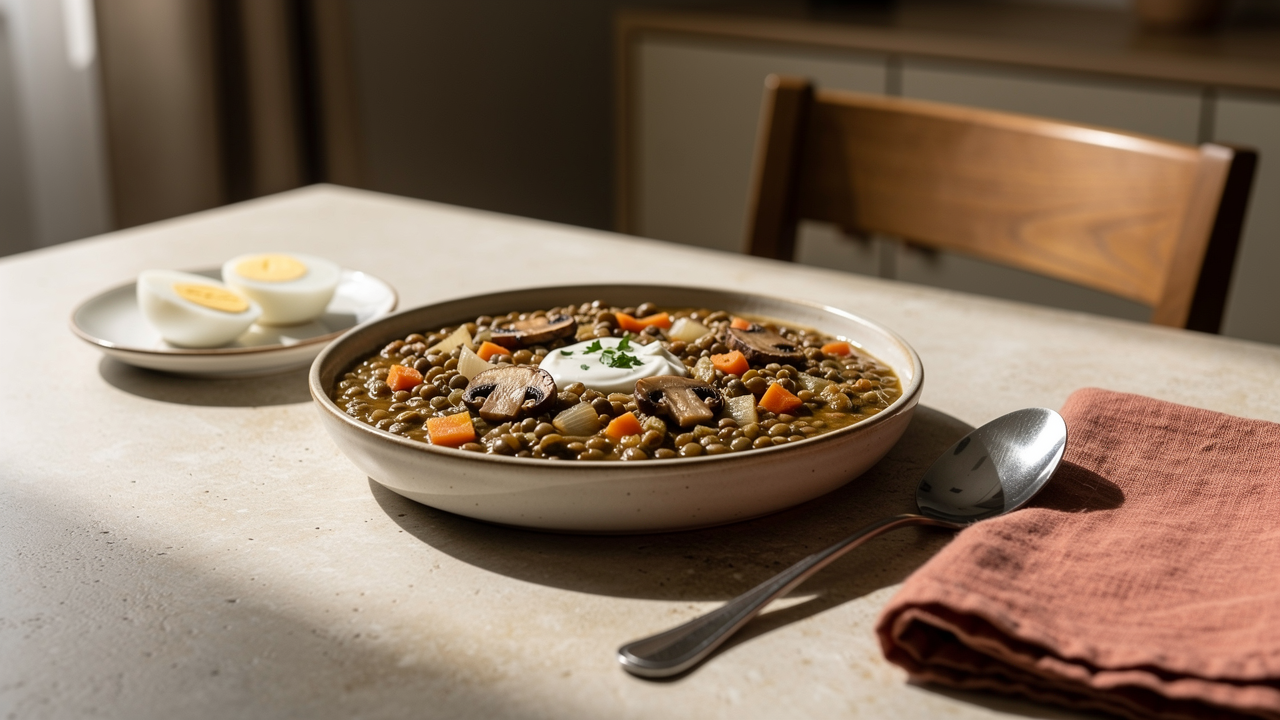
That practical difference shows up in everyday foods. In a hospital dietetic table, 100 g cooked lentils provide 7.8 g protein, 120 g canned drained kidney beans provide 9.3 g, 120 g canned drained chickpeas provide 4 g, and 100 g cooked quinoa provides 5.8 g. Soy foods are denser: 120 g edamame provides 16 g, 100 g tofu provides 16.5 g, and 100 g tempeh provides 20 g. Nuts and seeds contribute protein too, but they are more calorie-dense: 30 g of cashews, peanuts or pistachios provide 5-8 g, while 25 g of seeds provide 6.5 g. University Hospitals Sussex NHS Foundation Trust food table
Protein density is not the same as calorie density: tofu, tempeh and edamame bring more protein per serving than nuts, seeds or grains, even when the calorie counts are similar.
How to estimate a serving without supplements
| Food | Typical serving in source | Protein | Calories |
|---|---|---|---|
| Large poached egg | 1 large egg, edible portion | 6.25 g | Not stated |
| Oven-roasted fat-free chicken breast | 2 slices | 7.05 g | Not stated |
| Lentils | 100 g cooked | 7.8 g | 86 kcal |
| Edamame (soya) beans | 120 g | 16 g | 188 kcal |
| Tofu | 100 g | 16.5 g | 148 kcal |
| Tempeh | 100 g | 20 g | 200 kcal |
| Quinoa | 100 g cooked | 5.8 g | 149 kcal |
| Seeds | 25 g | 6.5 g | 140 kcal |
If you are choosing food first, the useful habit is to look at the protein amount for the portion you actually eat, not at a raw ingredient list or a per-100 g figure that does not match the serving on your plate. USDA protein table University Hospitals Sussex NHS Foundation Trust food table
What protein supplement forms exist?
Protein supplements are not one single ingredient in different tubs. A review of whey also notes that whey proteins can be used as simple supplements or as ingredients in transformed foods whey review.
Milk proteins: whey, casein and blends
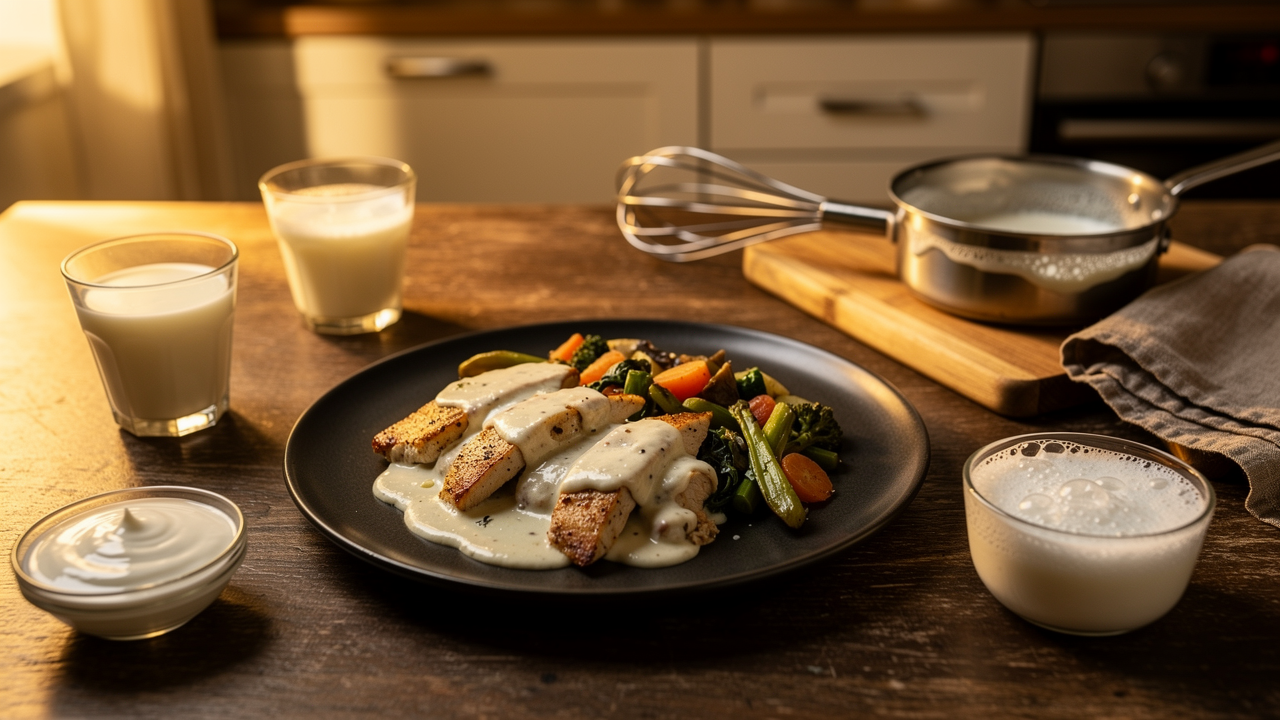
Within whey, concentrate, isolate and hydrolysate are not just marketing names. A comparative review reports differences in serum solids, protein composition and functional properties such as solubility, gelling, foam stability, hydration, diffusion and adsorption whey processing review. That is why two whey products can behave differently when you mix them, even before you look at flavouring or added ingredients. Casein is the other major milk protein and is associated with a slower post-meal amino-acid rise than whey in the trial above trial in older adults.
Plant proteins and vegan blends
Plant proteins are not one uniform category. EFSA notes that foods differ in indispensable-amino-acid composition and digestibility, and that combinations such as legumes and grains can provide a good distribution of indispensable amino acids EFSA Dietary Reference Values summary. That is the logic behind blended vegan formulas: they try to combine sources rather than relying on one plant ingredient alone. If you are comparing soy, pea or rice formulas, read them as plant-based options and compare the ingredient list, serving size and total protein, not just the front label.
Convenience formats and what they change
Powder is not the only way protein is sold. The whey review describes protein ingredients being used in transformed foods, and the same source notes products such as whey-based dairy gels and fermented drinks whey in food formulations. For shopping, the practical differences are the things you can feel or see: whether the product dissolves well, whether it is more liquid or more textured, and how much of the finished product is actually protein after flavourings and other ingredients are added. The label is the place to check protein per serving, serving size in grams, and the full nutrition panel, including sugars, saturated fat and salt EU food information rules.
Lactose is one of the main tolerance issues in milk-based products. NIDDK says many people with lactose intolerance tolerate about 12 g lactose with no or only mild symptoms, but actual tolerance varies by person and by product NIDDK lactose guidance. That is why a milk-based powder, a ready-made drink or a bar should be judged by its own ingredient list, not by the name on the front.
What health claims can protein products legally make?
What the label must already qualify as
Those claims can be used only when the food is at least a source of protein. EUR-Lex 2011/1169
| Category | Exact wording | Condition |
|---|---|---|
| Health claim | At least a source of protein | |
| Health claim | At least a source of protein | |
| Health claim | At least a source of protein | |
| Health claim for children | “Protein is needed for normal growth and development of bone in children.” | At least a source of protein |
| Nutrition claim | “source of protein” | At least 12% of energy from protein |
| Nutrition claim | “high protein” | At least 20% of energy from protein |
What the claim does and does not prove
These authorised wordings describe protein’s contribution to normal body functions; they are not a separate proof that a product will outperform food, or that a single powder automatically delivers the outcome you want. Research and legal authorisation are different questions: a systematic review of 49 resistance-training studies in 1,863 healthy adults found average fat-free-mass gains of 0.30 kg with protein supplementation, but that finding is still research, not an extra authorised label claim. PubMed resistance-training meta-analysis
Read the exact authorised wording first; then check whether the nutrition panel shows the product meets the protein threshold.
How to read marketing language critically
If the wording does match, it still only works when the product also meets the required nutrition condition. EUR-Lex 2012/432 EUR-Lex 2011/1169
How should you choose a protein product?
Start with the numbers on the finished product
Compare protein per 100 g and protein per serving before you look at the front label. Processing terms such as concentrate, isolate, and hydrolysate describe how a whey ingredient was made, not a promise about the final tub. A review of whey products reports about 30–89% protein in whey concentrates, over 90% in isolates, and about 80% protein in whey hydrolysates; whey powder in the same review was described as 8–12% protein and over 70% lactose. Those are ingredient descriptions, so the label on the actual product still matters most.
| Label check | What to look for | Why it helps |
|---|---|---|
| Protein per 100 g | The declared protein content of the whole product | Lets you compare tubs with different scoop sizes |
| Protein per serving | What one serving or scoop provides | Shows the amount you are actually likely to use |
| Protein source | Clear naming such as whey, casein, soy, egg, or a plant blend | Makes the product easier to compare with your preferences |
Read the ingredient list and allergen panel together
Use the ingredient list to see what else is in the product besides the protein source: sweeteners, fats, salt, flavours, and thickeners all change how a powder tastes, mixes, and fits your routine. For allergies, FDA requires major allergens used as ingredients to be identified on applicable food labels, for example “whey (milk),” while precautionary cross-contact statements are not required.
If the front of pack sounds impressive but the panel is vague, trust the panel.
Use quality checks before you trust a brand name
For sport-focused products, NIH’s Office of Dietary Supplements warns that some performance supplements contain undeclared or unlawful substances. It advises checking that a product carries the certifier’s official mark and appears on the certifier’s listing; that kind of certification is about banned-substance screening, not proof that one protein is better than another. See the NIH consumer guidance on supplement testing.
Compare products by value, tolerance, and format fit rather than by brand reputation alone. A smaller product with a clearer ingredient list and the protein grams you actually want can be a better buy than a larger tub with a louder label. If two options are similar on protein per serving, the deciding factors are often the allergen panel, the sweetener system, and whether you will actually use powder, ready-to-mix drinks, or another format consistently.
How and when should you use protein?
Start with the day’s total, then spread it out
For healthy adults, EFSA’s population reference intake is 0.83 g protein/kg body weight/day, and the Nordic Nutrition Recommendations 2023 use the same figure, with an average requirement of 0.66 g/kg/day. For many active adults, the ISSN position stand on protein and exercise discusses 1.4–2.0 g/kg/day as a practical sports-nutrition range. The simplest way to use that information is to divide your intake across the day, rather than trying to “catch up” with one oversized serving.
A review comparing protein taken before versus after resistance exercise found no important difference in lean-body-mass change in the eligible studies, which is why the narrow post-workout window matters less than the full day’s intake for most people.
Use supplements where convenience helps most
| When protein is useful | Practical way to use it | Evidence-based point |
|---|---|---|
| Breakfast is light | Add a food serving or a powder portion to close the gap | USDA examples include 25.61 g in 3 oz cooked turkey breast, 21.76 g in 1/2 cup firm calcium-set tofu, 15.13 g in 1 cup cooked black turtle beans, and 6.25 g in one large poached egg |
| Around training | Treat a shake as one part of the day, not the whole strategy | The timing review found no meaningful advantage for before-vs-after exercise |
| Busy meals or snacks | Use the form you will actually eat consistently | Protein powder is a convenience, not a replacement for a varied diet |
Protein powder can be mixed into a shake, stirred into yoghurt, added to oats or a smoothie, or used as a snack when food is impractical. That is a way to fill a gap, not a magic upgrade.
Total daily protein and even distribution matter more than chasing one perfect workout moment.
Common mistakes to avoid
- Relying on one large serving instead of spreading intake through the day.
- Using a shake in place of regular meals and a varied diet.
- Expecting supplements alone to build muscle without training and overall diet quality.
If you want the most practical rule, use protein where it helps you meet your daily target consistently, then let meals and supplements work together rather than compete.
Who needs caution with protein?
Protein is not the main issue for everyone; the main reasons for caution are existing disease, life stage, medicines, allergies, and products that contain more than protein. In chronic kidney disease, NIDDK says nutritional needs change as CKD advances and there is no single meal plan for everyone, while its clinical guidance describes 0.8 g/kg/day as adequate and non-excessive, with needs sometimes increasing during dialysis. The CKD eating page also says calories, fluids, phosphorus and potassium may need attention as kidney disease advances. Read the NIDDK CKD guidance
| Group | Why caution is needed | Practical step |
|---|---|---|
| Chronic kidney disease | Protein needs can change with disease stage and dialysis | Use an individualized plan from the kidney team |
| Pregnancy, breastfeeding, children | Life-stage needs differ from adult gym targets | Follow age- or stage-specific guidance |
| Medicines and added ingredients | Some supplements are not just protein; the full ingredient list can matter | Check the whole product with a clinician or pharmacist |
Allergies and product labels
Whey and casein come from milk, and FDA requires major allergens used as ingredients to be identified on applicable labels, for example whey (milk). Precautionary cross-contact statements are not required, so people with milk, soy, egg, nut or other allergies need the exact product label, not the front-of-pack name alone. FDA food-allergy labeling rules
When medicines or special conditions are involved
NHS says a high-protein meal can reduce levodopa absorption in some people taking co-beneldopa, so timing can matter for that medicine. If you are taking any medicine, the safest step is to review the full product and its other ingredients before changing protein intake substantially. NHS co-beneldopa advice
For children, EFSA and the Nordic Nutrition Recommendations use age- and life-stage-specific intakes rather than adult training targets; EFSA adds 1, 9 and 28 g/day in pregnancy trimesters one, two and three, and 19 g/day in the first six months of lactation, then 13 g/day thereafter, while NNR 2023 gives children figures such as 1.05 g/kg/day at ages 1–3.
Safety and precautions
People with chronic kidney disease, pregnancy, breastfeeding, children, allergies, or medicines should get personalised advice before changing protein intake or using a supplement. The product can contain more than protein, so check the full ingredient list and allergen panel, and speak with a healthcare professional or pharmacist if you take medicines or have a medical condition.
If you are buying for a child or are pregnant or breastfeeding, use age- or life-stage-specific guidance rather than adult gym targets.
Frequently asked questions
How should opened protein powder be stored?
The article does not give a specific storage rule for opened powder. It focuses on reading the label, so check the package instructions for storage details.
Can protein powder be baked into recipes?
The article mentions mixing protein powder into a shake, yoghurt, oats, a smoothie, or using it as a snack. It does not specifically discuss baking, so use the product’s directions if you want to try it in recipes.
Do protein shakes need refrigeration after mixing?
The article does not say whether a mixed shake needs refrigeration. Check the product label and follow the maker’s instructions for the specific format you buy.
Can protein powder be mixed into hot drinks?
The article does not mention hot drinks. It only says protein powder can be mixed into a shake, stirred into yoghurt, added to oats or a smoothie, or used as a snack when food is impractical.
Sources
- Dietary Reference Values for nutrients Summary report (external link)
- NORDIC NUTRITION RECOMMENDATIONS 2023 (external link)
- Dietary Supplements for Exercise and Athletic Performance - Health Professional Fact Sheet (external link)
- A systematic review, meta-analysis and meta-regression of the effect of protein supplementation on resistance training-induced gains in muscle mass and strength in healthy adults - PubMed (external link)
- Healthy Eating for Adults with Chronic Kidney Disease - NIDDK (external link)
- Food as Treatment - Dairy Free and Vegan - University Hospitals Sussex NHS Foundation Trust (external link)
- Dairy By-Products: A Review on the Valorization of Whey and Second Cheese Whey - PMC (external link)
- Protein type and caloric density of protein supplements modulate postprandial amino acid profile through changes in gastrointestinal behaviour: A randomized trial - PubMed (external link)
- <table id="e1"> (external link)
- EUR-Lex - 02012R0432-20250820 - EN - EUR-Lex (external link)
- Regulation - 1169/2011 - EN - Food Information to Consumers Regulation - EUR-Lex (external link)
- Dietary Supplements for Exercise and Athletic Performance - Consumer (external link)
- International Society of Sports Nutrition Position Stand: protein and exercise. (external link)
- Does Protein Ingestion Timing Affect Exercise-Induced Adaptations? A Systematic Review with Meta-Analysis - PubMed (external link)
- Slow Progression & Reduce Complications - NIDDK (external link)
- Food Allergies | FDA (external link)
- EFSA sets population reference intakes for protein | EFSA (external link)
- How and when to take co-beneldopa (external link)
- Comparative Meta-Analysis of the Effect of Concentrated, Hydrolyzed, and Isolated Whey Protein Supplementation on Body Composition of Physical Activity Practitioners - PMC (external link)
- Eating, Diet, & Nutrition for Lactose Intolerance - NIDDK (external link)