Protein Bars: What to Know, Types, and How to Choose
Short answer
Protein bars are packaged foods that can help fill a protein gap when regular protein-rich food is not practical. In the EU, the label claim matters: “source of protein” and “high protein” have fixed thresholds. The best choice depends on the protein source, serving size, and the full nutrition panel.
Quick facts
- “Source of protein” means at least 12% of energy comes from protein.
- “High protein” means at least 20% of energy comes from protein.
- EFSA’s adult protein PRI is 0.83 g per kg body weight per day.
- Protein bars are most useful when food is hard to organise or you need a ready-made snack.
- Whey is complete and fast-digested; casein is complete and slower-digested.
- Plant-based bars are a fit for vegans and dairy-avoiders.

What are protein bars for, exactly?
A protein bar is defined by its label, not just its shape
In the EU, a food may be described as a "source of protein" only when at least 12% of its energy comes from protein, and as "high protein" only when at least 20% of its energy comes from protein. EFSA’s reference intake for healthy adults is 0.83 g per kg body weight per day. That makes a protein bar a practical way to add a protein-containing snack to the day, rather than a special food that everyone needs.
Because those claim thresholds are about energy share, two bars can look similar but belong to different label categories.
Where a bar solves a real problem
NIH’s Office of Dietary Supplements says protein-fortified products, including bars, can help people reach their requirements when eating patterns or energy needs limit whole-food intake. NIH ODS FAQ In practice, that means a bar is most useful when you need something ready-made and you do not have a proper protein food in front of you.
| Situation | What the bar can do | Why it is useful |
|---|---|---|
| Busy day | Add protein in a single packaged snack | It can fill a gap when a meal is not practical |
| Travel | Provide a protein option when normal food is harder to arrange | It can be used when eating patterns are disrupted |
| Emergency backup | Keep a protein-containing snack available | It can stand in until ordinary food is available again |
When whole food is the better default
EFSA says the average protein intake of adults in Europe is often at or above the adult PRI, and that the main sources in adult diets are meat and meat products, grains and grain-based products, and milk and dairy products. EFSA protein reference intakes NIH ODS likewise points to ordinary protein-rich foods such as meat, dairy and legumes as sufficient for many people. NIH ODS FAQ So if you can eat a regular protein-rich meal or snack, that remains the first choice; the bar is the convenience option for times when food is hard to organise.
Protein bars are best treated as a tool for filling a protein gap, not as a required part of a healthy diet.
How much protein do bars provide, and how is it used?
Daily targets are set by body weight
EFSA sets the population reference intake for protein in adults, including older adults, at 0.83 g per kg of body weight per day, while the NIH Office of Dietary Supplements gives an adult RDA of 0.8 g/kg/day EFSA protein reference intakes NIH nutrient recommendations. Because the figure is tied to body weight, the same bar covers a different share of intake for different people: a 20 g bar is a much larger slice of the day for a smaller adult than for a larger one.
That also means there is no single bar amount that fits every reader, including people who train regularly. The useful question is not just how many grams are in the wrapper, but how that amount fits the rest of the day’s protein intake and the person’s body size.
The body uses protein as amino acids, not just as a number on the label
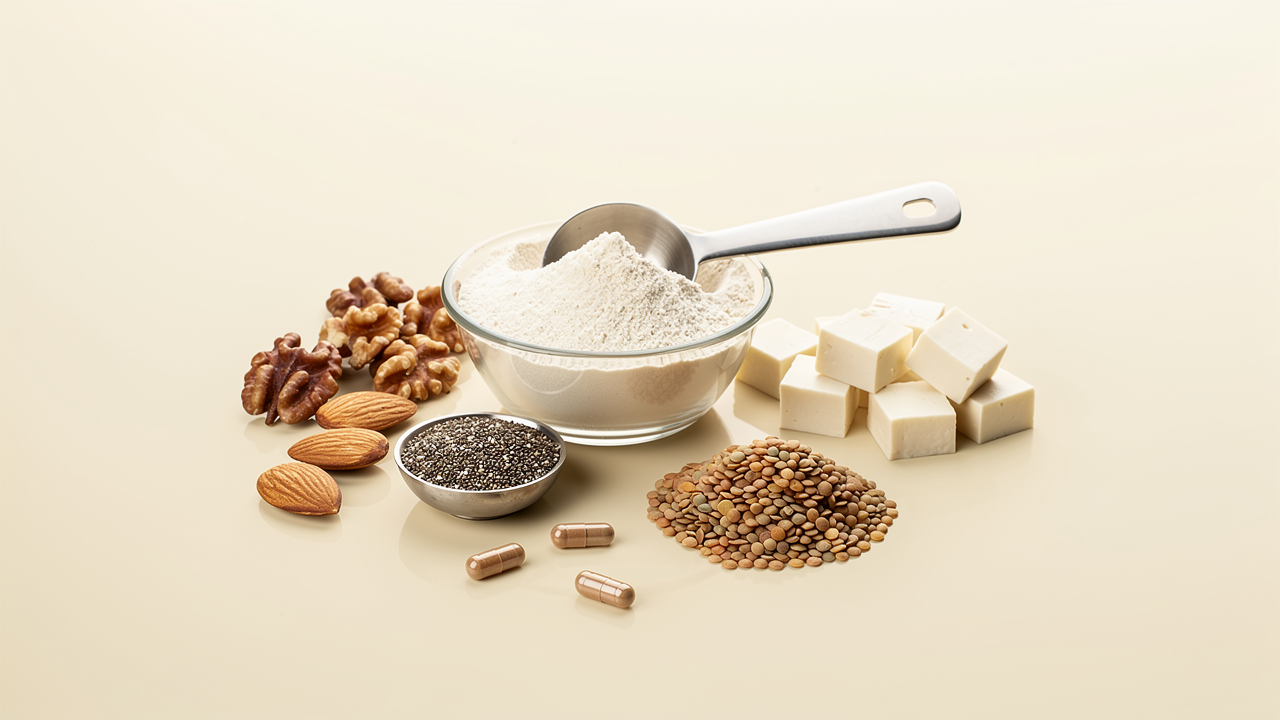
EFSA describes dietary proteins as sources of nitrogen and indispensable amino acids, and its protein work takes digestibility and amino-acid composition into account when judging protein quality EFSA draft opinion on protein DRVs. In practice, that means two bars can both list the same total grams yet still differ in how complete their amino-acid profile is and how quickly the protein is digested and absorbed.
The NIH fact sheet says whey is a complete protein with all essential amino acids and is rapidly digested, while casein is also complete but digested more slowly NIH exercise and athletic performance fact sheet. It also notes that plant proteins such as soy may be lower in some essential amino acids and may lose some amino acids during processing.
How common protein sources compare
| Protein source | What the evidence says | How to read it on a bar |
|---|---|---|
| Whey | Complete protein; rapidly digested NIH ODS | Useful when faster amino-acid availability is the goal. |
| Casein | Complete protein; digested more slowly NIH ODS | Fits situations where a slower release is preferred. |
| Soy | Plant protein; may be low in some essential amino acids and may lose some amino acids during processing NIH ODS | Check the full ingredient list, not only the headline protein grams. |
For people using a bar around training, the NIH says faster-digested proteins may be advantageous after exercise, while slower-digested proteins can sustain amino-acid availability for longer periods, such as overnight NIH exercise and athletic performance fact sheet. Protein bars can contribute meaningfully to daily intake, but no single bar is a universal dose recommendation or proof that one source is superior.
A bar is best judged by its total grams, its protein source or blend, and the timing of when you plan to eat it.
What do official claims allow on protein bars?
Two EU nutrition claims with fixed thresholds
On a protein bar, “source of protein” and “high protein” are nutrition claims. The European Commission’s rules say “source of protein” may be used only when at least 12% of the energy value of the food comes from protein, and “high protein” only when at least 20% of the energy value comes from protein. European Commission nutrition claims rules
| Claim on pack | EU condition | What the rule means |
|---|---|---|
| Source of protein | At least 12% of energy from protein | The label may use the authorised nutrition claim |
| High protein | At least 20% of energy from protein | The label may use the stricter authorised nutrition claim |
These are legal label terms. They tell you that the recipe meets the protein-energy threshold for that wording; they do not tell you anything else about the bar’s overall profile.
Health claims are a separate legal category
Under Regulation (EC) No 1924/2006, a health claim is a statement that links consumption of a food to a health effect, and EFSA assesses submitted claims before the EU authorises them. EFSA also notes that foods bearing any nutrition or health claim must satisfy nutrient profiles. EFSA health claims framework
For readers, that means a bar can be legally “high protein” and still be a product that you should inspect carefully for sugar, saturated fat, calories, or sweeteners in the nutrition table and ingredients list. The claim is only one line of the label.
Read the exact wording, not the marketing idea
The safest habit is to read the exact claim on the pack and then check the nutrition panel behind it. A compliant protein claim does not remove the need to look at the rest of the label, and it does not turn one bar into a general promise of benefit. The legal test is the protein-energy percentage; the practical test is whether the whole bar fits what you want to buy.
Takeaway: in Europe, a protein claim is about a label threshold, not a guarantee that the bar is otherwise balanced.
Which protein bar types are on the market?
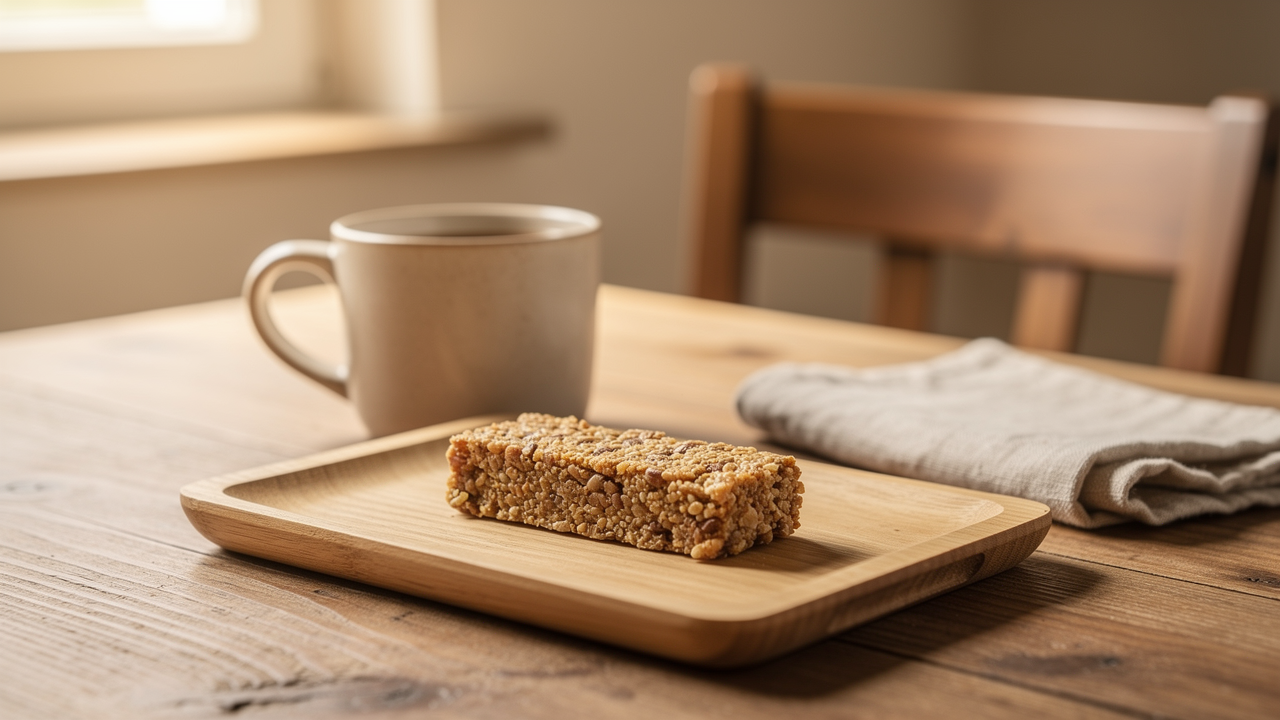
In the EU, a "source of protein" claim needs at least 12% of a food’s energy from protein, while "high protein" needs at least 20%. A "high fibre" claim has a separate threshold: at least 6 g of fibre per 100 g or 3 g per 100 kcal. That is why two bars can both be sold as protein bars and still look very different on the shelf.
Dairy-based bars
The NIH Office of Dietary Supplements says whey protein is a complete protein with all essential amino acids and is rapidly digested, while casein is also complete but digested more slowly.
Plant-based and mixed-source bars
Plant-based bars are the obvious fit for vegans and for anyone avoiding dairy ingredients. NIH ODS notes that soy may be low in methionine, and rice protein may lack isoleucine. EFSA’s adult protein PRI is 0.83 g per kg body weight per day, and EFSA says that figure applies to mixed dietary protein from both animal and plant sources. So a bar with blended sources can sit neatly inside an overall mixed diet, but the protein source still matters when you read the ingredient list.
Snack-style versus supplement-style bars
EFSA says food supplements are concentrated sources of nutrients marketed in dose form, and they may include fibre and sweeteners. Their labels must also state that they should not be used as a substitute for a varied diet. For a protein bar, that is a useful reminder: a protein claim tells you about composition, not that the whole product is automatically balanced.
| Bar type | What the source tells you | Best fit |
|---|---|---|
| Dairy-based | Whey is complete and fast; casein is complete and slower | Shoppers who want milk proteins |
| Plant-based | Soy and rice may be less complete on some amino acids | Vegans and dairy-avoiders |
| Mixed-source | EFSA’s protein PRI is based on mixed dietary protein | People who want flexibility across ingredients |
Takeaway: the front-of-pack protein number is only part of the story; the protein source and the claim threshold tell you much more about what kind of bar you are actually buying.
How do you read a protein-bar label?
Start with the nutrition panel, not the front claim. On the EU nutrition-claims page, a nutrition claim is any statement about a food’s energy, nutrients, or other substances. That means the front can be lawful and still leave out the trade-offs you need to compare on the shelf.
Compare the same bar in two ways
Use per bar to see what you actually eat, and per 100 g to compare bars of different sizes. A large bar can look efficient on protein while still carrying more calories, sugars, or salt than a smaller one.
| Claim wording | EU condition on the label | Source |
|---|---|---|
| Low energy | No more than 40 kcal per 100 g for solids | European Commission nutrition claims |
| Low sugars | No more than 5 g of sugars per 100 g for solids | European Commission nutrition claims |
| Sugars-free | No more than 0.5 g of sugars per 100 g or 100 ml | European Commission nutrition claims |
| Low sodium/salt | No more than 0.12 g of sodium, or the equivalent salt value, per 100 g or 100 ml | European Commission nutrition claims |
| With no added sugars | No added mono- or disaccharides, or other foods used for sweetening; naturally present sugars need a separate label statement | European Commission nutrition claims |
Calories, sugars, fibre, saturated fat, and salt belong in the same decision because they shape the whole nutrition panel, not just the protein line. If the bar is meant to replace a more substantial snack, a higher calorie count may be exactly what you want; if it is only a portable bite, a smaller serving can be easier to fit into the day.
Read the ingredients list as well
The ingredients list tells you what the bar is built from. EFSA’s food-supplements topic page notes that foods, including food supplements, may contain additives such as sweeteners and coating agents, and that these substances are regulated under EU food-additive rules.
A label can be accurate and still be a poor match for your purpose.
Pick the bar for the job: post-workout convenience, a more filling snack, or a portable bite between meals.
If the job is convenience, compare protein per bar with the bar’s size. If the job is satiety, compare the full nutrition panel, not just the front claim. If the job is an everyday portable snack, the shortest label is not automatically the best one; the deciding factors are the serving size, the sugar and salt figures, and how the ingredients are ordered.
How do Fulfil, Nature Valley, Aldi and Barbell compare?
If you are comparing Fulfil or Fulfill, the safest approach is to use the exact pack in front of you, not the search term you typed. The same applies to names such as Nature Valley, Aldi own-label and Barbell: brand names help you find a product, but the nutrition panel tells you what the bar actually is.
In Europe, the clearest label test is the protein-claim rule. A food may say "source of protein" only if at least 12% of its energy comes from protein, and "high protein" only if at least 20% does.
Compare the exact bar, not the brand family
| What to compare | What to read on the pack | Why it matters |
|---|---|---|
| Protein | Grams per bar and protein as a share of energy | Shows whether protein is central enough to meet the EU claim threshold |
| Fibre | Grams per bar and per 100 g | Useful when two bars look similar but feel different on the label |
| Calories | Energy per bar | Shows how dense the bar is for its size |
| Sweeteners | Ingredient list | Explains part of the taste profile and helps spot recipe changes |
| Allergens | Ingredient list and allergen statement | Important when comparing bars from the same brand family |
| Serving size | Per bar and per 100 g |
What counts as a real protein bar?
Best rule: compare the exact pack, then judge protein share, sugars, fibre, calories, sweeteners, allergens and serving size together.