Magnesium Tablets: What to Know, How to Choose, and Safety
Short answer
Magnesium tablets are a way to add magnesium when your diet is not providing enough. The key choices are the elemental magnesium amount, the salt form, and whether the product fits your safety needs.
Quick facts
- Most body magnesium is stored in bone and soft tissue, not in blood.
- Less than 1% of the body's magnesium is in blood serum.
- Supplement labels declare elemental magnesium, not just the salt weight.
- Citrate and chloride are generally better absorbed than oxide in the reviewed studies.
- Adult supplemental magnesium has an upper limit of 350 mg/day in NIH guidance.
- Magnesium can interact with tetracycline and quinolone antibiotics.

What do magnesium tablets do in the body?
A mineral the body uses in many basic processes
Magnesium is an essential mineral and, according to the NIH Office of Dietary Supplements magnesium fact sheet, a cofactor in more than 300 enzyme systems. Those systems include protein synthesis, muscle and nerve function, blood glucose control, blood pressure regulation, energy processes such as glycolysis and oxidative phosphorylation, DNA and RNA synthesis, and the antioxidant glutathione. The same source says magnesium also helps move calcium and potassium ions across cell membranes, which is part of how nerves send impulses, muscles contract, and the heart keeps a normal rhythm.
In practical terms, magnesium tablets are not about one isolated action; they are about adding a mineral that the body uses across many everyday systems. EFSA Scientific Opinion on Dietary Reference Values for magnesium
Where magnesium is stored
| Body compartment | Approximate share | What that means |
|---|---|---|
| Bone | 50% to 60% | The largest store, according to NIH ODS and EFSA |
| Soft tissues / muscle | Most of the rest; EFSA estimates about 25% in muscle | Another major reserve outside the bloodstream |
| Blood serum | Less than 1% | A tiny circulating fraction that is tightly regulated |
NIH ODS estimates that an adult body contains about 25 grams of magnesium, with half to 60% stored in bone and most of the remainder in soft tissues, while less than 1% is in blood serum. EFSA gives a very similar picture, placing about 60% in bone and around 25% in muscle. NIH Office of Dietary Supplements magnesium fact sheet EFSA Scientific Opinion on Dietary Reference Values for magnesium
Most magnesium is stored away from blood, so the bloodstream shows only a tiny slice of the body’s total magnesium.
Why a shortfall can matter before it looks dramatic
EFSA notes that the kidney plays a major role in magnesium homeostasis and that intestinal absorption can vary, while the body can also adjust elimination. NIH ODS likewise describes serum magnesium as tightly regulated. That means the body can buffer changes for a while, but those buffers do not remove the need for steady intake over time. EFSA Scientific Opinion on Dietary Reference Values for magnesium NIH Office of Dietary Supplements magnesium fact sheet
EFSA also notes that magnesium deficiency can lead to hypocalcaemia and hypokalaemia, and that because magnesium is involved in so many functions, it is difficult to connect early shortfalls to one single symptom. The practical takeaway is straightforward: magnesium tablets are a way to add magnesium to total intake when needed, while the body’s main stores sit in bone and soft tissues rather than in blood. EFSA Scientific Opinion on Dietary Reference Values for magnesium
Which benefits are actually supported?
EFSA’s health-claims system is strict: claims on foods and supplements must be scientifically assessed, and consumers should separate authorised nutrient-function wording from broader marketing promises EFSA health claims overview.

Where magnesium tablets make the most sense
The strongest case is correcting low intake or deficiency. EFSA adds that deficiency can disturb calcium and potassium balance and may lead to neurological or cardiac symptoms, but those symptoms are not specific to magnesium alone EFSA dietary reference values for magnesium.
The clearest benefit is filling a real magnesium gap, not treating a symptom without knowing the cause.
Popular claims: what is modest, mixed, or not shown here
For blood pressure, NIH ODS reports only small average changes in meta-analyses, while EFSA describes the evidence as inconclusive NIH ODS magnesium fact sheet EFSA dietary reference values for magnesium.
| Common consumer claim | What the retrieved evidence supports |
|---|---|
| Sleep | No supportive magnesium finding was identified in the retrieved NIH or EFSA materials. |
| Muscle cramps | No general cramp-relief evidence was identified in the retrieved NIH or EFSA materials. |
| Exercise performance | No supportive evidence was identified in the retrieved NIH or EFSA materials. |
| Blood pressure | Small, inconsistent average changes; EFSA describes the evidence as inconclusive NIH ODS. |
| Glucose control | Observational association with lower type 2 diabetes risk, not a treatment claim NIH ODS. |
Magnesium tablets are supplements, not substitutes for diagnosing or treating an underlying medical problem.
How much magnesium do adults need, and what is 500 mg?
Reference intakes are not the same across authorities
Adult magnesium targets differ by authority and population. EFSA sets an adequate intake of 350 mg/day for men and 300 mg/day for women, while NIH ODS lists adult RDAs of 400 mg/day for men and 310 mg/day for women; for adults aged 51 and older, NIH gives 420 mg/day for men and 320 mg/day for women. EFSA also says pregnant and lactating women use the same AI as non-pregnant women in its opinion on dietary reference values. A tablet strength of 500 mg therefore sits above these adult reference points, but those figures are not interchangeable and are not meant to be read as one universal target for every adult.
| Authority | Population | Reference intake | What it shows |
|---|---|---|---|
| EFSA | Adult men | 350 mg/day | EU adequate intake for the general adult population EFSA opinion |
| EFSA | Adult women | 300 mg/day | EU adequate intake for the general adult population EFSA opinion |
| NIH ODS | Adult men | 400 mg/day | US RDA for adults NIH ODS factsheet |
| NIH ODS | Adult women | 310 mg/day | US RDA for adults NIH ODS factsheet |
What the 500 mg on a label should mean
On a supplement label, the number that matters for comparison is the amount of elemental magnesium. NIH ODS says the Supplement Facts panel declares elemental magnesium, not the total weight of the magnesium compound such as oxide or citrate NIH ODS factsheet. That is why two products can both name a salt form and yet contain different amounts of actual magnesium.
For example, if Product A says Magnesium 200 mg (as magnesium citrate) and Product B says Magnesium 500 mg (as magnesium oxide), compare the 200 mg and 500 mg values on the Supplement Facts panel, not the citrate or oxide name. The salt name tells you the form; the magnesium number tells you the amount of magnesium being declared NIH ODS factsheet. If a package only shows a large front-panel number, check whether that number is the elemental magnesium amount or part of the ingredient description before you compare it with another product.
Read the Supplement Facts panel first: the magnesium number is the comparison point, while the salt name tells you which form the tablet uses.
Why one tablet strength is not right for everyone
Needs vary by age and sex, and EFSA and NIH use different reference systems for different populations. EFSA’s opinion also notes the same AI for pregnant and lactating women as for non-pregnant women, so a strength that looks straightforward on the shelf may not match every household member’s needs EFSA opinion. In practice, a 500 mg tablet should be read as a product specification, not as a universal daily target.
Which magnesium forms are best absorbed?
What the head-to-head studies actually show
The retrieved reviews do not point to one universal winner. The NIH Office of Dietary Supplements says magnesium aspartate, citrate, lactate and chloride tend to have higher bioavailability than magnesium oxide and magnesium sulfate in small studies, and a 2025 systematic review found that magnesium citrate and magnesium chloride showed good bioavailability while magnesium oxide was poorly bioavailable, probably because oxide is poorly soluble in water.

A 2021 systematic review of 14 human studies reached the same broad direction, concluding that inorganic forms were generally less bioavailable than organic forms and that absorption was dose-dependent: Bioavailability of magnesium food supplements. An older absorption review also found mixed results across studies, with some balance studies showing no clear differences between salts and others favouring organic forms, so the safest reading is that the salt matters, but not by itself: Intestinal Absorption and Factors Influencing Bioavailability of Magnesium-An Update.
| Form on the label | What the retrieved evidence says | How to read it |
|---|---|---|
| Magnesium citrate | Named by ODS among the more soluble, higher-bioavailability forms; the 2025 review found good bioavailability: ODS, 2025 review. | One of the clearest options when absorption is the main question. |
| Magnesium chloride | Named by ODS among the more soluble, higher-bioavailability forms; the 2025 review found good bioavailability: ODS, 2025 review. | Also supported in the supplied reviews as a well-absorbed form. |
| Magnesium oxide | Consistently described as poorly bioavailable in the supplied reviews, with low water solubility as one likely reason: 2025 review. | Do not assume a larger milligram number means better absorption. |
| Magnesium lactate | Named by ODS among the more soluble, higher-bioavailability forms in small studies: ODS. | Supported as a higher-bioavailability option in the retrieved evidence, though not ranked against every other form head to head. |
| Magnesium glycinate / bisglycinate | Not directly ranked in the retrieved head-to-head bioavailability summaries; a later review groups glycinate among forms with better gastrointestinal tolerance: Magnesium: Health Effects, Deficiency Burden, and Future Public Health Directions. | Read the label as a product choice, not as a guaranteed absorption winner. |
| Magnesium malate | Not directly ranked in the retrieved head-to-head bioavailability summaries; the later review groups malate with forms that generally have better gastrointestinal tolerance: 2023 review. | Often discussed for tolerance rather than for decisive head-to-head absorption data. |
Absorption and stomach tolerance are not the same thing
The later review on magnesium health effects says organic forms such as citrate, glycinate, malate and lactate generally show better gastrointestinal tolerance. It also notes that less well absorbed salts may still be appropriate when a laxative effect is desired, so the best choice depends on whether the priority is absorption, easier digestion or a deliberately more laxative product: review.
That is why the salt on the front of the pack and the tablet design underneath it should be read separately.
Takeaway: the evidence most consistently favours citrate and chloride over oxide for absorption on average, but there is no universal best magnesium tablet because tolerance and delivery format matter too: ODS, 2025 review.
How do you choose a magnesium tablet?
Start with the Supplement Facts panel. NIH’s magnesium fact sheet says the label should declare elemental magnesium, not the total weight of the salt, and its Dietary Supplement Label Database lets you check the full label, including ingredient forms, amounts and statements. That makes the front of the pack a headline, not the decision-maker.
If you are comparing a tablet with a capsule, chewable or effervescent product, treat the format as a convenience and tolerance choice first. The name on the box does not tell you how much elemental magnesium is actually in a serving, or what else has been added to the formula.
A practical buying checklist
| Checklist item | What to look for |
|---|---|
| Elemental magnesium | The amount per tablet or per serving, not just the salt weight. NIH notes labels declare elemental magnesium. |
| Salt form | The named compound on the ingredient list, so you know what form you are comparing. |
| Serving size | Whether the label counts one tablet or more than one tablet as a serving. |
| Excipients and allergens | All non-active ingredients, especially if you avoid certain additives. |
| Vegan suitability | Whether the capsule shell or tablet coating fits your diet. |
| Quality testing | Any third-party testing or quality statement the brand provides, and what it actually covers. |
Use the same checklist whether you are looking at a mainstream product or a brand such as Sona. A brand name alone does not tell you the elemental amount, the serving size, or whether the formula contains extra ingredients you do not need.
EU health claims are not marketing free-for-alls: EFSA’s health claims page explains that claims are only approved after scientific assessment, and many evaluated claims are rejected for lack of evidence. So if a front label looks busy or more “complete” because it adds vitamin B6 or another nutrient, choose it only if that extra ingredient has a clear reason in your own purchase decision.
Best shortcut: ignore the bold promise on the front until you have checked the elemental magnesium, serving size, full ingredient list and any testing information.
Which foods provide magnesium first?
Magnesium is better judged by a usual eating pattern than by one meal. NIH ODS says the adult body contains about 25 grams of magnesium, with most stored in bone and soft tissue and less than 1% in blood serum; EFSA adds that the kidney plays a major role in keeping serum levels stable NIH ODS magnesium fact sheet EFSA scientific opinion on dietary reference values for magnesium. That is why food-first magnesium makes sense only as part of the broader diet, not as a reaction to a single symptom or a single meal.

Food-first sources in practice
EFSA describes magnesium-rich foods as nuts, whole grains and grain products, fish and seafood, and several vegetables; the NIH ODS fact sheet also points readers to nuts, seeds, legumes, and green leafy vegetables as useful food sources NIH ODS magnesium fact sheet EFSA scientific opinion on dietary reference values for magnesium.
| Food | Typical portion | Magnesium in the retrieved source |
|---|---|---|
| Roasted pumpkin seeds (kernels) | 1 cup | 649 mg |
| Nuts or seeds | 1 oz | 50–160 mg |
| Legumes | 1/2 cup | 50–160 mg |
| Octopus, common, raw | 3 oz | 26 mg |
| Fast-food croissant with egg, cheese, and sausage | 1 sandwich | 29 mg |
When tablets make sense
Tablets make more sense when the diet is consistently low in these foods, or when digestive disease or malabsorption makes it hard to take in enough magnesium from food alone. If a clinician has identified a gap, a supplement can be used as a back-up to food, not as a substitute for the food pattern itself.
Takeaway: a magnesium tablet fits best when it fills a clear dietary gap; if nuts, seeds, legumes, whole grains, and leafy vegetables are already regular parts of the day, food may already be doing much of the work.
What to avoid assuming
Because serum magnesium is tightly regulated and represents only a very small share of total body magnesium, one meal does not tell you whether your usual intake is low or adequate EFSA scientific opinion on dietary reference values for magnesium NIH ODS magnesium fact sheet. The practical question is whether your regular diet repeatedly leaves out magnesium-rich foods.
What are the safety issues and who should avoid them?
The main safety line is whether magnesium is coming from food or from a tablet. NIH’s consumer fact sheet sets the adult upper limit for supplemental magnesium at 350 mg/day from supplements and medications, excluding food magnesium, and says higher intakes can cause diarrhea, nausea, abdominal cramping, and at very high doses more serious heart effects (NIH ODS Magnesium Consumer). EFSA’s upper-level tables separately list 250 mg/day for adults for readily dissociable magnesium salts used in supplements and fortified foods, while magnesium naturally present in food is treated differently (EFSA UL summary tables).
Kidney disease is the clearest reason to check first
EFSA explains that the kidney plays a major role in magnesium homeostasis and in maintaining serum concentrations (EFSA Scientific Opinion on Dietary Reference Values for magnesium). That matters because NIH ODS advises caution with supplements in kidney disease, where impaired renal excretion can allow magnesium to accumulate (NIH ODS Magnesium Consumer).
Some medicines need to be spaced apart
NIH ODS says magnesium can form insoluble complexes with tetracycline antibiotics such as doxycycline and quinolone antibiotics such as ciprofloxacin and levofloxacin; these should be taken at least 2 hours before or 4–6 hours after a magnesium supplement (NIH ODS Magnesium Health Professional). In practice, that is the key reason to review the full medicine list before starting tablets, especially if you take medicines that need careful timing around minerals.
| Situation | Why a clinician check helps | Practical step |
|---|---|---|
| Kidney disease | Reduced excretion can increase accumulation risk | Ask before using magnesium tablets |
| Certain antibiotics | Magnesium can reduce absorption by binding in the gut | Separate doses by hours, not minutes |
| Higher supplement intakes | Adult supplement upper limits are 350 mg/day in NIH guidance and 250 mg/day in EFSA’s adult table | Check the label and count all supplemental sources |
Watch for tolerance problems, not just dose strength
GI side effects are the most common issue, and the limit itself was set around diarrhea observed with supplements in studies (NIH ODS Magnesium Consumer; EFSA SCF opinion on magnesium ULs). If a product causes abdominal cramping or loose stools, that is a sign to stop and ask for tailored advice rather than simply switching to a higher amount.
For magnesium tablets, the people who need the closest check are those with kidney disease, those on interacting medicines, and anyone whose total supplemental intake could approach the adult upper limits.
Older adults are also a group to review carefully: NIH ODS lists them among people at risk of low magnesium status (NIH ODS Magnesium Health Professional). EFSA’s upper-level tables also show separate pregnancy and lactation columns, so pregnancy and breastfeeding deserve individualized advice as well (EFSA UL summary tables).
What mistakes are most common with magnesium tablets?
Reading the dose too quickly
NIH ODS says supplement labels list elemental magnesium, not the total weight of the compound, so a tablet can look larger or smaller than the magnesium it actually delivers. The same fact sheet says the more soluble forms—magnesium aspartate, citrate, lactate and chloride—tend to be more bioavailable than oxide and sulfate in small studies. NIH Office of Dietary Supplements
That is why the front label is not enough. Read the Supplement Facts panel, note the salt form, and total the elemental magnesium if you use more than one product.
| Common mistake | Better check |
|---|---|
| Assuming the number on the front equals elemental magnesium | Use the Supplement Facts panel to find the elemental amount |
| Choosing by brand name alone | Check the salt form and the listed elemental magnesium |
| Comparing all magnesium forms as if they were the same | More soluble forms such as citrate, chloride, lactate and aspartate tend to be more bioavailable than oxide and sulfate in small studies |
Expecting one tablet to explain every symptom
Magnesium is involved in more than 300 enzyme systems, but the evidence for tablets is not broad or uniform. NIH Office of Dietary Supplements EFSA Scientific Opinion on Dietary Reference Values for magnesium
If the reason for taking magnesium is not the right one, the result may be little or no change.
That makes the goal as important as the product: a tablet is a poor test if the outcome you want is outside the evidence behind magnesium.
Combining products without tracking the total
If you use a multivitamin, a separate magnesium tablet and another mineral product, add up the elemental magnesium across all of them. NIH states that the adult upper limit for magnesium from supplements and medications is 350 mg/day, excluding food sources. NIH Office of Dietary Supplements consumer fact sheet
If an initial trial is not helpful, the next step is to reassess the goal, the dosage form and the product choice rather than keep adding tablets. EFSA’s opinion also notes that the kidney plays a major role in magnesium homeostasis and that absorption is variable, which is one reason results can differ from person to person. EFSA Scientific Opinion on Dietary Reference Values for magnesium NIH Office of Dietary Supplements
Safety and precautions
Magnesium tablets can cause diarrhea, nausea, abdominal cramping, and at very high doses more serious heart effects. Be careful with the total amount from all supplements, and use extra caution if you have kidney disease.
Ask a healthcare professional before using magnesium if you take medicines that need spacing, are pregnant or breastfeeding, or are giving magnesium to children. If a product causes stomach upset or loose stools, stop and ask for tailored advice.
Supplements with the ingredients in this article
Compare contents, dose and price
Frequently asked questions
Can a blood test diagnose magnesium deficiency?
A blood test measures serum magnesium, but serum is less than 1% of the body's magnesium and is tightly regulated. Because most magnesium is stored in bone and soft tissues, a blood result gives only a small snapshot and should be interpreted in context by a healthcare professional.
Are magnesium tablets useful for migraine prevention?
The body reviewed here does not identify supportive evidence for migraine prevention. Magnesium tablets are best viewed as a way to add magnesium when intake is low, not as a general migraine solution.
Are magnesium tablets suitable for children?
The article does not give a child-specific dosing recommendation. Because children need individualized advice, ask a healthcare professional before giving magnesium tablets to a child.
Do I need magnesium if I already take a multivitamin?
Maybe not, depending on how much elemental magnesium your multivitamin already provides and how much you get from food. The article says to add up all supplemental magnesium and keep the total in mind, because adult supplemental magnesium has an upper limit.
What does 'chelated' mean on a magnesium label?
The article does not define 'chelated' directly. For buying decisions, check the ingredient list for the magnesium form and compare products by the elemental magnesium amount per serving, not just the salt name.
Sources
- Magnesium - Health Professional Fact Sheet (external link)
- Scientific Opinion on Dietary Reference Values for magnesium (external link)
- Health claims | EFSA (external link)
- Magnesium - Health Professional Fact Sheet (external link)
- Dietary Supplement Label Database (DSLD) (external link)
- USDA National Nutrient Database-Magnesium (external link)
- Magnesium - Consumer (external link)
- Version 10 (June 2024) (external link)
- complet_chapitres.indd (external link)
- Bioavailability of magnesium food supplements: A systematic review - PubMed (external link)
- Bioavailability of Magnesium and Potassium Salts Used as Potential Substitutes for Sodium Chloride in Human Nutrition — A Review - PMC (external link)
- Magnesium for Pain Treatment in 2021? State of the Art - PMC (external link)
- Intestinal Absorption and Factors Influencing Bioavailability of Magnesium-An Update - PMC (external link)
- Magnesium: Health Effects, Deficiency Burden, and Future Public Health Directions - PMC (external link)
Read more
- Magnesium Sachets: What to Know Before You Buy
- Magnesium vs Manganese: What’s the Difference and How to Choose?
- Viridian Magnesium: Forms, Label Amounts and Comparisons
- What Is Magnesium? Forms, Uses, and Nutrition
- What does magnesium do in the body?
- Can You Take Magnesium With Water? Forms, Absorption & Safety
Products related to this article

Life Extension
Life Extension - Magnesium Glycinate - 90 Vcaps
260 krIn stockWhy is this shown?
Katalogkoppling till samtliga valda ingredienser · Ämnesnamnet förekommer i produktnamnet · I lager · Betyg 5.0 av 15 kunder
NOW Foods
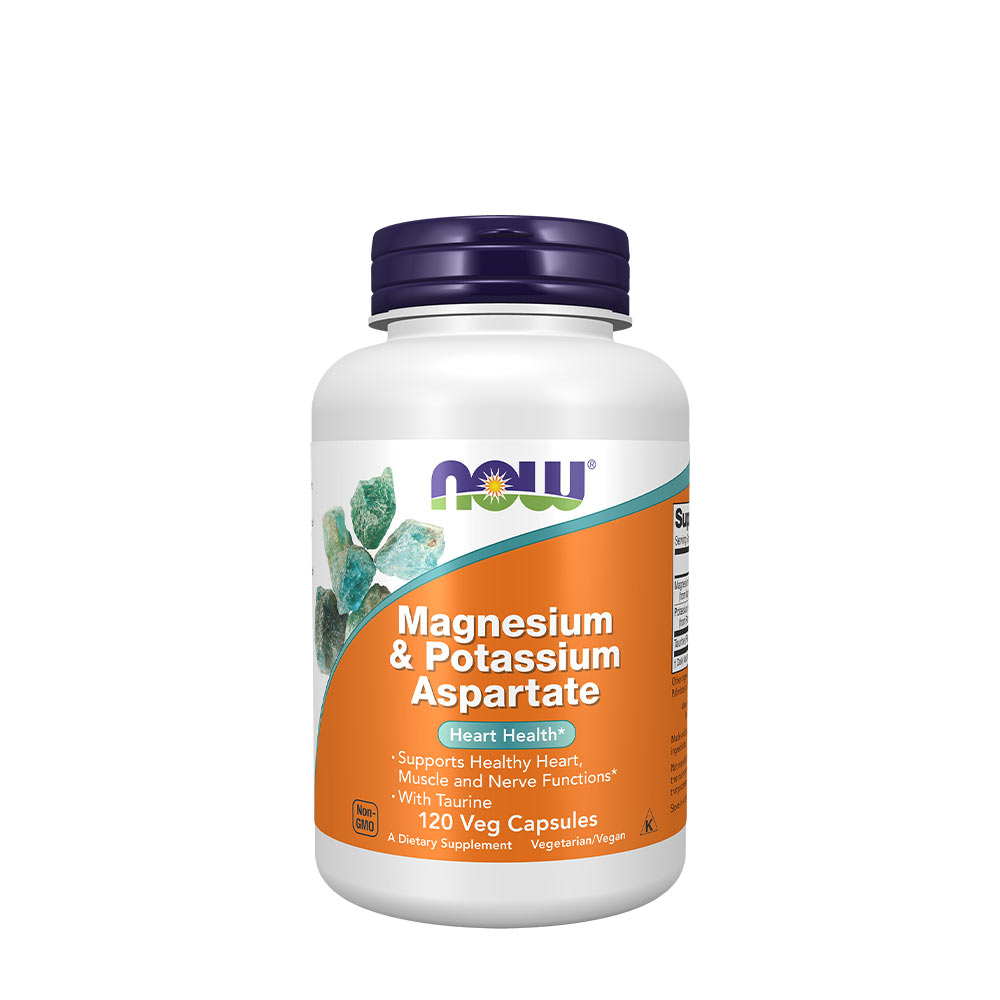
NOW Foods - Magnesium & Potassium Aspartate - 120 Vcaps
210 krIn stockWhy is this shown?
Katalogkoppling till samtliga valda ingredienser · Ämnesnamnet förekommer i produktnamnet · I lager · Betyg 4.9 av 17 kunder

NOW Foods
Now Foods - Magnesium Bisglycinate Powder - 227g
235 krIn stockWhy is this shown?
Katalogkoppling till samtliga valda ingredienser · Ämnesnamnet förekommer i produktnamnet · I lager · Betyg 4.9 av 16 kunder

NOW Foods
Now Foods - Magnesium Glycinate - 180 Tabs
313 krIn stockWhy is this shown?
Katalogkoppling till samtliga valda ingredienser · Ämnesnamnet förekommer i produktnamnet · I lager · Betyg 4.9 av 17 kunder

NOW Foods
Now Foods - Magnesium Oxide - 227g
141 krIn stockWhy is this shown?
Katalogkoppling till samtliga valda ingredienser · Ämnesnamnet förekommer i produktnamnet · I lager · Betyg 4.9 av 15 kunder


