Vitamin B12: What It Does, Sources, and How to Choose
Short answer
Vitamin B12 is an essential nutrient used in key enzyme reactions, red blood cell formation, DNA synthesis, and myelin maintenance. When choosing a supplement, compare the amount per serving, the form on the label, and how easy the product is to take consistently.
Quick facts
- Vitamin B12 is an essential nutrient that must come from food or supplements.
- EFSA’s adult reference value is 4 µg/day.
- B12 is used in two key enzyme reactions: methionine synthase and L-methylmalonyl-CoA mutase.
- Food B12 is released in the stomach and absorbed in the distal ileum with intrinsic factor.
- High-dose tablets can still deliver some B12 because passive absorption continues.
- Low B12 can affect both blood and nerves, even without anaemia.

What does vitamin B12 do in the body?
Two enzyme jobs explain most of its biology
Vitamin B12, or cobalamin, is an essential nutrient. EFSA notes that essential nutrients cannot be made by the body and must be consumed from food, while the NIH Office of Dietary Supplements describes B12 as a cofactor for two key enzymes: methionine synthase and L-methylmalonyl-CoA mutase. Methionine synthase converts homocysteine to methionine, and methionine is then used to make S-adenosylmethionine, the body’s universal methyl donor for methylation reactions involving DNA, RNA, proteins, and lipids. The second reaction converts L-methylmalonyl-CoA to succinyl-CoA in propionate metabolism. EFSA’s cobalamin reference values note the nutrient status of B12 and NIH ODS explains the core biochemical reactions.
When this system is under-supplied, the same pathways that support normal cell turnover and metabolism are affected. EFSA’s scientific opinion also identifies these two B12-dependent reactions as the known human functions requiring cobalamin. EFSA’s scientific opinion on cobalamin describes the methionine synthase and methylmalonyl-CoA mutase reactions directly.
Why blood and nerves are both affected
NIH ODS states that vitamin B12 is required for the development, myelination, and function of the central nervous system, as well as for healthy red blood cell formation and DNA synthesis. RUH Pathology likewise describes B12 as essential for red cell formation, tissue repair, and DNA synthesis, and notes that deficiency can lead to neuropathy; severe deficiency may cause subacute combined degeneration of the cord with weakness and incoordination. NIH ODS Vitamin B12 factsheet and RUH Pathology’s B12 test information show why the consequences can involve both blood and nerve tissue.
Because B12 is used in DNA synthesis, red blood cell formation, and myelin maintenance, low intake can affect more than one body system at the same time.
What low B12 can look like in the body
EFSA’s draft opinion says cobalamin insufficiency is characterised by biochemical abnormalities, including elevated homocysteine, and the South Tees laboratory page adds that elevated methylmalonic acid can support the picture of B12 deficiency. On the clinical side, low B12 may present with neurological changes such as peripheral neuropathy, ataxia, loss of position and vibration senses, memory impairment, depression, or dementia even when anaemia is absent. That is why B12 deficiency is not just a blood issue: the vitamin sits at the intersection of haematological and neurological function. EFSA on cobalamin insufficiency and South Tees on plasma methylmalonic acid provide the underlying biochemical context.
How much vitamin B12 do you need each day?
In Europe, EFSA’s summary of its cobalamin opinion sets 4 µg/day for adults and 1.5 to 4 µg/day for infants and children (EFSA press release on cobalamin). In the full consultation text, EFSA says it used an Adequate Intake (AI) because of uncertainties in the cut-off values used to judge cobalamin status, and it looked at healthy reference ranges for holoTC and cobalamin together with MMA and tHcy below proposed cut-offs (EFSA cobalamin scientific opinion).
The figures are expressed in micrograms, so they look small, but they are still daily reference values for ordinary intake rather than product strength (EFSA press release on cobalamin). A practical mistake to avoid is reading a bigger number on a tablet label as automatically “better”; the reference value is the amount used to judge usual intake, not a treatment dose (EFSA press release on cobalamin).
Adults and the main European benchmark
For adults aged 18 years and above, EFSA’s AI is 4 µg/day (EFSA press release on cobalamin). The NIH Office of Dietary Supplements lists an adult Recommended Dietary Allowance (RDA) of 2.4 µg/day, so the same nutrient can have different reference values depending on the authority and the method it uses (NIH ODS vitamin B12 fact sheet).
| Life stage | EFSA | NIH ODS |
|---|---|---|
| Adults | 4 µg/day AI | 2.4 µg/day RDA |
| Pregnancy | Examples cited by EFSA include 2.6 to 3.5 µg/day, depending on the authority | 2.6 µg/day RDA |
| Lactation | D-A-CH cited by EFSA: 4.0 µg/day total | 2.8 µg/day RDA |
| Infants and children | 1.5 to 4 µg/day AI | — |
Pregnancy, lactation and growth
EFSA’s consultation notes several pregnancy values from other authorities: the Dutch Health Council proposed 1.65 to 2.90 µg/day incremental intake in the third trimester, the SCF recommended an extra 0.2 µg/day, the IOM recommended 2.6 µg/day total, and D-A-CH suggested 3.5 µg/day (EFSA cobalamin scientific opinion). For lactation, the same document says D-A-CH recommended an additional 1.0 µg/day, based on 0.4 µg/day secreted in breast milk and 50% absorption efficiency, giving a total of 4.0 µg/day (EFSA cobalamin scientific opinion).
That is why vitamin B12 reference values are best read as life-stage benchmarks: adults have one number, pregnancy and lactation may sit a little higher depending on the authority, and children are given a broader range because the requirement changes with growth (EFSA press release on cobalamin, NIH ODS vitamin B12 fact sheet).
AI, RDA and PRI: the label matters
Older European work used a Population Reference Intake (PRI), while EFSA’s 2015 opinion presents an AI; NIH uses the RDA label instead (EFSA cobalamin scientific opinion, NIH ODS vitamin B12 fact sheet). The label matters because it tells you whether a figure is a population reference value, not a supplement instruction.
Use the reference value that matches your life stage, and compare tablet amounts against that number rather than against a much larger claim on the front of the pack.
How do vitamin B12 tablets absorb in the body?
The normal route is built in steps
Vitamin B12 from food is protein-bound, so it first has to be released in the stomach by stomach acid and protease. After that, it binds to haptocorrin, then forms a complex with intrinsic factor in the duodenum, and that complex is taken up in the distal ileum by receptor-mediated endocytosis. The NIH Office of Dietary Supplements describes this sequence in its Vitamin B12 Health Professional Fact Sheet, and the EFSA cobalamin opinion also notes intrinsic-factor dependent absorption in the terminal ileum in its Scientific Opinion on Dietary Reference Values for cobalamin.
That is why food-bound B12 and tablet B12 do not behave identically. Tablets contain free B12, so they do not need the first release step from food proteins, but they still rely on the body’s absorption machinery for efficient uptake. If stomach acid is low, or if the gut handling of the vitamin is impaired, absorption from food can be less efficient because the release and binding steps are weakened.
Why higher-dose tablets can still work
The intrinsic-factor pathway is limited. NIH ODS reports that absorption is around 50% at low intakes below about 1–2 µg, but it falls sharply as the dose rises: about 2% for a 500 µg oral dose and about 1.3% for a 1,000 µg dose. EFSA likewise notes that when oral doses increase, the fraction absorbed declines rapidly and absorption increasingly depends on passive, nonspecific mechanisms that are much less efficient. See the NIH ODS fact sheet and EFSA’s cobalamin opinion.
Even when only a small fraction is absorbed, a large oral tablet can still deliver some B12 because passive diffusion continues after the intrinsic-factor pathway is saturated.
| Oral amount | Approximate absorption | What it means in practice |
|---|---|---|
| Below 1–2 µg | About 50% | The intrinsic-factor route is working near its best. |
| 500 µg | About 2% | Most of the tablet is not absorbed, but the absorbed amount can still be meaningful. |
| 1,000 µg | About 1.3% | High-dose tablets depend partly on passive diffusion. |
In practice, the NIH ODS notes that oral doses of 1,000–2,000 µg can normalize B12 levels similarly to intramuscular injections in a 2018 Cochrane review, although the evidence quality was low. The supplied sources do not give separate absorption data for sublingual products, but they do show that oral tablets and injections are both used in the evidence base, with oral therapy relying on dose rather than perfect absorption.
For readers comparing formats, the key mistake is assuming a tablet must be “well absorbed” in percentage terms to be useful. The numbers above show the opposite: high-dose tablets can still matter because the body absorbs a small fraction even when the main transport system is saturated.
Which vitamin B12 tablet should you choose?
Supplement labels may use different cobalamin names, including cyanocobalamin, methylcobalamin, adenosylcobalamin and hydroxocobalamin. NIH ODS says these are all common supplemental forms and that there is no evidence that any one form is superior for absorption or efficacy. EFSA also notes that methylcobalamin and 5′-deoxyadenosylcobalamin are the coenzyme forms that function in humans, so the name on the label may not match the exact form your cells use inside the body. EFSA cobalamin scientific opinion
| Label form | What it tells you | Practical check |
|---|---|---|
| Cyanocobalamin | A common supplemental form | Compare the declared amount and serving size first. |
| Methylcobalamin | A coenzyme form used in humans | Do not assume the label name alone makes it better than other forms. |
| Adenosylcobalamin | Another coenzyme form used in humans | Check whether the product is a single-ingredient tablet or part of a multivitamin. |
| Hydroxocobalamin | A common supplemental form | Look at tablet size and how often you are meant to take it. |
Read the label, not just the front panel
The most useful comparison points are concrete: amount per tablet, serving size, ingredient form, and whether the product is a single-ingredient tablet or a multivitamin. A single-ingredient product is often easier to compare because the B12 amount is isolated on the label, while a multivitamin bundles B12 with other nutrients.
Also check the ingredients list for allergens, sweeteners, coatings and other excipients. If you prefer a simpler routine, a tablet may be easier to follow; if swallowing is awkward, a lozenge, sublingual product or spray may be more convenient to use day to day. That convenience point matters more than marketing language, because NIH ODS says there is no evidence that sublingual B12 absorbs better than oral forms.
Choose the format you will actually use
Tablets are straightforward, but they are not the only option on the shelf. The better choice is usually the format you can take consistently and comfortably, alongside a label that clearly states what is in each serving. In practice, that means reading the declared amount, confirming the ingredient form, and making sure the tablet size and dosing schedule fit your routine.
No vitamin B12 form is universally superior; choose by the label details you can verify, then pick the format that is easiest to take consistently.
Who should be careful with vitamin B12?
Vitamin B12 is generally considered low-risk: the NIH Office of Dietary Supplements says no tolerable upper intake level was set because of low toxicity, and EFSA’s upper-limit summary lists vitamin B12 as having “no defined adverse effects.” NIH Office of Dietary Supplements vitamin B12 fact sheet EFSA upper-limit summary tables

Medicines and exposures that can matter
Acid-suppressing medicines such as proton-pump inhibitors and H2 blockers can reduce the stomach acid needed to release B12 from food, so low status can develop over time. NIH ODS also flags metformin as a medicine that may impair absorption. NIH Office of Dietary Supplements vitamin B12 fact sheet
Nitrous oxide exposure is another clear risk area: an NHS pathology service notes that it can cause a functional B12 deficiency. Methylmalonic acid (serum)
Groups that need extra attention
| Group | Why it matters | Practical takeaway |
|---|---|---|
| Older adults | NIH ODS identifies older adults as a higher-risk group, especially with atrophic gastritis; its fact sheet notes deficiency prevalence in community-dwelling elderly of about 3% to 43%, and in long-term care residents 14% had B12 below 156 pmol/L and 38% below 300 pmol/L. NIH ODS vitamin B12 fact sheet | Do not assume a normal diet rules out low B12. |
| People with pernicious anaemia, malabsorption disorders, or after gastric/bowel surgery | These are the situations where absorption can be impaired, so the cause of low B12 may not be simple low intake. NIH ODS vitamin B12 fact sheet | Assessment matters because the underlying cause changes what “enough” looks like. |
| Vegans and vegetarians, especially infants of vegan mothers | NIH ODS notes that natural food sources are animal-based and highlights risk in vegans and vegetarians; EFSA’s opinion also records infant symptoms in strict veganism and maternal-infant status concerns. NIH ODS vitamin B12 fact sheet EFSA dietary reference values news release | Plan intake carefully and do not rely on untreated low intake. |
| Pregnant or breastfeeding people with low intake | Low maternal status can matter for infant status, so low intake in these periods deserves attention. NIH ODS vitamin B12 fact sheet | Ask for personalised advice if intake is limited. |
Low-risk does not mean “ignore symptoms”: if absorption is the issue, supplements alone may not explain why B12 is low.
Self-treatment is not enough when neurological symptoms or anaemia are present. RUH notes that B12 deficiency can cause neuropathy and, in severe cases, subacute combined degeneration of the cord; South Tees reports peripheral neuropathy, ataxia, loss of position and vibration sense, memory impairment, depression, and dementia even without anaemia. RUH Pathology Services South Tees Hospitals NHS Foundation Trust methylmalonic acid page
If symptoms are unexplained, or if anaemia or neurological changes are already present, medical assessment is the safer next step than relying on supplements alone. RUH Pathology Services
How are low B12 levels tested and confirmed?
A single serum B12 result can mislead because EFSA says the main biomarkers of cobalamin status all have limitations and should be combined, and because cobalamin deficiency can show as megaloblastic anaemia, neurological dysfunction, or biochemical changes without obvious symptoms.
The common tests used in practice
| Test | What it adds | Why it still needs context |
|---|---|---|
| Serum B12 | First-line, low-cost measure of total cobalamin | RUH says reference ranges vary by method, and serum levels do not always match intracellular B12; its local cut-offs are <145 ng/L deficiency, 145–180 ng/L possible deficiency, and >180 ng/L deficiency unlikely. RUH Pathology Services |
| Holotranscobalamin | The physiologically active form that delivers B12 to cells | NWL Pathology lists <25 pmol/L as confirming deficiency, 25–70 pmol/L as indeterminate, and >70 pmol/L as deficiency unlikely. North West London Pathology |
| Methylmalonic acid (MMA) | A functional marker that rises when B12-dependent metabolism is impaired | University Hospitals Sussex gives 0.29–0.70 µmol/L as suggesting deficiency and >0.70 µmol/L as consistent with overt deficiency; South Tees lists 73–271 nmol/L as the reference range and says increased levels support a diagnosis. University Hospitals Sussex South Tees Hospitals NHS Foundation Trust |
When confirmatory testing matters most
EFSA names malabsorption, pernicious anaemia, and transport defects as causes of clinical deficiency, and University Hospitals Sussex says MMA requests are routinely used when B12 is in the indeterminate range between the laboratory lower limit and the NICE cut-off.
Borderline B12 is usually a prompt for more than one test, not a final answer.
Safety and precautions
Vitamin B12 is generally considered low-risk, and no tolerable upper intake level was set because of low toxicity. If you use acid-suppressing medicines, metformin, or have had gastric or bowel surgery, ask a healthcare professional for advice before relying on a supplement.
Seek healthcare advice during pregnancy, breastfeeding, and for children, especially if intake is limited or symptoms are present. Older adults, people with malabsorption or pernicious anaemia, and anyone with neurological symptoms should also be assessed rather than self-treating.
Supplements with the ingredients in this article
Compare contents, dose and price
Frequently asked questions
What is the difference between vitamin B12 and folate?
This article focuses on vitamin B12 and does not compare it directly with folate. It does explain that B12 is involved in DNA synthesis and methylation-related chemistry, so low B12 can affect more than one body system. For a side-by-side comparison, the article does not provide enough detail.
Can a multivitamin cover vitamin B12 needs?
A multivitamin can include vitamin B12, but the article says to check the declared amount per serving rather than assuming the front label is enough. It also notes that a single-ingredient tablet can be easier to compare because the B12 amount is isolated on the label. The key is whether the amount matches your life-stage reference value.
Do probiotics or gut bacteria make usable vitamin B12?
This article does not discuss probiotics or gut bacteria as a source of usable vitamin B12. It focuses instead on food intake, absorption, and supplement labels. So it does not provide support for using them as a dependable B12 strategy.
Are energy drinks a meaningful source of vitamin B12?
This article does not evaluate energy drinks as a vitamin B12 source. It recommends checking the declared amount per serving and the label details rather than relying on marketing language. So it does not establish energy drinks as a dependable way to meet B12 needs.
Can vitamin B12 deficiency happen without anaemia?
Yes. The article says low B12 can cause neurological changes even when anaemia is absent, so a normal blood count does not rule it out. It can affect blood and nerve tissue at the same time.
Sources
- Vitamin B12 - Health Professional Fact Sheet (external link)
- Dietary reference values: vitamin E and cobalamin | EFSA (external link)
- Scientific Opinion on Dietary Reference Values for cobalamin (vitamin B12) (external link)
- Vitamin B12 - Consumer (external link)
- Version 10 (June 2024) (external link)
- RUH Pathology Services | Blood Test Information (external link)
- CPY Document Title (external link)
- Methylmalonic acid (serum) (external link)
- Methylmalonic Acid (Plasma) - South Tees Hospitals NHS Foundation Trust (external link)
- Vitamin B12 (active) - North West London Pathology (external link)
Read more
Products related to this article
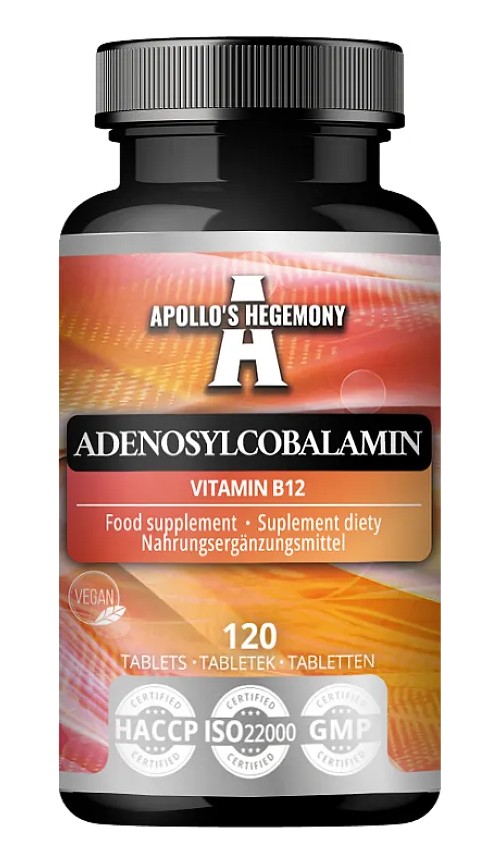
Apollo'S Hegemony
Apollo'S Hegemony - Adenosylcobalamin Vitamin B12 - 120 Tabs
131 krIn stockWhy is this shown?
Katalogkoppling till samtliga valda ingredienser · Ämnesnamnet förekommer i produktnamnet · I lager
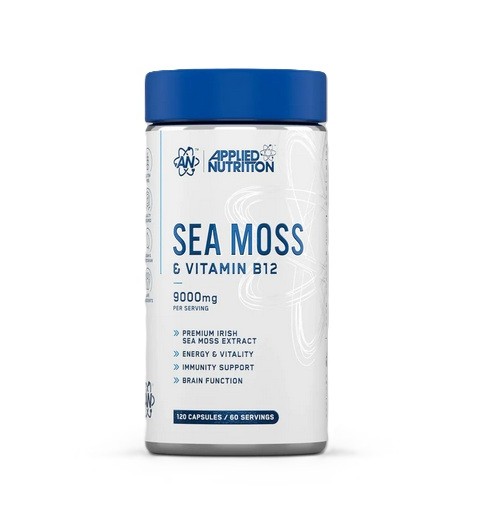
Applied Nutrition
Applied Nutrition - Sea Moss & Vitamin B12 60 Servings
306 krIn stockWhy is this shown?
Katalogkoppling till samtliga valda ingredienser · Ämnesnamnet förekommer i produktnamnet · I lager
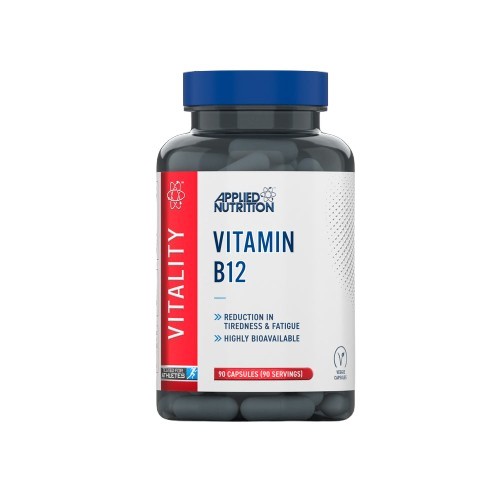
Applied Nutrition
Applied Nutrition - Vitamin B12 - 90 Caps
144 krIn stockWhy is this shown?
Katalogkoppling till samtliga valda ingredienser · Ämnesnamnet förekommer i produktnamnet · I lager
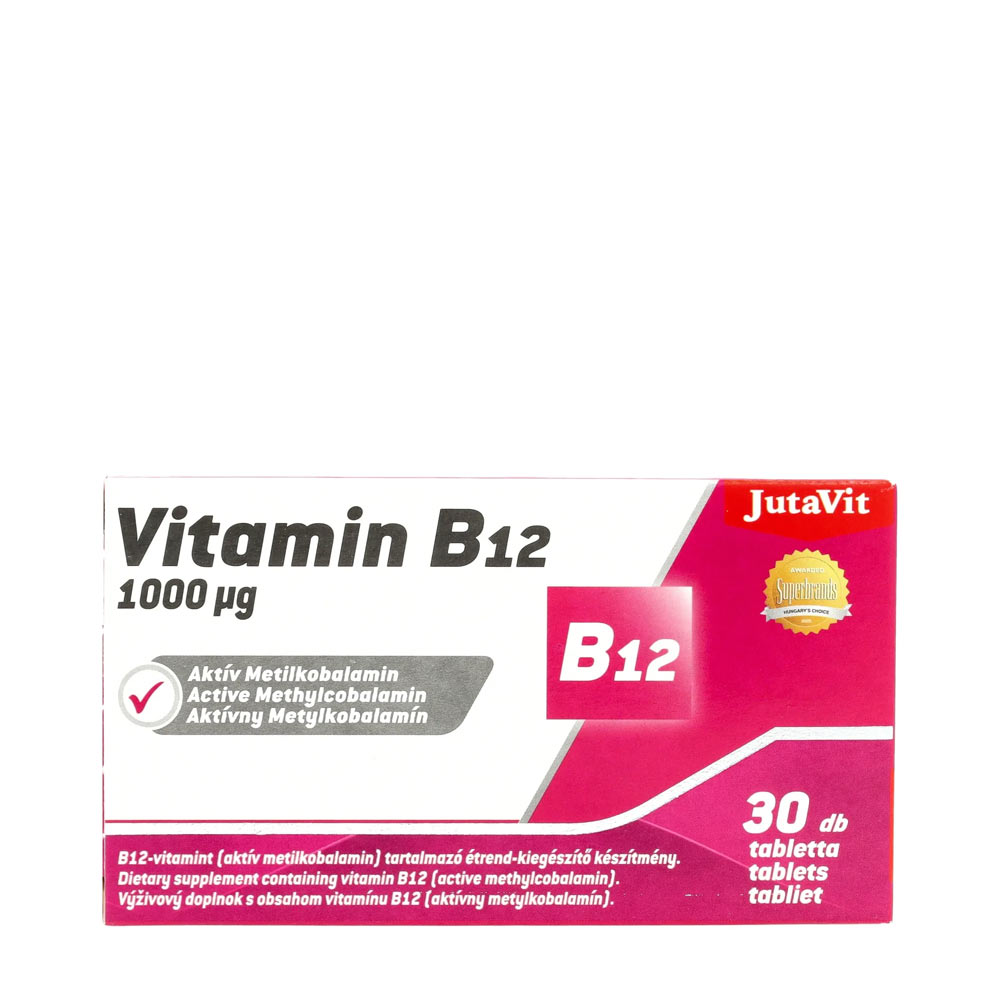
JutaVit
JutaVit - Vitamin B12 Active Methylcobalamin - 30 Tablets
111 krIn stockWhy is this shown?
Katalogkoppling till samtliga valda ingredienser · Ämnesnamnet förekommer i produktnamnet · I lager
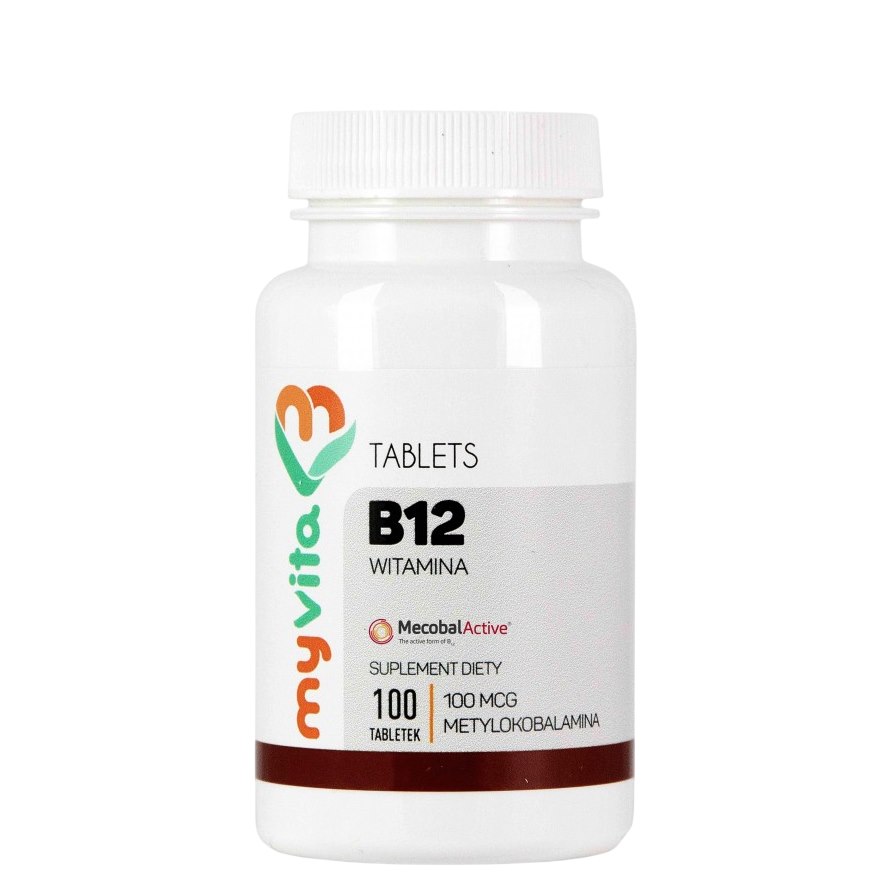
MyVita
Myvita - Vitamin B12 - 100 Tabs
107 krIn stockWhy is this shown?
Katalogkoppling till samtliga valda ingredienser · Ämnesnamnet förekommer i produktnamnet · I lager


