Whey Protein: What Is It, Types, How to Choose, and Key Facts
Short answer
Whey protein is the smaller protein fraction in milk, and products can differ because processing changes protein, lactose, minerals, moisture, fat, and ash. The best way to choose a tub is to compare the ingredient list, protein per 100 g, protein per serving, and any sweeteners or flavourings on the label.
Quick facts
- Whey is about 20% of total milk protein; casein is about 80%.
- Native whey is made from milk or skim milk by microfiltration and separation.
- Higher protein levels are reached with additional filtration and diafiltration.
- Adults have a protein reference intake of 0.83 g per kg of body weight per day.
- The ingredient list and nutrition panel matter more than the front name alone.
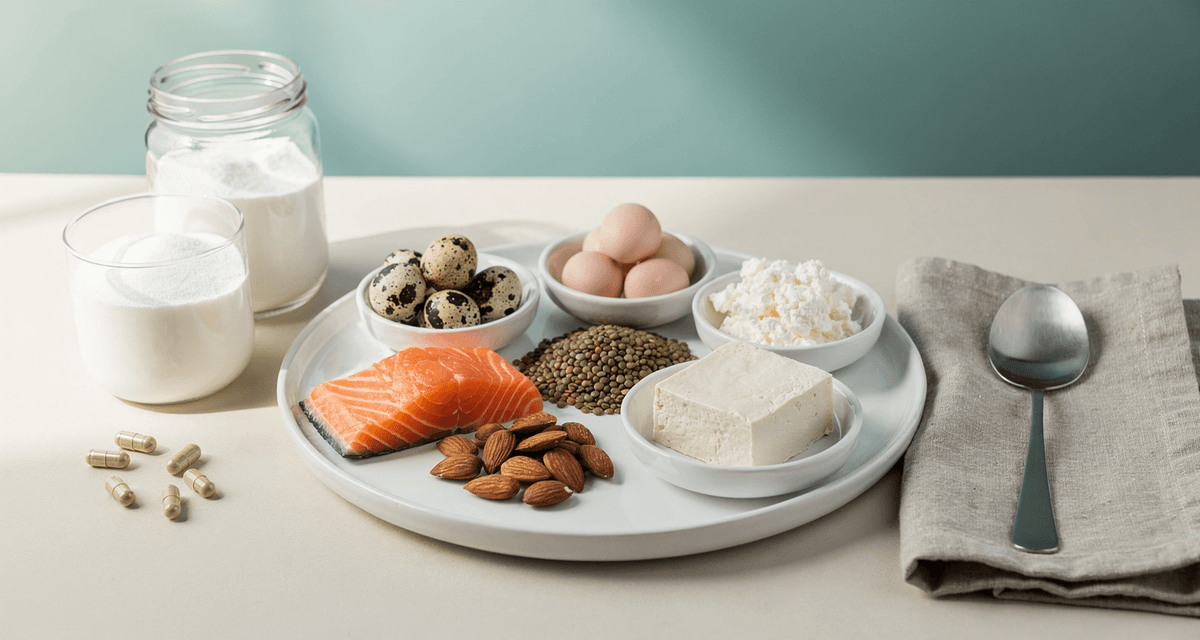
What is whey protein made of?
Where whey sits in milk
FDA describes cow’s milk as having two main protein groups: casein, about 80% of total milk protein, and whey proteins, about 20% FDA raw milk page. In other words, whey is the smaller protein fraction, while casein is the larger one.
The FDA’s GRAS materials also distinguish whey-based ingredients from other milk-protein ingredients. In the notice reviewed by FDA, the starting material is pasteurized whole or skim milk, and protein is concentrated by physical separation using food-grade membrane processes such as microfiltration and ultrafiltration, with optional nanofiltration, evaporation, or dialysis before drying into powder FDA GRAS response letter FDA GRAS notice 000633.
What remains after processing
Those processing steps may remove part of the lactose, minerals, and moisture from the liquid starting material, so two powders with similar names can still differ in composition. FDA’s response letter gives concrete examples: cMP80 contains at least 79.5% protein on a dry basis, fat below 1%, ash no more than 5%, and moisture no more than 5.5%; cMP90 contains at least 89.5% protein and ash no more than 4.5% FDA GRAS response letter.
| Label term | What the FDA source says | Why it matters |
|---|---|---|
| Whey proteins | About 20% of total milk protein FDA raw milk page | Smaller milk-protein fraction than casein |
| Casein | About 80% of total milk protein FDA raw milk page | Different milk-protein family from whey |
| cMP80 / cMP90 | Milk-protein concentrates made from pasteurized whole or skim milk; cMP80 and cMP90 have different protein and ash specifications FDA GRAS response letter | Shows why “milk protein” is not the same as a whey-only ingredient |
“Whey protein,” “casein,” and “milk protein” do not mean the same thing on a label.
How to read the tub
If a product says whey protein, whey concentrate, whey isolate, or a milk-protein ingredient, the ingredient list and nutrition panel tell you more than the front label alone. FDA’s documents show that milk-derived powders can be made with different separation steps and can retain different amounts of lactose, minerals, moisture, fat, and ash FDA GRAS response letter FDA GRAS notice 000633.
Which whey protein types exist?
Concentrate and isolate
Whey protein concentrate and whey protein isolate are usually distinguished by how far the liquid has been filtered. The FDA letter describing cMP80 and cMP90 also says higher protein levels are reached with additional filtration and diafiltration, which is used to remove more lactose and minerals before drying. FDA response letter on GRN 000633
| Form | What the source says | How to read the label |
|---|---|---|
| Native whey | Made from milk or skim milk by microfiltration and separation, not from cheese whey | Separate process term, not just a marketing flourish |
Native whey is a process term, not just a brand word
The FDA notice for native whey protein says it is obtained by microfiltration and subsequent separation of whey proteins from milk or skim milk, and that the product is identified by total protein on a dry basis. It gives thresholds of 79.5% protein or more for native whey protein concentrate and 89.5% protein or more for native whey protein isolate. FDA GRAS notice for native whey protein
Native whey protein differs from traditional whey protein in that it is not produced via the cheese making process. FDA response letter on GRN 000633
Hydrolysed whey, clear whey, and blends
The retrieved FDA and EFSA sources do not give quantitative composition for hydrolysed whey protein or clear whey protein, and they do not define clear whey as a separate nutrient category. In these materials, the safe interpretation is to treat those words as label language unless the ingredient list and nutrition panel show the exact form. FDA GRAS notice for native whey protein EFSA protein opinion
The retrieved sources do not provide price data, so price comparison is brand- and market-dependent rather than fixed by the word isolate, native, or hydrolysed.
For a lower-lactose option, isolate is the clearest scientific comparison in these sources. For a milk-derived ingredient made directly from skim milk rather than cheese whey, native whey is the distinct category. For clear whey and hydrolysed whey, the label needs checking line by line because the name itself does not supply a separate composition standard in the sources here.
How does whey protein work in the body?
Digestion starts in the stomach
Why whey is used around training
The NIH Office of Dietary Supplements says athletes are often advised to aim for about 1.2 to 2.0 g/kg/day of protein, and to take about 0.3 g/kg of high-quality protein within 0 to 2 hours after exercise, then every 3 to 5 hours after that. The same fact sheet says whey is a practical choice for that timing because it releases amino acids rapidly compared with slower proteins such as casein. NIH ODS: Exercise and Athletic Performance
Context matters more than one shake
EFSA sets the adult protein population reference intake at 0.83 g per kg of body weight per day, and says the available data were insufficient to derive PRIs based on body weight, muscle mass, bone health, or kidney function outcomes. That is why whey makes most sense as one part of a full day’s protein intake, not as a stand-alone answer. EFSA protein reference intakes
| Context | What the evidence says | Source |
|---|---|---|
| Adults | 0.83 g protein per kg body weight per day | EFSA |
| Athletes | 1.2 to 2.0 g protein per kg body weight per day | NIH ODS |
| Post-exercise timing | About 0.3 g/kg of high-quality protein within 0 to 2 hours, then every 3 to 5 hours | NIH ODS |
In practice, the question is not only how fast whey is absorbed, but also how it fits the rest of the day’s protein intake. That is the useful way to think about a shake after training or between meals. EFSA protein reference intakes
How much protein do you need, and what claims are authorised?
European reference intakes by life stage
EFSA sets protein Population Reference Intakes for the general population. For adults, including older adults, the PRI is 0.83 g per kilogram of body weight per day. EFSA also says the same benchmark applies to mixed dietary protein from both animal and plant sources, and that average adult intake in Europe is often already at or above this level.
| Life stage | Reference intake | What EFSA states |
|---|---|---|
| Adults, including older adults | 0.83 g/kg/day | Population Reference Intake |
| Children and adolescents | 0.83 to 1.31 g/kg/day | Depends on age |
| Pregnancy | +1 g/day, +9 g/day, +28 g/day | First, second, and third trimesters |
| Breastfeeding | +19 g/day, then +13 g/day | First 6 months, then after 6 months |
EFSA also reports that average protein intake among European adults is often at or above the PRI, at roughly 67 to 114 g/day for men and 59 to 102 g/day for women. That is a useful reminder that whey is a tool for topping up intake, not a requirement for everyone.
What counts as an authorised protein claim?
Under Regulation (EC) No 1924/2006, the nutrition claim “source of protein” may be used when protein provides at least 12% of the energy value, and “high in protein” when protein provides at least 20% of the energy value.
These are protein claims, not proof that whey is better than every other protein source.
EFSA’s reference values are population benchmarks, and the Panel noted that the available data were insufficient to derive PRIs based on outcomes such as bone health or muscle mass.
What are the limits of whey protein?
Whey works best as a convenient way to reach total protein intake, not as a replacement for an overall eating pattern. EFSA sets the adult population reference intake at 0.83 g protein per kg body weight per day, and EFSA also notes that average adult protein intake in Europe is often at or above that level. When food already covers the day’s target, a shake has less room to change the result; it mainly adds convenience. EFSA protein reference intakes
Timing helps convenience, not magic
The retrieved sports-nutrition material points to about 0.3 g/kg of high-quality protein within 0 to 2 hours after exercise, then every 3 to 5 hours thereafter. That makes whey easy to use around training, but it still fits inside the wider daily total, which is the main number EFSA defines for adults. ODS exercise and athletic performance fact sheet EFSA protein reference intakes
Form does not automatically mean better results
| Form | What the retrieved sources show | What not to assume |
|---|---|---|
| Concentrate | Native whey protein concentrate is described as containing 79.5% or more protein by weight; FDA’s cMP80 material also describes a concentrate with 79.5% or more protein on a dry basis. FDA GRAS Notice 633 FDA response letter | Higher protein concentration is a composition fact, not proof of better outcomes. |
| Isolate | Native whey protein isolate is described as containing 89.5% or more protein by weight; FDA’s cMP90 material uses the same kind of high-protein framing. FDA GRAS Notice 633 FDA response letter | More protein by weight does not automatically mean a better practical result. |
| Clear whey | The FDA and EFSA material retrieved here contains no data on clear whey as a beverage form. FDA GRAS Notice 633 EFSA protein reference intakes | Do not treat clarity as a performance advantage. |
The FDA/EFSA sources in this set also do not provide human study data showing that one whey form, one texture, or one brand automatically outperforms another. One practical takeaway from the FDA and USDA material is that whey is best used to fill gaps: USDA data in the retrieved material show that three scoops of whey isolate provide around 50 g protein, while ordinary foods such as cheddar cheese, chicken gizzard, and yellowtail fish also supply large amounts of protein. USDA protein reference sheet
How do you choose the right whey protein?
Read the panel before the front name
Compare protein per 100 g and protein per serving first. FDA says ingredients are listed in descending order by weight, and some can appear under grouped names such as “flavors” or “artificial flavoring,” so the ingredient panel is where you see whether a powder is mostly whey or also includes sweeteners and flavourings. FDA ingredient-listing rules

In the EU, nutrition and health claims must be clear and scientifically substantiated, and food supplements carry mandatory label statements about the daily portion, not exceeding the stated dose, not using the product as a substitute for a varied diet, and storage advice. EFSA health claims EFSA food-supplement labelling
Match the whey type to the numbers on the pack
| Hydrolysed whey | The supplied sources do not give a separate quantitative figure for this name. | Do not assume the name alone tells you protein percentage or lactose level. |
| Clear whey | The supplied sources do not give a separate quantitative figure for this name. | Check the label directly instead of relying on the word “clear.” |
Cost per gram of protein is the cleanest way to compare tubs, because a bigger container or a bigger serving count does not automatically mean more protein. Use the protein percentage and serving size together, then work out the price against the grams of protein you actually get.
Do not let the brand name do the comparing
Names such as Optimum Nutrition, Gold Standard, and Applied Nutrition identify the product on the shelf, but the useful comparison still comes from the label: protein per 100 g, protein per serving, the ingredient list, the allergen statement, and any sweeteners or flavourings listed. FDA says foods that contain a major food allergen must declare it, and FDA identifies milk as a major food allergen; whey comes from milk. FDA major food allergen information FDA whey protein GRAS notice
For Ireland and the wider EU, look for the mandatory supplement wording and a label you can read comfortably before you decide. The sources here do not give a separate quantitative ranking for clear whey or hydrolysed whey, so the label is the only safe basis for comparison when those names appear.
How do you use whey protein in everyday eating?
Use it to top up the day, not to replace the day
A practical way to use whey is to treat it as a protein top-up. For adults, EFSA’s protein reference intake is 0.83 g/kg/day; for physically active people, the NIH Office of Dietary Supplements cites sports-nutrition guidance of about 1.2 to 2.0 g/kg/day. The same ODS fact sheet cites a timing example of about 0.3 g/kg of high-quality protein, around 20 g for a 68 kg athlete, within 0 to 2 hours after exercise, then every 3 to 5 hours thereafter.
That makes whey useful after training, alongside meals, between meals, or at bedtime if it helps you reach your total. On rest days, the same logic still applies: if a shake helps you meet your daily protein goal, it can still earn a place in the day.
How whey compares with everyday foods
USDA protein data shows that whey can be a very dense protein source. Three scoops of whey protein isolate provide about 50 g protein, which is comparable to a large serving of several whole foods.
| Food or serving | Approximate protein |
|---|---|
| Whey protein isolate, 3 scoops | about 50 g |
| 1 cup diced cooked cheddar cheese | about 30.2 g |
| Cooked chicken gizzard | about 44 g |
| Half a fillet of yellowtail fish | about 43 g |
That comparison is the point: whey is usually easiest to use when it complements meals rather than trying to carry the whole day on its own.
Mixing with water or milk
With water, the shake stays focused on the powder itself. With milk, the drink also adds milk protein; the FDA describes milk as about 3 to 3.5% total protein by weight, with casein making up about 80% of milk protein and whey proteins about 20%. See FDA’s milk protein overview.
So the main practical difference is simple: milk increases the shake’s protein total, while water does not. If you want the shake to be a small, quick top-up, water is the cleaner option; if you want more protein in the glass, milk contributes more.
Takeaway: a good whey shake is one part of the day’s protein, not the whole strategy.
Common mistakes
- Making a shake so small that it barely changes the day’s protein total.
- Using powder in place of too many meals instead of combining it with ordinary foods.
- Stopping after the post-workout shake and forgetting the rest of the day’s intake.
Whey works best when it fills the gap left by meals, snacks, and training timing.
Is whey protein safe for everyone?
FDA says milk and products derived from milk, such as whey, have a long history of safe consumption by humans at all ages, except for people who are milk-allergic or who cannot tolerate lactose well FDA GRAS Notice 000633. For ordinary use by healthy adults, that is the basic safety picture.
Milk allergy is the clearest stop sign
Milk is one of FDA’s major food allergens, and ingredients that contain protein derived from milk must be labelled as such FDA major allergen rule. FDA also states that cMP≥W60:C40 made from milk requires labelling because it contains protein derived from milk FDA GRAS Notice 000633.
That is why milk allergy and lactose intolerance are different problems. FDA discusses lactose maldigestion separately from milk allergy on its raw-milk page, which shows that the concern is not simply “dairy” as a category, but the specific ingredient and the reason a person reacts to it FDA raw milk page.
Who should be extra careful?
EFSA sets separate protein reference intakes for adults, children, adolescents, pregnant women and breast-feeding women, and it notes that available data were insufficient to set protein values from outcomes such as bone health, body weight, muscle mass and kidney function EFSA protein PRIs.
| Group | Practical check | Key source |
|---|---|---|
| Milk allergy | Avoid whey ingredients that contain milk protein | FDA major allergen rule |
Product quality still matters
FDA’s GRAS review for a whey ingredient says the material is manufactured under cGMP conditions, so clear label information and ordinary manufacturing controls are basic quality checks FDA whey GRAS notice. If a product causes discomfort, stop using it and ask for professional advice before trying a different formula or flavour system.
Safety and precautions
If you have a milk allergy, avoid whey ingredients that contain milk protein. Lactose intolerance is different from milk allergy, and if a product causes discomfort, stop using it and ask for professional advice.
If you take medication, are pregnant or breastfeeding, or are choosing a protein product for children, ask a healthcare professional before using whey.
Frequently asked questions
Can whey protein be mixed into coffee or other hot drinks?
The body does not give a specific rule for mixing whey into coffee or other hot drinks. The safe approach is to follow the product label and check the ingredient list and nutrition panel before you mix it.
How should opened whey protein powder be stored, and does it expire?
The body does not give a specific opened-storage method or shelf-life rule for whey powder. It does say supplement labels include storage advice, so follow the directions and any date printed on the package.
What does 'hydrolysed whey' mean on a label?
Treat it as label wording unless the ingredient list and nutrition panel show the exact form. In this article, the name alone is not enough to tell you the composition.
Is whey protein suitable if I want to keep carbohydrates very low?
If you want carbohydrates very low, compare the nutrition panel closely, because powders can retain different amounts of lactose and other components. Isolate is the clearest lower-lactose comparison in these sources, but the label still decides the final numbers.
What is the difference between whey protein and meal replacement shakes?
This article uses whey protein as a protein top-up that fits into the day's intake. It does not describe whey as a full meal replacement, and the body says it should complement meals rather than replace the whole eating pattern. So compare the product's stated purpose on the label before choosing it.
How can I tell whether a protein tub is sweetened, flavoured, or unflavoured?
Read the ingredient list and nutrition panel, not only the front name. FDA says ingredients can appear under grouped names such as flavors or artificial flavoring, so those panels are where you can see whether a powder is sweetened, flavoured, or unflavoured. The front label alone may not tell you enough.
Sources
- Raw Milk Misconceptions and the Danger of Raw Milk Consumption | FDA (external link)
- GRAS Notice 633: Whey protein (external link)
- Agency Response Letter GRAS Notice No. GRN 000633 | FDA (external link)
- EFSA sets population reference intakes for protein | EFSA (external link)
- Dietary Supplements for Exercise and Athletic Performance - Health Professional Fact Sheet (external link)
- Regulation - 1924/2006 - EN - EUR-Lex (external link)
- Regulation - 432/2012 - SV - EUR-Lex (external link)
- USDA United States Department of Agriculture (external link)
- What is a "major food allergen"? | FDA (external link)
- Health claims | EFSA (external link)
- Food supplements | EFSA (external link)
- Types of Food Ingredients | FDA (external link)
Read more
- What is Protein? Forms, Uses, and How to Choose
- High Protein Snacks: What Should You Compare?
- What Are the Main Sources of Protein? Food & Supplement Guide
- What is a protein shaker and how do you choose one?
- Protein Bars: What to Know, Types, and How to Choose
- Protein powder: What to know, types, and how to choose
Products related to this article
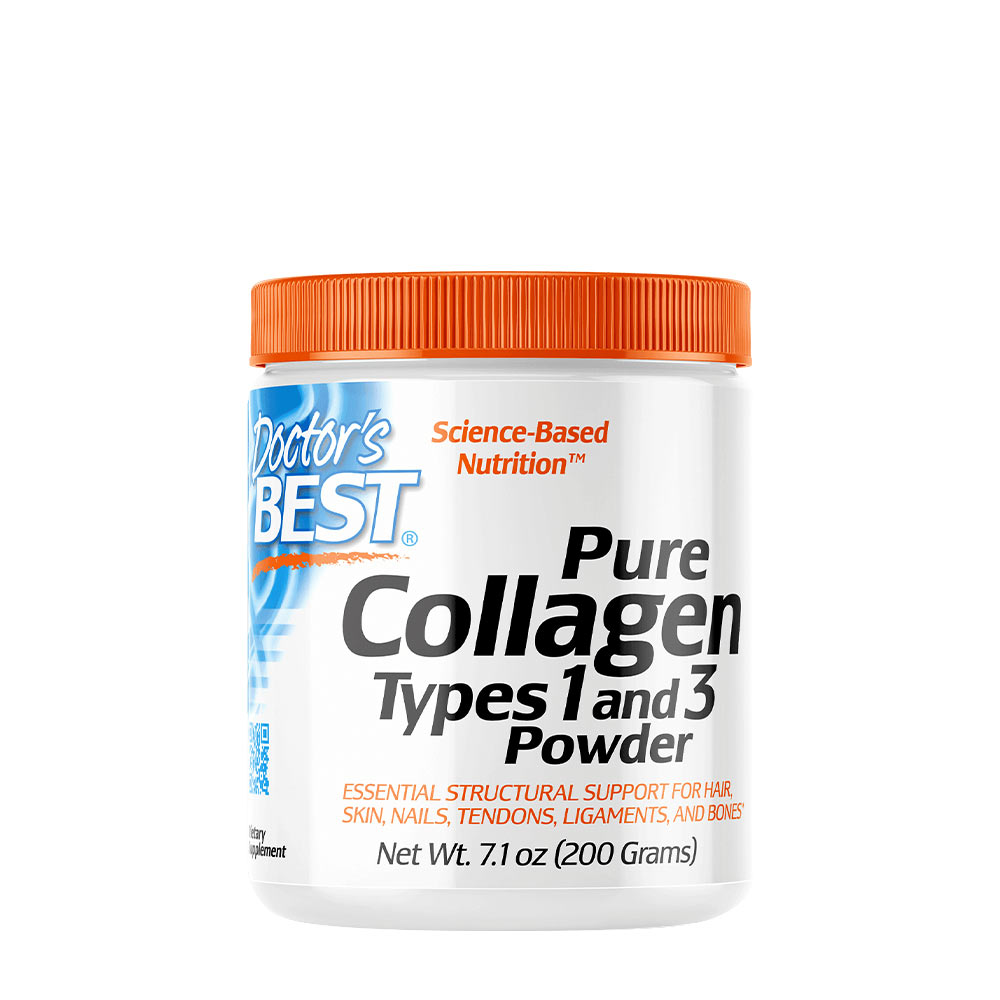
Doctor's Best
Doctor's Best - Pure Collagen Types 1 and 3 - 7.1 oz
253 krIn stockWhy is this shown?
Historiskt katalogurval. Innehåll, mängd och form behöver kontrolleras mot aktuellt underlag.
Tierlieb
tierlieb - Brewer's Yeast Tablets - 400 tablets
80 krIn stockWhy is this shown?
Historiskt katalogurval. Innehåll, mängd och form behöver kontrolleras mot aktuellt underlag.


